Size & fit
Crocs size guide: measure, compare and check the fit
A measurement is a starting point, not a promise of fit. Pair it with the exact model’s size guide and a careful try-on.
Read the full guide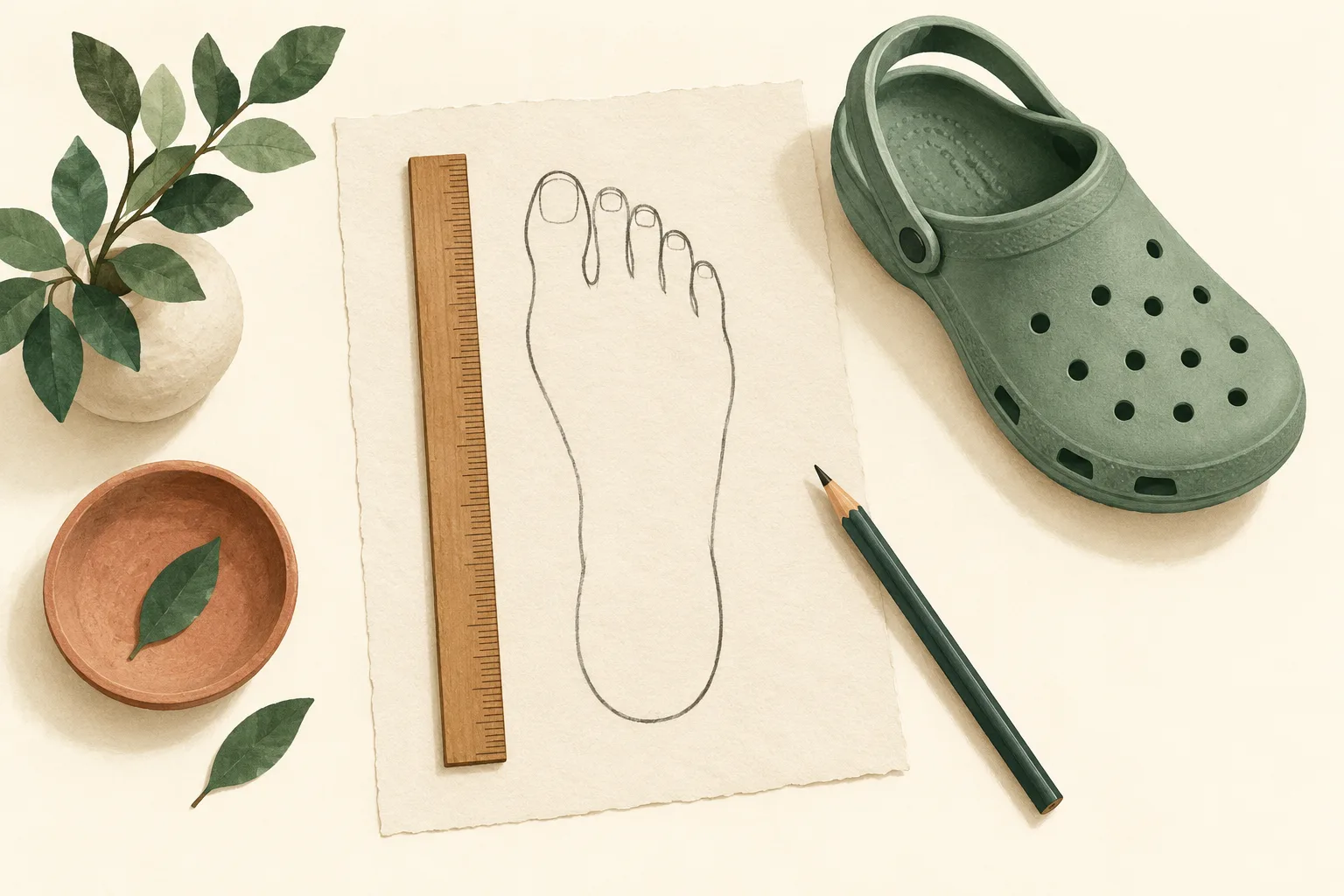
Your fit check, at a glance
Measure both feet
Record heel-to-longest-toe length for each foot. Keep the units consistent.
A useful detail
Keep both measurements rather than averaging them. Compare the longer one with the relevant chart. This illustration is not a printable measuring tool.
Read the size system
Match your notes to the current regional chart for the exact model.
A useful detail
A number alone is not enough. Check the country’s size system and any model-specific fit notes; there is no universal size-up or size-down rule here.
Try before committing
Check the return conditions, then assess both shoes indoors.
A useful detail
Notice toe pressure, rubbing or excessive movement. Stop if the fit feels wrong; do not try to reshape the shoe with heat.
Independent guide. CrocsDeal is not affiliated with or endorsed by Crocs, Inc. This is a newly written sizing reference, not an official size chart or a recovered copy of the former page. Crocs and its product names belong to their respective trademark owners.
Start with the size guide on the exact product listing you intend to buy. A size remembered from a different shoe is a useful starting point, not a guarantee. The aim is to combine a current measurement with the right regional chart and an actual fit check, rather than apply a universal rule to every Crocs style.
Make a usable measurement record
- Set a sheet of paper on a flat, firm floor against a straight edge such as a wall. Have a ruler and pen ready.
- Measure one foot at a time while standing comfortably. Keep the heel at the reference edge and mark the longest toe without curling it.
- Measure from the heel reference to the toe mark. Record the result in millimetres so it can be compared with a chart using the same unit.
- Repeat for the other foot and repeat any measurement that seems inconsistent. Keep both results rather than averaging them.
- Compare the longer measurement with the relevant chart. If you cannot measure reliably, ask for help or arrange an in-person fitting.
This is a practical recording method, not a medical assessment. Do not add an invented allowance or round repeatedly between centimetres and inches. If you normally wear socks with the intended shoes, include that preference in your fitting questions and try-on. A measurement narrows the choice; it cannot describe every aspect of foot shape.
Read the labels carefully
The official Crocs Singapore size chart has separate adult and children's charts. Its adult chart labels women's and men's sizes by region; the children's chart includes C and J sizes. Check the heading above the numbers: a bare “8” is not enough information. Use the chart linked from the regional store or exact product, particularly when shopping across borders.
Crocs also describes roomy, relaxed and standard fits in its footwear fit-profile FAQ. These describe different amounts of space and security, not a reason to buy an arbitrarily larger shoe. Read the model's fit notes. There is no single size-up or size-down instruction in this guide for every model, market and foot.
Try the pair on before committing
Read the return conditions first, then try both shoes on a clean indoor surface. Stand, take a few normal steps and turn carefully. Check for toe pressure, rubbing, excessive movement or a need to grip with your toes to keep the shoe on. If a strap is fitted, check the intended position using the product instructions rather than forcing it into place.
Pause if the fit feels wrong. Do not assume pain will disappear after “breaking in,” and do not try to solve a sizing error with heat, boiling water or other alteration. Describe the specific problem to the seller: toe contact, heel movement and pressure across the top are more useful observations than simply saying that a shoe feels strange.
Questions worth asking
- Is this the same product code as the size advice I am reading?
- Which country's size system appears on the order confirmation?
- Does the model have a lining or fit feature that changes the comparison?
- Can I exchange an unworn pair, and what restrictions or costs apply?
- Do I need a different model rather than a different number?
For a child's pair, use current measurements and assess the actual fit instead of choosing from age alone. The children's chart on the Singapore site lists typical ages alongside heel-to-toe lengths and regional sizes. If there is persistent pain or a clinical footwear requirement, seek advice from a qualified health professional; this page does not diagnose a problem or recommend a shoe as treatment.
Keep a note of the model, size system and fit result for future comparison, but reassess when the model or your needs change. Continue with the buying checklist, read the care guide, or return to all Crocs footwear guides.
Published 24 September 2026. Manufacturer sizing references checked 16 October 2026; model information and regional terms can change.