Hearing-Friendly Headphone Habits
Enjoy music, podcasts, calls, and games while paying attention to volume, listening time, fit, background noise, and warning signs.
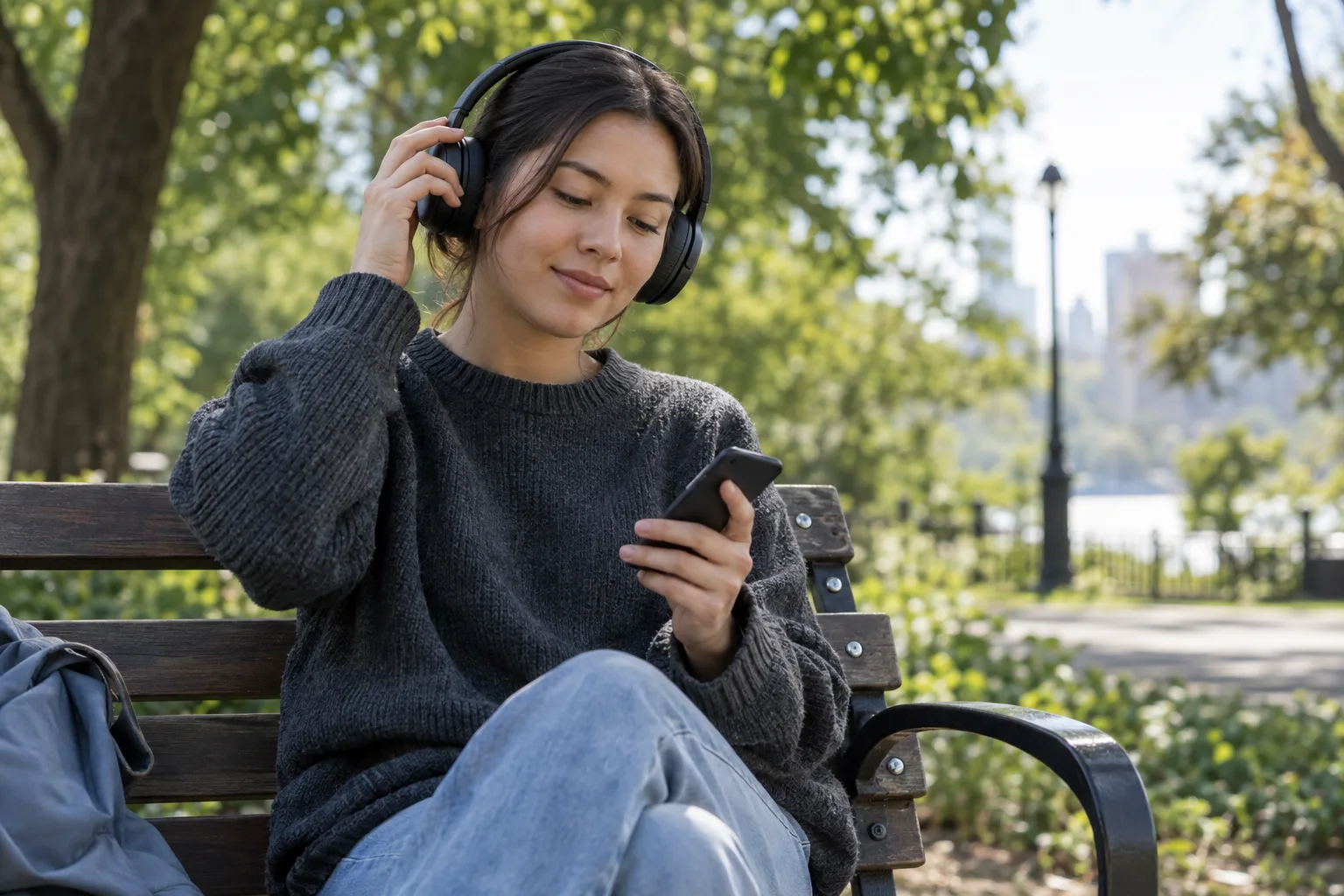
Headphones make private space in crowded places. They can turn a commute into reading time, make exercise more enjoyable, and help a call feel clearer. The risk is easy to miss because volume often rises one step at a time. A noisy train arrives, the next track sounds quiet, or an exciting game runs longer than expected.
Hearing-friendly listening is not about giving up audio. It is about managing sound as a combination of volume and time, then arranging the environment so you do not have to keep turning it up.
Think in terms of a sound dose
The louder a sound is, the less time it can be heard safely. The World Health Organization's safe-listening guidance gives a useful illustration: at an average of 80 decibels, weekly safe listening time is much longer than at 90 decibels. Exact exposure is difficult to judge by feel, and different devices fit and measure sound differently, so the lesson is not to calculate every minute. It is to respond to higher volume by shortening the session.
A single percentage on a volume slider is also imperfect because output varies across phones, headphones, recordings, and fit. WHO suggests keeping a device at no more than about 60 percent of maximum and, when sound-level monitoring is available, staying below an average of 80 decibels. Treat those as practical guardrails rather than a personalized medical threshold.
Reduce the competition from background noise
If you cannot hear speech or music details, pause before raising the volume. Move away from the loudspeaker, road, machine, or crowd if possible. Well-fitted headphones can reduce sound leakage, while active noise cancellation may make a comfortable listening level easier to maintain in steady background noise.
Noise cancellation is not hearing protection, and headphones should never block awareness where traffic, workplace alarms, or instructions matter. In genuinely loud environments, use suitable hearing protection and follow workplace safety rules rather than relying on consumer headphones.
Set up the device before pressing play
The joint WHO-ITU safe-listening standard recommends device features that track sound level and duration, provide listening profiles, and offer volume-limiting options. Check whether your phone or player has a headphone safety setting, exposure history, or volume warning. Enable the feature if it is useful and understand what it measures.
- Start playback at a low setting, then raise it only until speech or music is comfortably clear.
- Keep volume normalization in mind; recordings can differ sharply in loudness.
- Use a limiter for a child's device and explain why it is there.
- Do not override repeated exposure warnings automatically.
Give listening a natural stopping point
Long sessions can disappear into a playlist or podcast queue. Use the end of an episode, album, commute, or work block as a cue to remove the headphones. A quiet break reduces total exposure and gives you a chance to notice whether your ears feel different.
If listening supports concentration, a break can be brief and practical: refill water, complete a task without audio, or walk through a quiet space. You do not need to wait for discomfort. Hearing damage can build gradually, and temporary muffling after loud sound is already a reason to reduce the next exposure.
Recognize signs that deserve attention
Persistent ringing or buzzing, difficulty hearing high-pitched sounds, trouble following phone speech, or difficulty understanding conversation in noisy places can be signs of hearing loss. WHO recommends having hearing checked when these problems occur. Sudden hearing loss or symptoms after an explosive sound warrant prompt medical attention.
Do not use an online article or phone app to diagnose hearing. Apps can help monitor exposure and may provide screening information, but a qualified hearing or medical professional can assess symptoms in context.
Practical takeaway
Before your next listening session, lower the starting volume, improve the fit, and turn on any exposure-monitoring feature your device provides. In a noisy place, change the environment before raising the slider. Build a quiet pause into long sessions and take persistent ringing, muffling, or difficulty understanding speech seriously. The best listening habit is one that lets audio remain enjoyable without asking your ears to compete with the room.
Sources
- Deafness and hearing loss: Safe listening, World Health Organization
- Safe listening devices and systems: a WHO-ITU standard, World Health Organization and International Telecommunication Union
Continue reading
Related articles

Use Daylight to Anchor Your Day
A gentle daytime routine that works with light, movement, meals, and your real schedule to create clearer cues for wakefulness and rest.

A Memory-Friendly Way to Learn Something New
Replace one long study session with a simple cycle of understanding, recalling, checking, and returning later.

Single-Tasking for a Less Scattered Day
A realistic way to reduce avoidable interruptions, protect attention, and finish one useful thing at a time without turning your day into a rigid productivity exercise.