Read a Nutrition Label Without Getting Lost
A five-step label-reading method that starts with your purpose and helps compare packaged foods without declaring any single product good or bad.
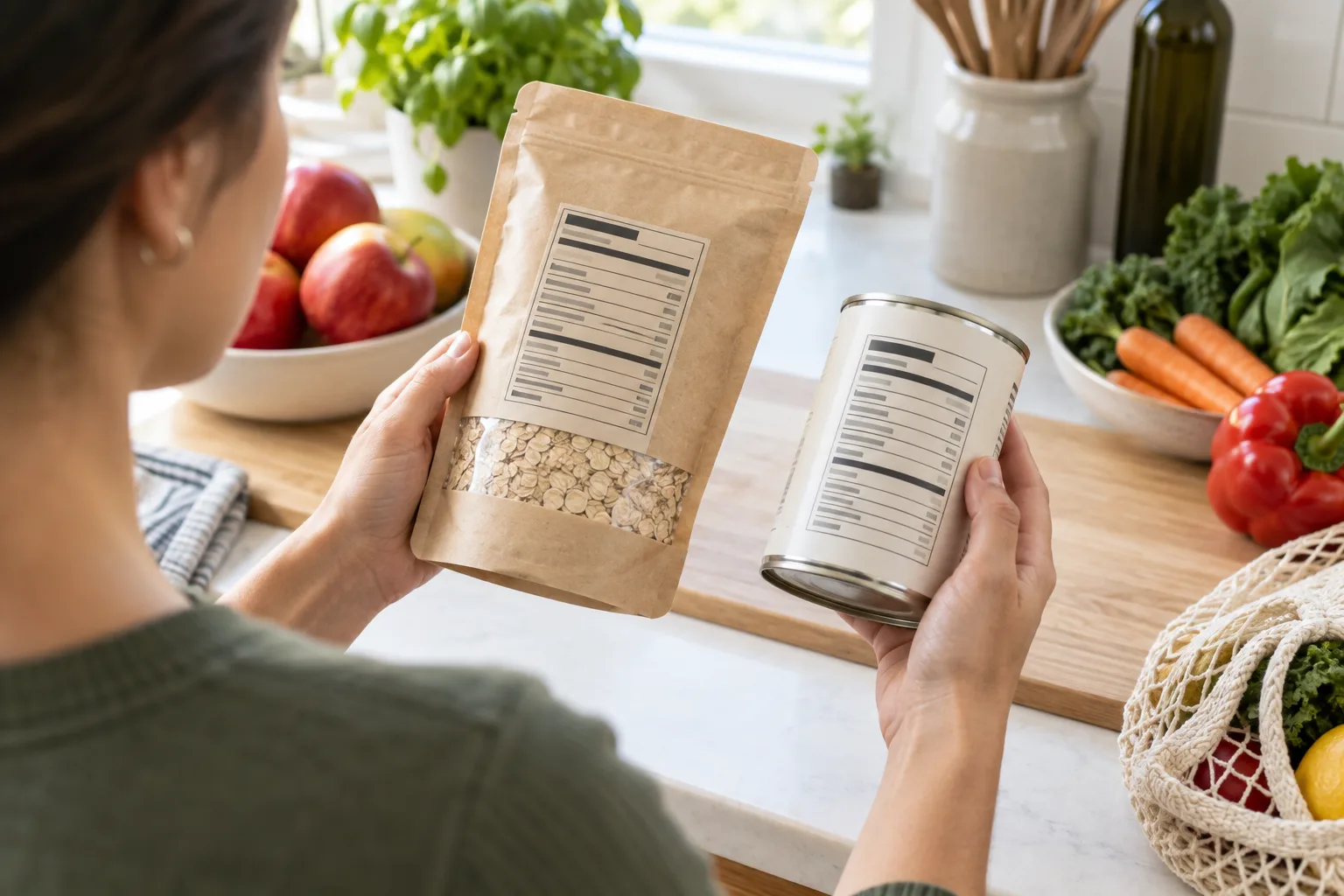
A Nutrition Facts label can make a simple snack look like an accounting exercise. There are grams, percentages, serving sizes, and a long ingredient list competing for attention. The label becomes easier when you stop trying to judge everything at once and begin with one question: what do I want to know?
You might be comparing fiber in two breads, checking sodium in a soup, looking for added sugars in yogurt, or estimating how many servings are in a package. A label is a comparison tool, not a score for whether a food or the person eating it is good or bad.
Step one: find the serving information
The FDA's label guide recommends starting with servings per container and serving size. Every nutrient number below them refers to that stated serving. If a package contains three servings and you eat the whole package, you receive roughly three times the listed amounts.
A serving size is designed to reflect an amount people typically consume and to help compare similar products. It is not a command or a personalized recommendation. Your portion is the amount you choose to eat, which may be smaller or larger depending on appetite, the rest of the meal, and individual needs.
Step two: compare like with like
Two products can appear different because their labels use different serving sizes. Before comparing sodium, fiber, protein, or added sugar, check whether the serving weights are reasonably similar. If one cereal lists 30 grams and another lists 60 grams, the nutrient numbers are not a direct comparison.
For a quick shop, exact arithmetic is often unnecessary. Notice the mismatch and compare products with similar serving weights, or use the per-100-gram column where local labeling provides one.
Step three: use Percent Daily Value as a guide
Percent Daily Value, written as %DV, shows how much one serving contributes to a reference daily amount. The FDA's Daily Value reference uses a simple guide: 5% DV or less is considered low, while 20% DV or more is considered high for that nutrient per serving.
Whether low or high is useful depends on the nutrient and your goal. You may look for more fiber, calcium, iron, potassium, or vitamin D, and less sodium, saturated fat, or added sugar. Daily Values are general references based on a 2,000-calorie diet, not individualized targets. People with allergies, kidney disease, diabetes, pregnancy-related needs, or another medical concern may need advice tailored by a qualified professional.
Step four: separate total and added sugars
Total sugars include sugars naturally present in foods such as milk and fruit as well as sugars added during processing. “Includes X grams Added Sugars” identifies the portion added through ingredients such as sugar, syrups, honey, or concentrated fruit or vegetable juices used as sweeteners.
This distinction can help compare two flavored products. It does not make naturally occurring sugar unlimited, nor does it mean a food containing some added sugar cannot fit into an overall eating pattern. Use the number to answer your comparison question rather than turning it into a verdict.
Step five: scan the ingredient list for practical needs
Ingredients are generally listed in descending order by weight. The list is especially important for identifying allergens and ingredients you avoid for dietary, religious, ethical, or personal reasons. Allergen declarations vary by country, so follow the label rules where the food was sold.
Long ingredient names do not automatically mean a food is harmful, and a short list does not automatically make it nutritionally balanced. Bring the ingredient list together with the Nutrition Facts panel, the portion you expect to eat, price, convenience, and enjoyment.
Practise with one comparison
- Choose two products intended for the same use.
- Check serving size and servings per container.
- Select one or two nutrients that matter for your purpose.
- Use %DV or matching weights to compare them.
- Choose the option that best fits the full meal and your preferences.
If neither product is clearly better for your needs, that is a valid result. Taste, cost, availability, and preparation time matter too.
Practical takeaway
Do not read every line every time. Start with the serving, decide which one or two nutrients answer your question, and compare similar amounts. Use Percent Daily Value as a guide rather than a personalized prescription. A label is most useful when it supports a specific choice and then lets you get on with eating.
Sources
- How to Understand and Use the Nutrition Facts Label, U.S. Food and Drug Administration
- Daily Value on the Nutrition and Supplement Facts Labels, U.S. Food and Drug Administration
Continue reading
Related articles

Everyday Energy: Sleep, Food, Movement and When Fatigue Needs Care
Energy is not a product or a single wellness score. Support daily function with sleep, regular food, fluids, movement and pacing, and recognise persistent fatigue as a symptom that may need medical care.
Add More Fiber One Food at a Time
A gradual, food-first approach to fiber using beans, whole grains, vegetables, fruit, nuts, and seeds—plus the practical role of fluids and labels.
Build a Balanced Meal With Foods You Know
A flexible meal-building framework based on variety, adequacy, balance, and moderation—not a rigid plate or a list of perfect foods.