Add More Fiber One Food at a Time
A gradual, food-first approach to fiber using beans, whole grains, vegetables, fruit, nuts, and seeds—plus the practical role of fluids and labels.
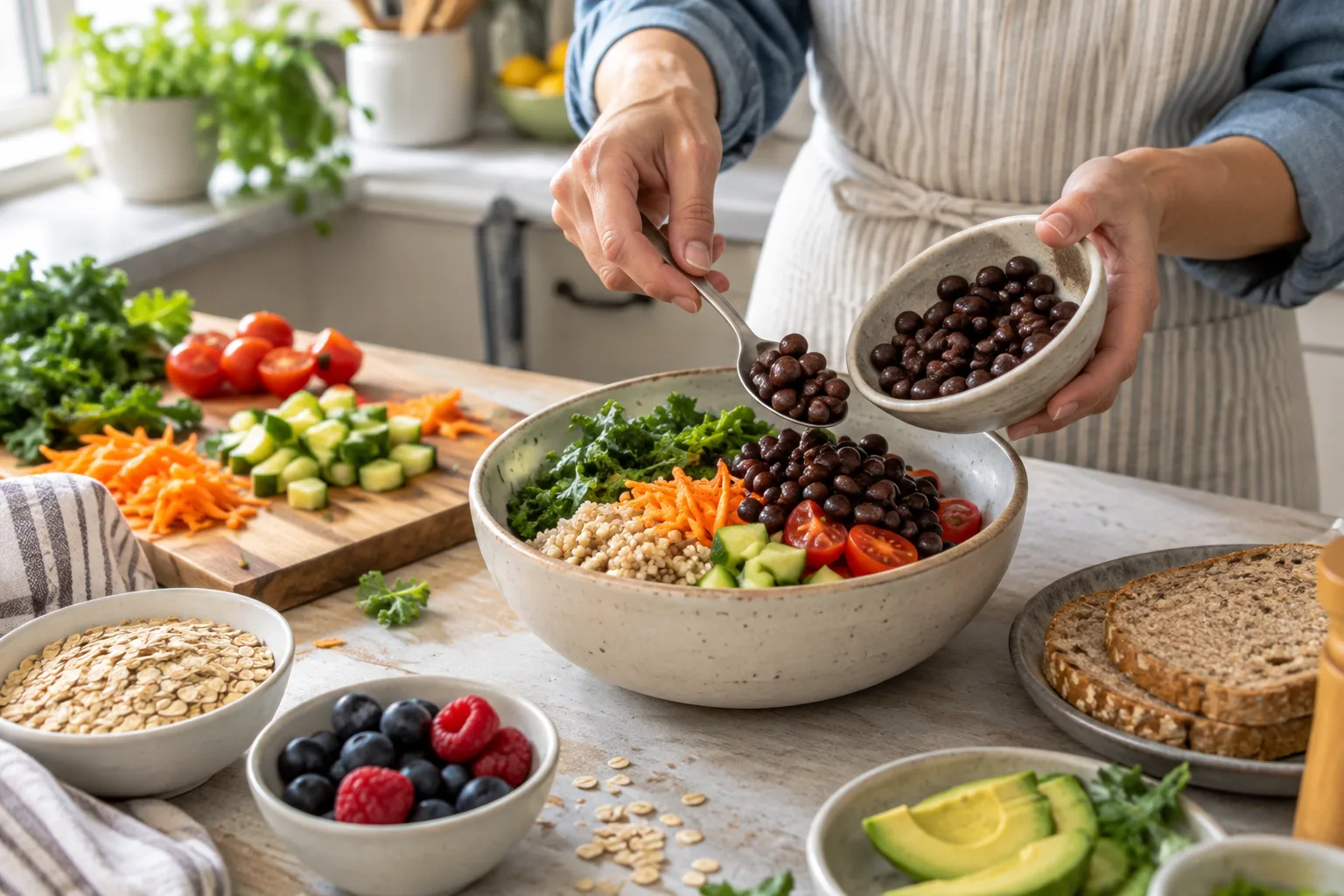
Fiber advice can sound like another target to hit, yet the useful part is very ordinary: more beans, whole grains, vegetables, fruit, nuts, and seeds. These foods can be added to meals you already eat. The change does not have to begin with a supplement, a specialty product, or a sudden bowl of bran large enough to upset your day.
Gradual is the key word. A digestive system accustomed to a lower-fiber pattern may respond to a large increase with gas, bloating, or discomfort. One food at a time makes it easier to discover what suits you.
What counts as dietary fiber?
Dietary fiber includes carbohydrates in plant foods that are not fully digested in the small intestine. The FDA's fiber overview distinguishes fiber naturally intact in foods such as vegetables, whole grains, fruit, bran, and flour from certain isolated or synthetic fibers added to products. Both may appear on a Nutrition Facts label, but a whole food also brings its particular mix of other nutrients and textures.
Different fibers behave differently, so variety is useful. You do not need to memorize categories of soluble and insoluble fiber before improving a meal.
Choose one reliable daily addition
Start with the meal that is easiest to change. Add fruit, oats, or seeds to breakfast; beans or lentils to lunch; or an extra vegetable to dinner. Keep the addition modest for several days before increasing it.
- Mix a spoonful of beans into rice, soup, salad, or a wrap.
- Replace part—not necessarily all—of a refined grain with a whole-grain version.
- Keep frozen vegetables ready for noodles, omelets, curries, and stews.
- Choose whole fruit sometimes instead of juice.
- Use unsalted nuts or seeds as a topping where allergies are not a concern.
The World Health Organization's healthy-diet guidance recommends carbohydrates primarily from whole grains, vegetables, fruit, and pulses. Its global guidance sets a general fiber goal for people older than ten, but individual needs and tolerance vary.
Let labels help with packaged foods
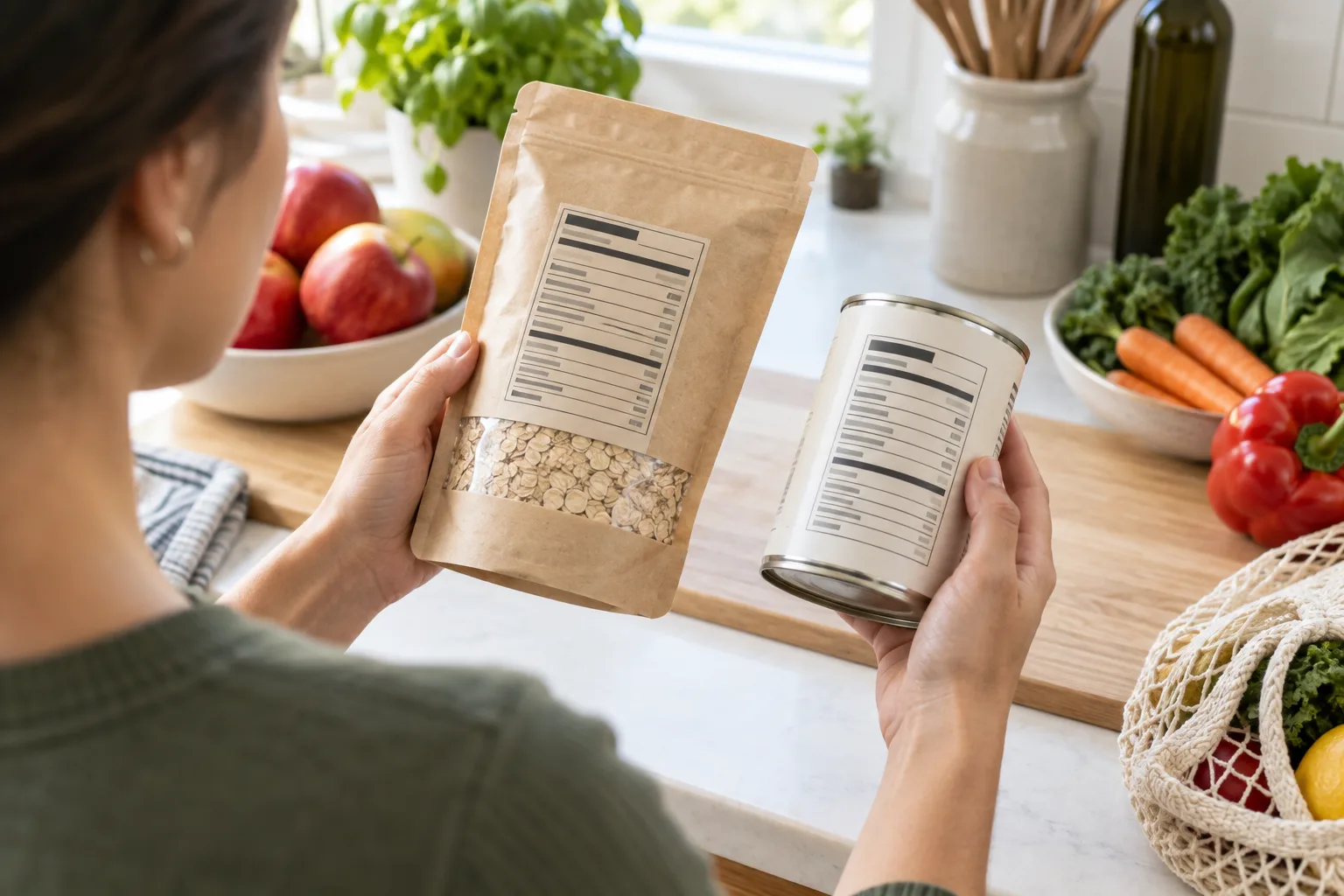
For bread, cereal, crackers, and other packaged staples, compare dietary fiber per similar serving size. The ingredient list can show whether a whole grain appears early, but the fiber number provides a direct comparison. Products with added isolated fiber may have a high number even when the rest of the product differs, so consider sodium, added sugar, price, taste, and how the food fits the meal too.
A “brown” color or rustic name does not prove a product is whole grain. Read the label rather than relying only on the front of the package.
Remember fluid and movement
Fiber holds water and changes stool bulk. As you add fiber, drink fluids regularly unless a clinician has asked you to restrict them. Needs differ with climate, activity, pregnancy, health, and the water content of food, so there is no single glass count that suits everyone.
Regular movement can also support normal bowel habits. This can be a walk, household activity, or another form of movement appropriate for you; it does not need to be strenuous.
Make beans easier to live with
Beans and lentils are affordable sources of fiber and protein, but a full bowl may be too much at first. Begin with a few spoonfuls. Rinse canned beans when practical, and cook dried beans until tender following food-safety instructions. Lentils often cook faster and can disappear easily into soup or sauce.
Some people tolerate one variety better than another. A simple note about the food, amount, and response can help without turning eating into constant tracking.
Know when general advice is not enough
Fiber needs can change with inflammatory bowel disease, bowel narrowing, surgery, chronic constipation, pelvic-floor conditions, or medicines. Persistent pain, vomiting, blood in stool, unexplained weight change, or a major change in bowel habits deserves medical assessment. Do not use a large fiber increase to delay appropriate care.
Practical takeaway
Pick one familiar meal and add one modest fiber source for the next several days. Drink fluids normally, notice comfort, and increase gradually rather than chasing a number overnight. Once the first change feels routine, add variety. A sustainable fiber pattern is built from ordinary foods repeated often enough to become unremarkable.
Sources
- Healthy diet, World Health Organization
- Questions and Answers on Dietary Fiber, U.S. Food and Drug Administration
Continue reading
Related articles

Build a Balanced Meal With Foods You Know
A flexible meal-building framework based on variety, adequacy, balance, and moderation—not a rigid plate or a list of perfect foods.
Read a Nutrition Label Without Getting Lost
A five-step label-reading method that starts with your purpose and helps compare packaged foods without declaring any single product good or bad.

Everyday Energy: Sleep, Food, Movement and When Fatigue Needs Care
Energy is not a product or a single wellness score. Support daily function with sleep, regular food, fluids, movement and pacing, and recognise persistent fatigue as a symptom that may need medical care.