An Athletic Shoe Fit Checklist That Starts With Comfort
Use fit, stability and real movement—not hype or a familiar size number—to choose comfortable athletic shoes.
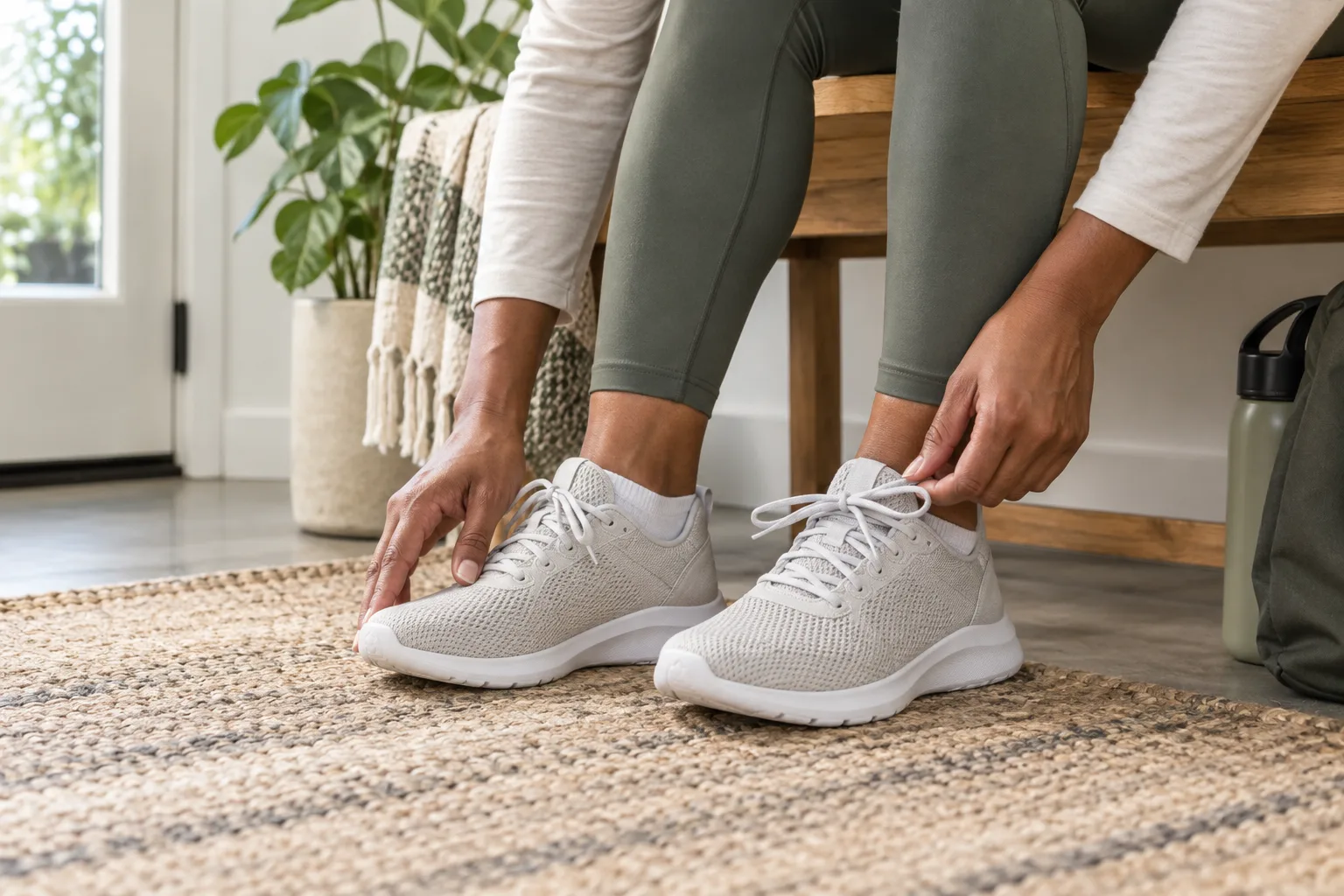
Athletic shoes are often sold through technology stories: special foam, unusual geometry or a label for a particular “type” of foot. Those features may matter to some people, but the first test is simpler. A useful shoe should fit the actual feet inside it, suit the intended activity and feel comfortable during the movements it will be asked to handle.
Shop for your feet, not your usual size
Shoe sizes vary between brands and sometimes between models. Have both feet measured and fit the larger foot, because small differences are common. Try shoes with the socks or insoles you expect to use. Feet can also change over time, so an old size is a starting point rather than a verdict.
The Oxford Health NHS footwear guide recommends checking length, width and depth, with about one centimetre between the longest toe and the front of the shoe. The toe box should let toes move without pressure from the upper or sides.
Run a standing fit check
Lace both shoes, stand up and work through a few observations:
- Your toes can move and do not touch the front when you bend your knees.
- The widest part of each foot aligns comfortably with the widest part of the shoe.
- The upper does not press on prominent joints, nails or the top of the foot.
- The heel feels secure without painful squeezing.
- Laces or straps hold the midfoot without needing to be pulled excessively tight.
Do not assume that a painfully tight shoe will become perfect after it is “broken in.” Some materials soften, but a mismatch in length, width or shape is unlikely to disappear. Comfort should be present from the beginning.
Match the shoe to the movement
A shoe built for steady forward walking or running may feel different from one intended for court movements in several directions. Think about the surface, pace and side-to-side demands of your activity. If one sport dominates your week, a shoe designed for that movement can be a sensible choice.
The Guy's and St Thomas' NHS footwear guidance explains that athletic shoes have different features and advises using a specialist shop when the choice is unclear, particularly for running. It also highlights adjustable lacing, a stable midsole, heel padding and a sole wide enough to support the forefoot.
Test movement inside the shop
Walk for several minutes rather than taking two steps beside the chair. If the shop permits it, try a gentle jog, a few turns and the basic movements of your activity. Notice heel lift, toe pressure, sliding and any seam that begins to rub. Test both feet; a comfortable left shoe does not guarantee the right one fits.
Pay attention to your own sensation instead of choosing the shoe that looks fastest. Research on footwear and injury is complex, and no retail feature can promise that an individual will remain injury-free. Fit and comfort are useful immediate signals, while training load, technique, recovery and the activity environment also matter.
Check compatibility with insoles and socks
If you use prescribed orthoses, bring them to the fitting and follow the clinician's instructions. Make sure the shoe has enough depth after the insole is fitted and that removing the factory liner is appropriate. Changing to a much thicker sock can make a previously comfortable shoe too tight, while a very thin sock may allow sliding.
People with diabetes, reduced sensation, persistent foot pain, major asymmetry or a history of foot problems should seek individual advice from an appropriate health professional rather than relying only on a general checklist.
Let condition, not a mileage myth, guide replacement
Inspect the outsole, midsole, heel lining, upper and laces. Uneven wear, compressed cushioning, rough internal edges or a damaged fastening can change comfort and control. Replacement timing differs with body, surface, use and shoe construction, so a universal calendar or distance is only a rough prompt. A sudden change in comfort deserves attention even if the shoe looks tidy.
Practical takeaway
Choose athletic shoes by trying both feet, checking usable toe room, securing the heel and midfoot, and testing the movements you actually do. Ignore pressure to buy by size number or marketing category alone. A comfortable, stable fit today is more valuable than a promise that an uncomfortable shoe will transform later.
Sources
- Choosing Athletic Footwear, Guy's and St Thomas' NHS Foundation Trust
- Footwear Advice, Oxford Health NHS Foundation Trust
Continue reading
Related articles

Visibility Gear for Walking and Running After Dark
Build a simple low-light kit with reflective details and active lighting while keeping route choice and road awareness first.

Cycling Helmet Fit and Care: A Pre-Ride Routine
Check certification, position, straps and condition so a cycling helmet is ready before every ride.

How to Choose Sun-Protective Activewear for Outdoor Days
Use coverage, fabric, fit and a few simple habits to make sun protection part of your outdoor clothing system.