Classic vs Crocband clogs: what to compare before buying
Compare Classic and Crocband clog listings, separate shared features from personal fit, and use a five-point worksheet before choosing your pair.
On this page
The Classic Clog and Crocband Clog share several listed features, so a useful comparison starts with the exact models and the details that matter to you. The Crocband's midsole stripe is one clear design distinction. It does not, by itself, establish a difference in comfort, fit or grip. This guide compares the manufacturer's US listings for Classic Clog style 10001 and Crocband Clog style 11016, then gives you a worksheet for choosing between the actual pairs available from your seller.
Check the model before comparing the photograph
Open the full product description and record the style number. A similar name or colour is not enough to establish that two listings describe the same shoe. This comparison concerns the two styles above; do not automatically transfer it to a lined, platform, sandal or children's model.
The Classic Clog listing describes a pivoting heel strap, Jibbitz compatibility and a design intended to aid breathability. The Crocband Clog listing identifies its midsole stripe, ventilation openings, pivoting heel strap and Jibbitz compatibility. Crocs describes both models as water-friendly, easy to clean and quick to dry. These are manufacturer descriptions, not findings from a CrocsDeal wear test.
Use the shared features to narrow your questions
A feature appearing on both lists does not decide the purchase. If you want a pivoting strap or compatible charm holes, both descriptions merit a closer look. If the stripe is the reason you prefer the Crocband, compare the exact colour option rather than assuming every photograph represents the pair in your basket.
| Question | Listing and personal checks |
|---|---|
| Which model? | Listing: Classic 10001; Crocband 11016. Check: The style number on your seller's listing. |
| Which appearance? | Listing: Crocs highlights the Crocband's midsole stripe. Check: The selected colour and all available product views. |
| Strap and charms? | Listing: Both list a pivoting heel strap and Jibbitz compatibility. Check: The configuration of the exact pair you plan to buy. |
| Which feels better? | Listing: The feature lists do not settle that personal comparison. Check: Your own try-on, using the same conditions for both. |
| Which purchase works? | Listing: A model name does not establish the seller's final offer. Check: Total cost, availability and return conditions. |
Keep fit separate from the model name
Do not choose a different size solely because someone calls one range roomier. The descriptions used here do not provide a measured, size-by-size width comparison. Nor have we measured these shoes. Start with the chart attached to the exact listing, then use our size and fit guide to organise an indoor try-on.
If you can compare both pairs, use the socks you intend to wear and try the straps in the same position. Record simple observations: where your toes sit, whether anything presses, and whether your heel moves in a way you find uncomfortable. If you can only try one, describe that pair honestly; an untried alternative cannot be declared better from a photograph.
Keep the test compatible with the seller's return conditions. A brief indoor comparison is different from an all-day wear trial, and neither should be invented in a product review. If the fit is wrong, reconsider the size or model rather than treating an attractive colour as a reason to ignore it.
Compare the transaction, not just the discount label
Write down the total payable amount for each exact size and colour, along with delivery costs and any conditions attached to the offer. A headline discount for another variant does not tell you what your selected pair costs. Record the seller too: buying the same branded shoe from a different business can mean a different return route.
Before ordering, use the returns checklist to identify the applicable instructions. There is no fixed price or universal winner in this comparison. For example, if both pairs fit acceptably, a preference for the stripe may settle your choice. If only one fits comfortably during your try-on, that observation is more useful than counting how many marketing features they share.
Practical takeaway
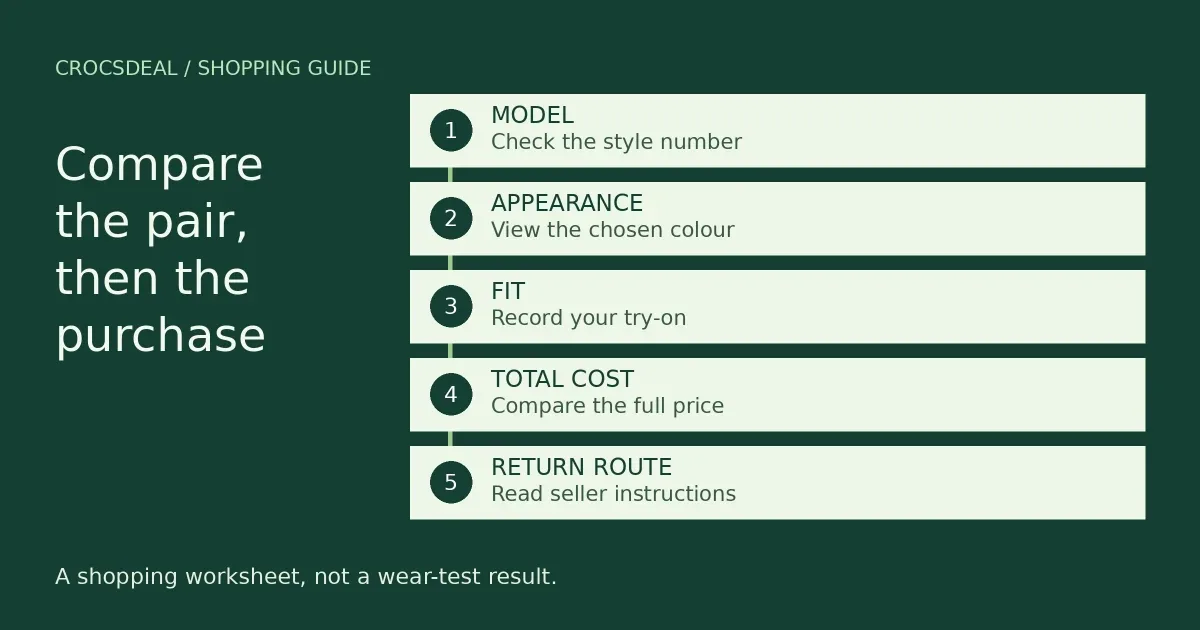
Compare five things in order: model, appearance, fit, total cost and return route. Keep the manufacturer's listed features separate from your personal observations. This guide does not rank long-term durability, wet-surface grip or workplace suitability; those require evidence beyond these product descriptions. Listings checked 25 October 2026. Recheck the current regional listing before buying because options and descriptions can change.
Sources
- Crocs US Classic Clog, style 10001, Crocs US
- Crocs US Crocband Clog, style 11016, Crocs US
Continue reading
Related articles
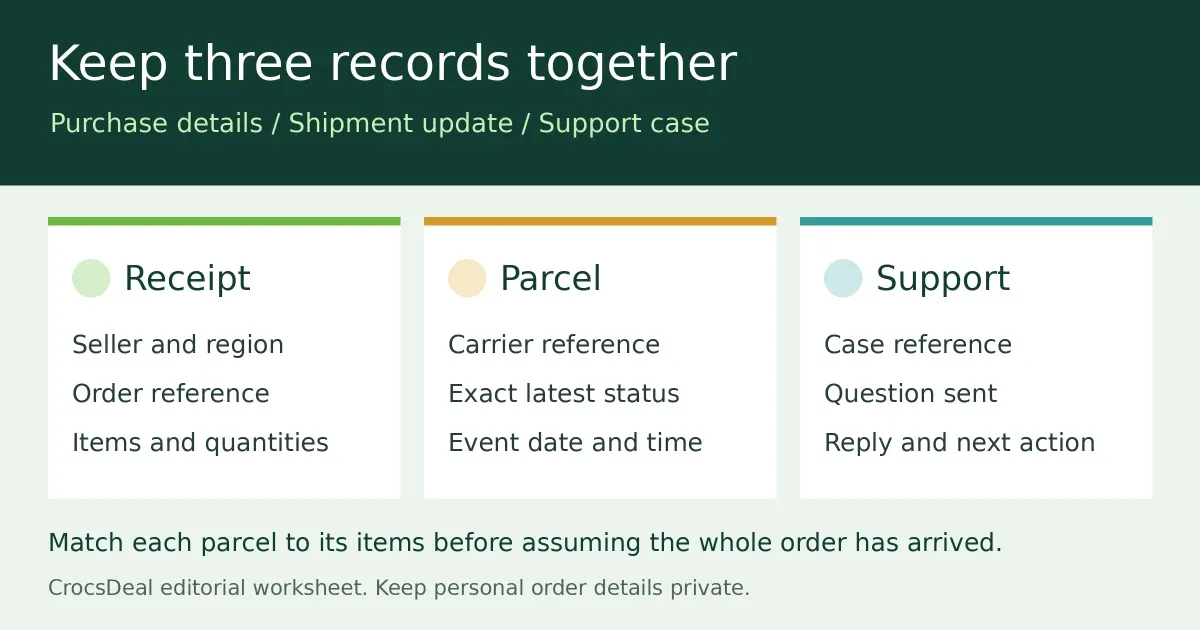
Tracking a Crocs order: receipts, parcels and delivery
Find the right Crocs order-tracking route, separate purchase and parcel updates, and prepare a clear support message using US and Singapore examples.
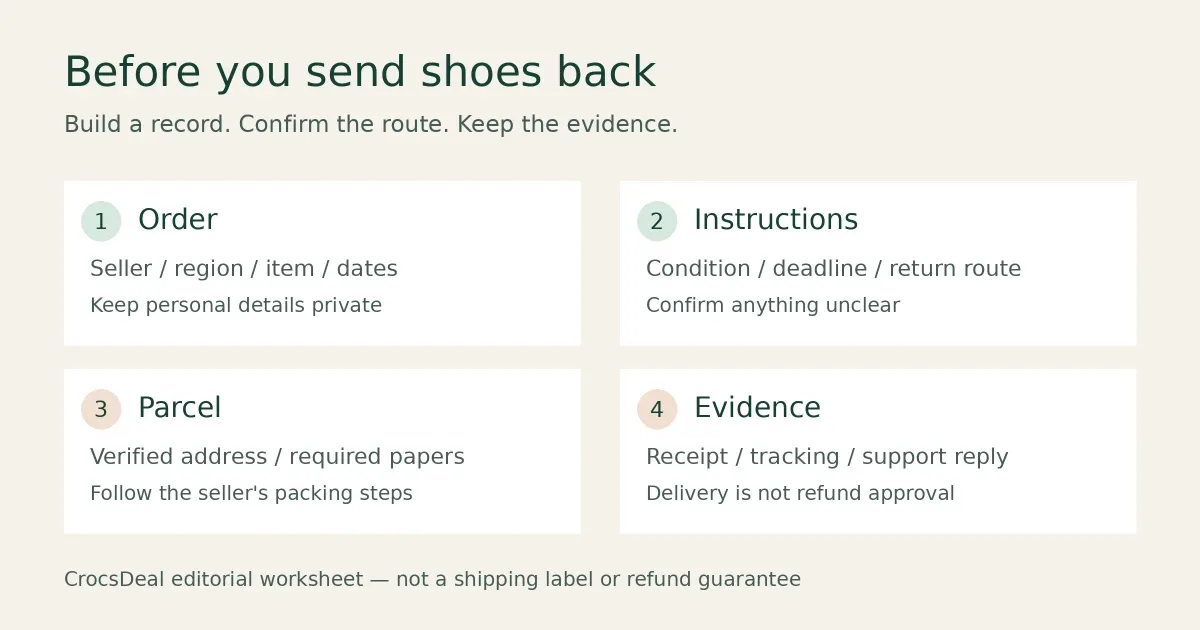
Returning Crocs: seller, route and paperwork checklist
Prepare a Crocs return with the right seller, regional instructions, condition checks and tracking record. Compare US and Singapore routes without guessing.
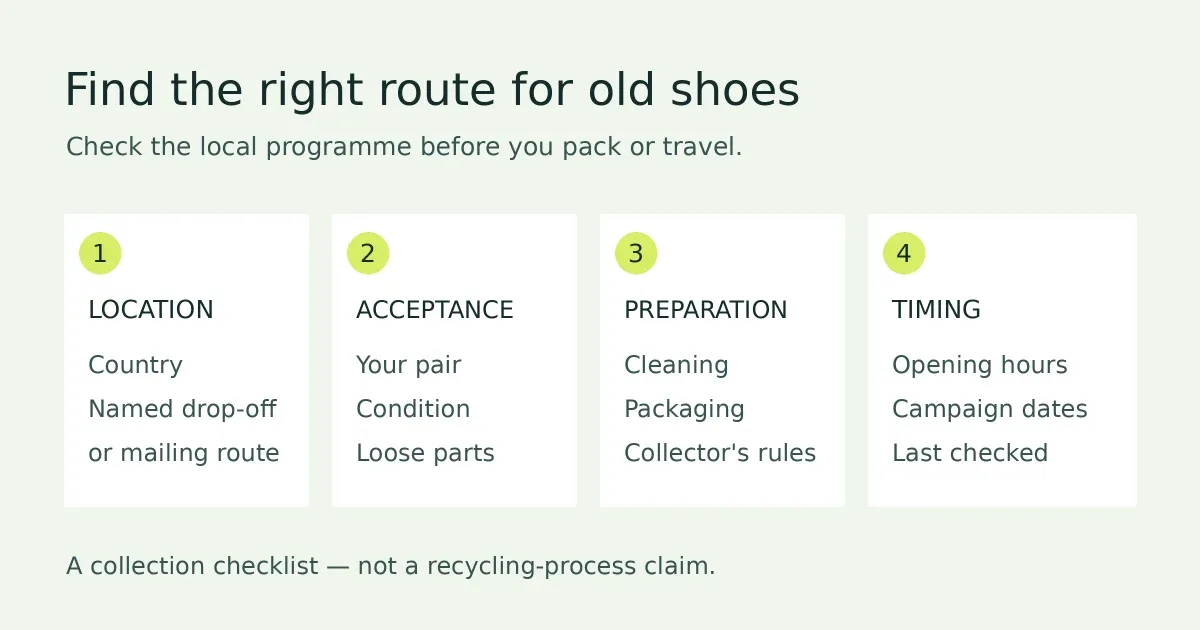
What to do with old Crocs: take-back options and checks
Check Crocs take-back options in the US and Singapore, distinguish collection from recycling, and prepare a pair without assuming every scheme accepts it.