How Soccer Boots Evolved: From Everyday Boots to Modern Studs
Soccer footwear changed alongside the laws, playing surfaces and manufacturing. This evidence-led overview separates the broad historical story from marketing claims about modern boots.
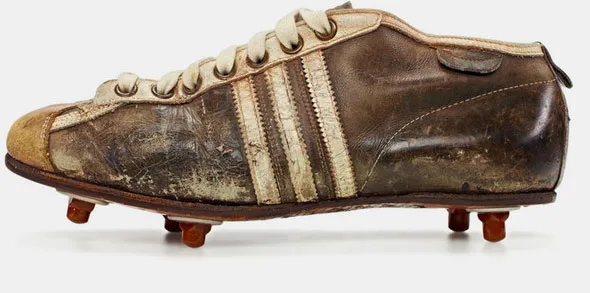
Soccer boots tell a compact version of football history. Early players did not begin with lightweight footwear designed in laboratories. They played in the sturdy shoes and boots available to them, while clubs and rule-makers gradually decided what was safe, fair and suitable for an organised game. Specialisation followed as football, manufacturing and playing surfaces changed.
Precise “first boot” claims are difficult to prove, so the written laws provide a firmer starting point. The National Football Museum’s copy of the 1863 Laws of the Game says players must not wear projecting nails, iron plates or gutta-percha on the soles or heels of their boots. That rule shows both that boots were ordinary equipment and that dangerous traction devices were already a concern.
From protection to specialised equipment
Heavy leather footwear could protect the foot, but it also absorbed water and offered little of the close touch associated with many modern designs. As organised football expanded, manufacturers made boots specifically for the sport. Shapes became closer to the foot, uppers became more flexible, and sole plates and studs became deliberate parts of the design rather than improvised additions.
It is tempting to tell this story as a straight line from “bad” old boots to “perfect” new ones. Reality is less tidy. A boot always balances fit, durability, protection, flexibility, traction, surface and cost. Players also have different foot shapes and preferences. A famous model or a lighter upper does not make one design best for everyone.
Studs became a surface decision
Traction helps a player accelerate and change direction, but the boot interacts with the ground. Firm natural grass, soft wet ground and artificial turf do not behave in the same way. Modern ranges therefore use different outsole and stud arrangements for different conditions.
The surface itself has evolved. FIFA’s football-turf history and quality programme describes early artificial surfaces and the later development of third-generation systems containing sand and rubber infill. Its testing looks at player-surface and ball-surface interaction, durability and safety. Footwear advice should therefore begin with the actual pitch and the rules of the facility or competition, not a universal stud chart copied from a shop.
Modern materials changed the feel
Contemporary boots may use natural leather, synthetic sheet materials, knitted or mesh-like uppers, internal support structures and moulded sole plates. These choices can reduce water uptake, alter flexibility, create different fits and allow manufacturers to tune specific areas of the upper. They also make product descriptions complicated.
Marketing often links one feature to speed, power or control. Those words are not guarantees of match performance. Technique, decision-making, training, comfort and the playing surface remain important. Treat weight and material as design characteristics to compare, not proof that a boot will make someone faster.
Safety rules still frame the design
The principle in the early laws remains visible today. Current IFAB Law 4 says a player must not use equipment or wear anything dangerous. Competition organisers and referees can also apply inspection and surface-specific requirements. Check those rules before a match, especially when changing stud type.
Inspect boots for sharp edges, cracked sole plates, loose studs and separation between the upper and sole. Retire damaged footwear rather than attempting a repair that creates a hard or projecting surface. Clean mud according to the maker’s instructions and let boots dry away from extreme direct heat unless the care guidance says otherwise.
Fit matters more than the launch story
Modern boots are often sold in several silos or fits, but model names do not replace trying them on. The NHS guide to athletic footwear recommends space ahead of the longest toe and an adjustable fastening that holds the mid-foot. Soccer boots may be fitted more closely than walking shoes, yet they still should not crush the toes, create painful pressure or let the heel slide excessively.
Try both boots with match socks and any approved insole or brace. Walk, jog and change direction in a safe fitting area. Children’s feet should be checked regularly rather than buying an excessively large boot to “grow into.” Persistent foot pain, skin damage or a medical foot concern calls for individual advice from a qualified clinician.
Practical takeaway
The soccer boot evolved as rules, materials and pitches evolved. Choose today’s pair by fit, condition, surface and competition rules—not by an unsupported promise of speed. Check the outsole before every session and use the history as context, not as a shopping script.
Sources
- The Laws of the Game, 1863, National Football Museum
- Law 4 — The Players' Equipment, The International Football Association Board
- FIFA Quality Programme for Football Turf, FIFA
- Choosing athletic footwear, Guy's and St Thomas' NHS Foundation Trust
Continue reading
Related articles

How to Get Fit for Soccer: A Practical Training Guide
Soccer fitness grows from regular ball work, general conditioning, strength, recovery and a sensible warm-up—not from one punishing workout. Use this framework to build a week you can repeat.

Cycling Helmet Fit and Care: A Pre-Ride Routine
Check certification, position, straps and condition so a cycling helmet is ready before every ride.
A Brief History of Athletics: From Ancient Contests to a Global Sport
Athletics grew from the basic acts of running, walking, jumping and throwing into a regulated international sport. Follow the major stages without turning a complicated history into a single origin story.