A Brief History of Athletics: From Ancient Contests to a Global Sport
Athletics grew from the basic acts of running, walking, jumping and throwing into a regulated international sport. Follow the major stages without turning a complicated history into a single origin story.
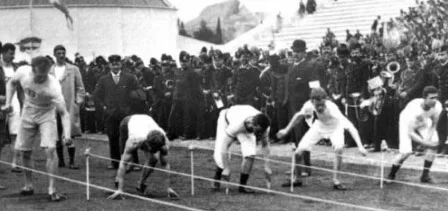
Athletics looks simple at first: people run, walk, jump and throw. Those movements are far older than any sports federation, stadium or stopwatch. The history becomes interesting when communities turn them into organised contests, agree on measurements and rules, and create events that athletes in different places can recognise.
There is no single day on which athletics began. Ancient societies held foot races and throwing or jumping contests for different cultural, military and religious purposes. World Athletics’ account of more than 24 centuries of athletics history uses surviving objects and records to connect the ancient Mediterranean games with later developments. That evidence is more useful than pretending every modern event arrived unchanged from antiquity.
Ancient contests were not modern track meets
Running and the pentathlon were important parts of the ancient Greek games. The pentathlon included a foot race, jumping and throwing events, but its equipment, techniques and social setting differed from today’s programme. Ancient competition was also not equally open to everyone. When modern organisations draw inspiration from that period, they are reviving selected ideas rather than continuing one uninterrupted rule book.
Athletic contests appeared in many other places and periods as well. Local foot races, strength contests, military exercises and festival games all contributed to the broad human tradition. A careful history leaves room for those parallel stories instead of crediting one country with inventing the underlying movements.
Clubs helped shape modern athletics
Many historians place the recognisable development of modern athletics in the 19th century. Schools, universities, military groups and new athletic clubs organised meetings, recorded results and gradually standardised distances and equipment. Events that once varied from one gathering to another could then be compared more consistently.
This was also the era of pedestrianism—competitive walking and running watched by paying crowds—and of amateur sporting organisations. The word “amateur” carried social and economic restrictions, and the rules often excluded working athletes. That history matters because a clean timeline of record performances can hide disputes about who was permitted to compete.
The Olympic revival created an international stage
Athletics was central to the first modern Olympic Games in Athens in 1896. The early programme did not yet match today’s. Women’s participation grew later, event schedules changed, and equipment and track surfaces continued to develop. Olympic competition raised the sport’s visibility, but it also exposed the need for shared international rules and dependable record keeping.
According to the official World Athletics organisation history, the International Amateur Athletic Federation was founded in Stockholm in 1912. It was created to provide a global home for rules, records and competition. The body later became the International Association of Athletics Federations and is now called World Athletics. Names and structures changed, while the core need for common standards remained.
The programme continued to expand
Modern athletics includes track races, field events, combined events, race walking, road running, cross country, mountain and trail running, and ultra running. Women’s events were added at different times rather than in one step. New competition formats developed, some distances disappeared from major programmes, and technical specifications changed as knowledge and equipment evolved.
The sport’s global history is also the history of its athletes. Performances from different eras cannot be compared only by numbers: track construction, footwear, travel, timing, training opportunities and access to competition all changed. The free Museum of World Athletics and Heritage collection preserves equipment, documents and athlete stories that give results a human context.
Why rules and records matter
A measured result becomes meaningful when the event conditions are defined. Officials need to know where a race starts, what counts as a legal throw or jump, how timing works and which equipment is permitted. Governing bodies also specify how a performance can be recognised as a record. These systems do not remove every controversy, but they let athletes compete under a shared framework.
Today’s rules are not a museum piece. They are amended as competition, safety, technology and participation change. Historical articles should therefore distinguish what happened in a particular era from what a current athlete will encounter at a meet.
Practical takeaway
Think of athletics history as several connected layers: ancient movement contests, 19th-century clubs and codification, the modern Olympic revival, international governance from 1912, and a continually changing global programme. For deeper exploration, use official heritage collections and date-specific rule books. They show how a familiar race, jump or throw became the event spectators recognise today.
Sources
- More than 24 centuries of athletics history, World Athletics
- Organisation, World Athletics
- Heritage, World Athletics
Continue reading
Related articles
How Soccer Boots Evolved: From Everyday Boots to Modern Studs
Soccer footwear changed alongside the laws, playing surfaces and manufacturing. This evidence-led overview separates the broad historical story from marketing claims about modern boots.
Middle-Distance Track Events: 800m, 1500m and 3000m Explained
Middle-distance racing sits between sprinting and long-distance events, combining pace, positioning and endurance. Learn how the 800m, 1500m and related track races are organised.

How to Get Fit for Soccer: A Practical Training Guide
Soccer fitness grows from regular ball work, general conditioning, strength, recovery and a sensible warm-up—not from one punishing workout. Use this framework to build a week you can repeat.