How to Choose Sun-Protective Activewear for Outdoor Days
Use coverage, fabric, fit and a few simple habits to make sun protection part of your outdoor clothing system.
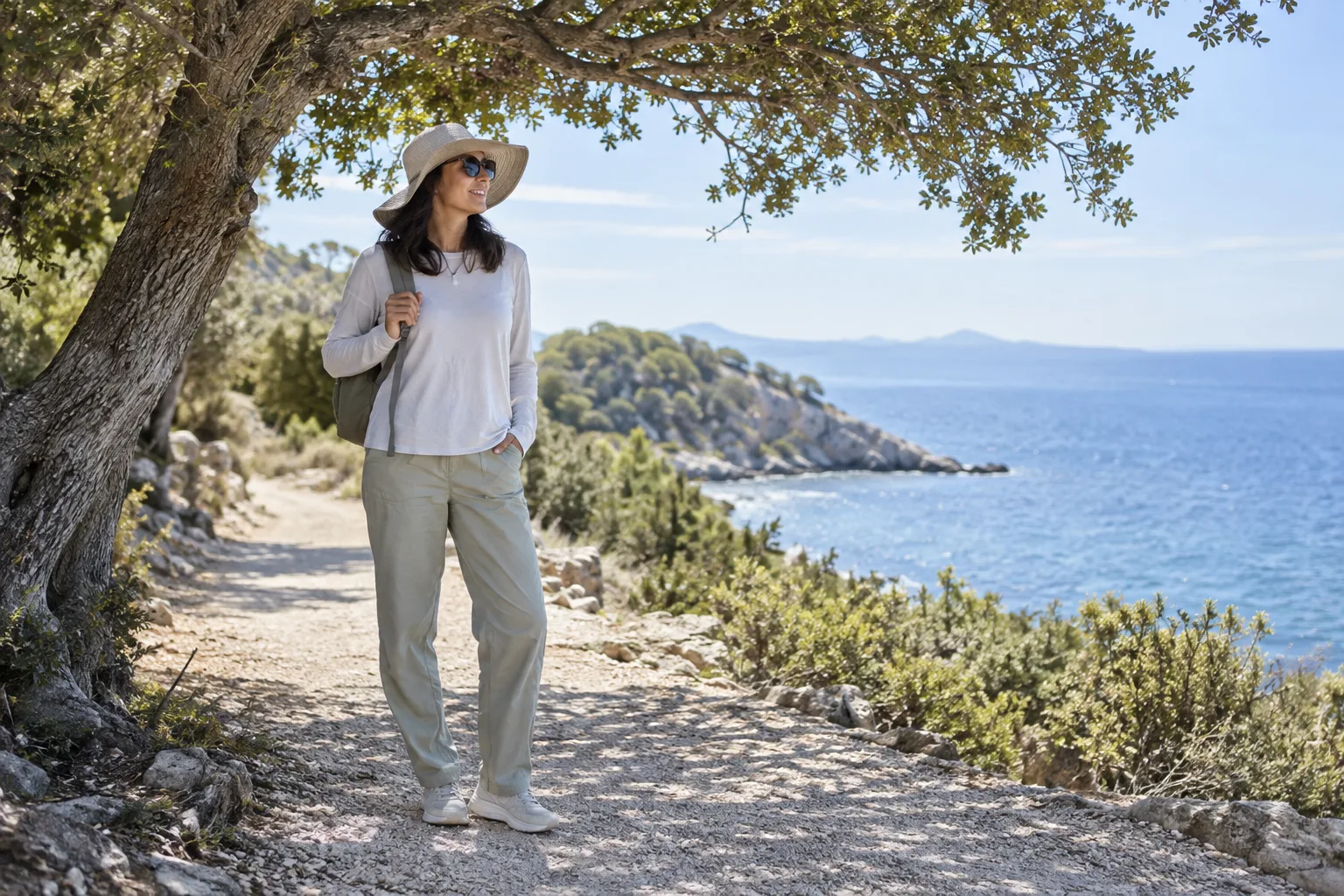
Sun protection is easier to maintain when it is built into what you wear. A well-chosen top, hat and pair of sunglasses do not need to interrupt a walk or training session for reapplication, although uncovered skin still needs attention. The aim is a practical system: enough coverage for the conditions, a comfortable fit for movement and sunscreen used as directed where clothing does not cover.
Check the UV index and the route
Clouds and cool air can make a day feel gentle while ultraviolet exposure remains significant. The CDC's sun-safety guidance says protection is important throughout the year and recommends taking protective action when the UV index is 3 or higher.
Look at when and where you will be outside. An open waterfront, road or playing field offers less shade than a tree-lined route. Water, sand, snow and concrete can reflect UV. If possible, schedule extended activity away from the strongest part of the day and include shaded sections. Clothing helps, but timing and route design reduce the burden on every other measure.
Start with reliable coverage
Long sleeves and longer bottoms cover more skin than small garments, provided they remain in place while you move. Raise your arms, reach forward and bend to see whether the top exposes your lower back or shoulders. Check the neckline and the gap between sleeves and gloves or wristwear.
Coverage should still be comfortable for the temperature. A lightweight, loose long-sleeved shirt can be more wearable than a heavy, tight layer. If full coverage is impractical, note exactly which areas remain exposed so sunscreen application is deliberate rather than rushed.
Understand what fabric can change
The CDC notes that tightly woven fabric offers better protection than a loose weave, darker colours may protect more than lighter ones, and wet fabric can protect less than dry fabric. Hold a garment up to bright light as a simple comparison: fabric that lets a great deal of light through may offer less of a barrier than a denser material.
Some garments carry an ultraviolet protection factor, or UPF, claim based on a standard. Follow the manufacturer's care directions because stretching, wear and fabric damage may change how a garment performs. A UPF label can be useful, but it does not cover skin outside the garment and does not replace shade or sensible timing.
Add a hat and sunglasses that stay put
A broad-brimmed hat can shade the face, ears and back of the neck more completely than a cap. Test it in wind and during the movements your activity requires. A brim that collapses over the eyes or a loose hat that needs constant adjustment is unlikely to be used consistently.
Choose sunglasses labelled to block UVA and UVB rays. Wraparound shapes can reduce light entering from the side. Fit matters here as well: the glasses should remain stable without painful pressure. A secure strap may help for faster movement or water-based activities.
Use sunscreen for the gaps
The U.S. Food and Drug Administration recommends broad-spectrum sunscreen with an SPF of 15 or higher, used with other protective measures. Apply it according to the label to uncovered skin before going out. Commonly missed areas include ears, the back of the neck, hands, tops of feet, lips and exposed scalp.
No sunscreen is waterproof. The FDA advises reapplication at least every two hours and more often after swimming or sweating, following the product directions. Carry it in an accessible pocket rather than somewhere that makes reapplication inconvenient. Keep the container out of excessive heat and direct sun.
Review the system after the activity
Notice where the outfit shifted, where sunscreen rubbed away and which areas became uncomfortably hot. Those observations are more useful than buying a completely new wardrobe. A longer hem, different hat, more stable sunglasses or a route with better shade may solve the actual problem.
Practical takeaway
Choose activewear that covers comfortably, uses a reasonably dense fabric and stays in place through your full range of movement. Add a stable broad-brimmed hat, UV-blocking sunglasses, shade and properly used sunscreen for exposed skin. Check the UV index before leaving, because the safest outfit begins with knowing the conditions.
Sources
- Sun Safety Facts, Centers for Disease Control and Prevention
- Sunscreen: How to Help Protect Your Skin from the Sun, U.S. Food and Drug Administration
Continue reading
Related articles
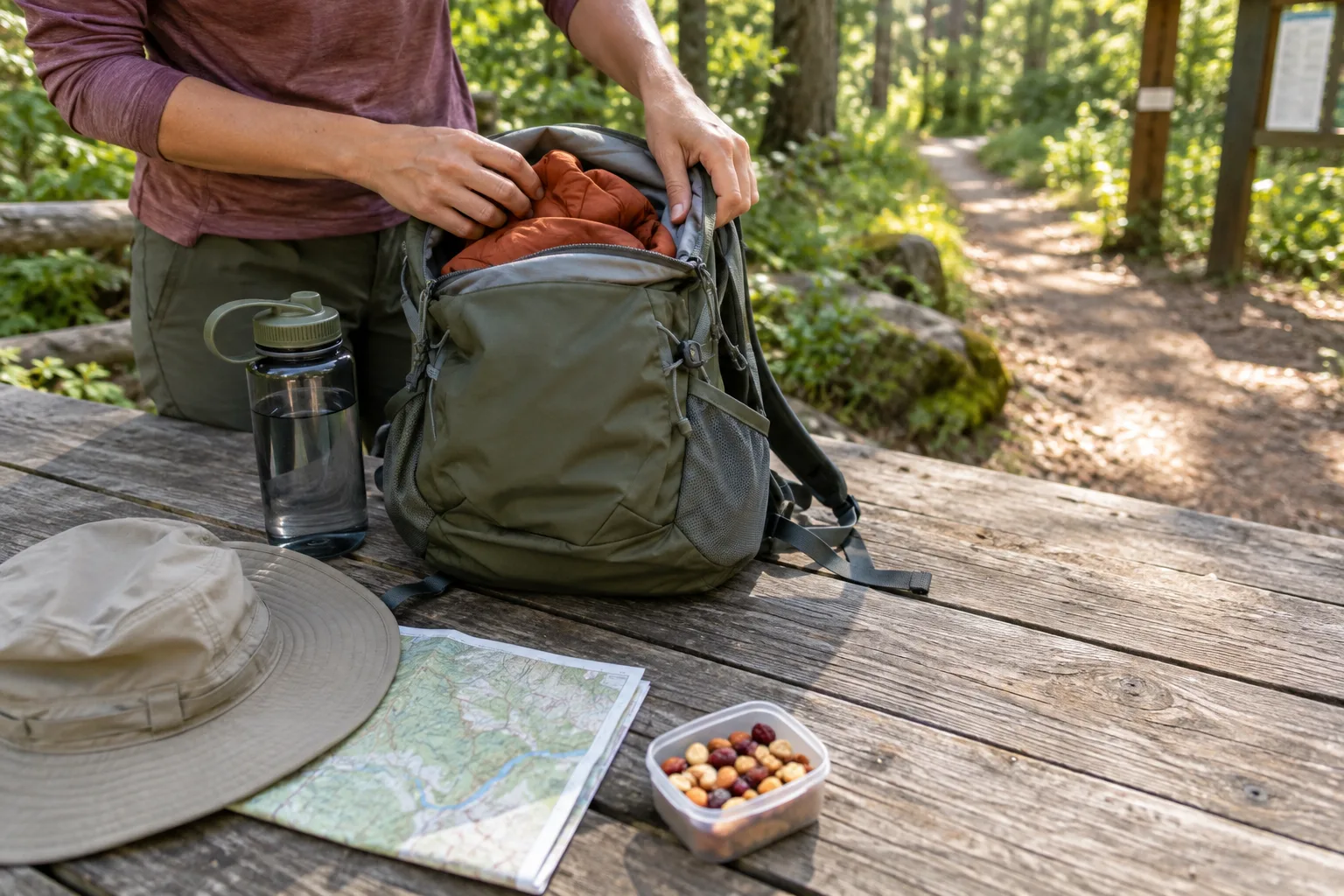
A Day-Hike Gear Checklist Without the Unnecessary Bulk
Pack a compact day-hike system around the route, weather and essential backup needs instead of carrying random extras.
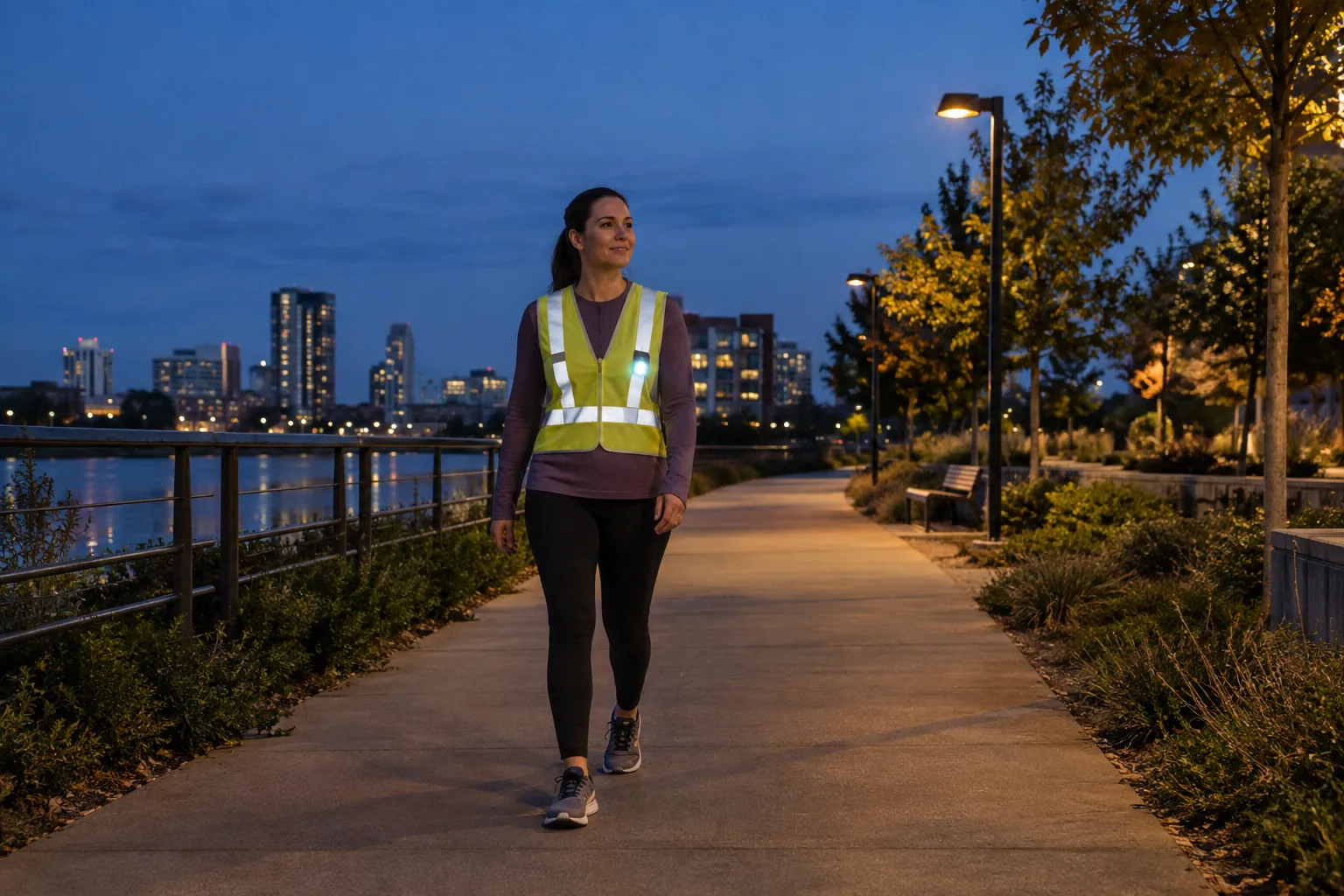
Visibility Gear for Walking and Running After Dark
Build a simple low-light kit with reflective details and active lighting while keeping route choice and road awareness first.
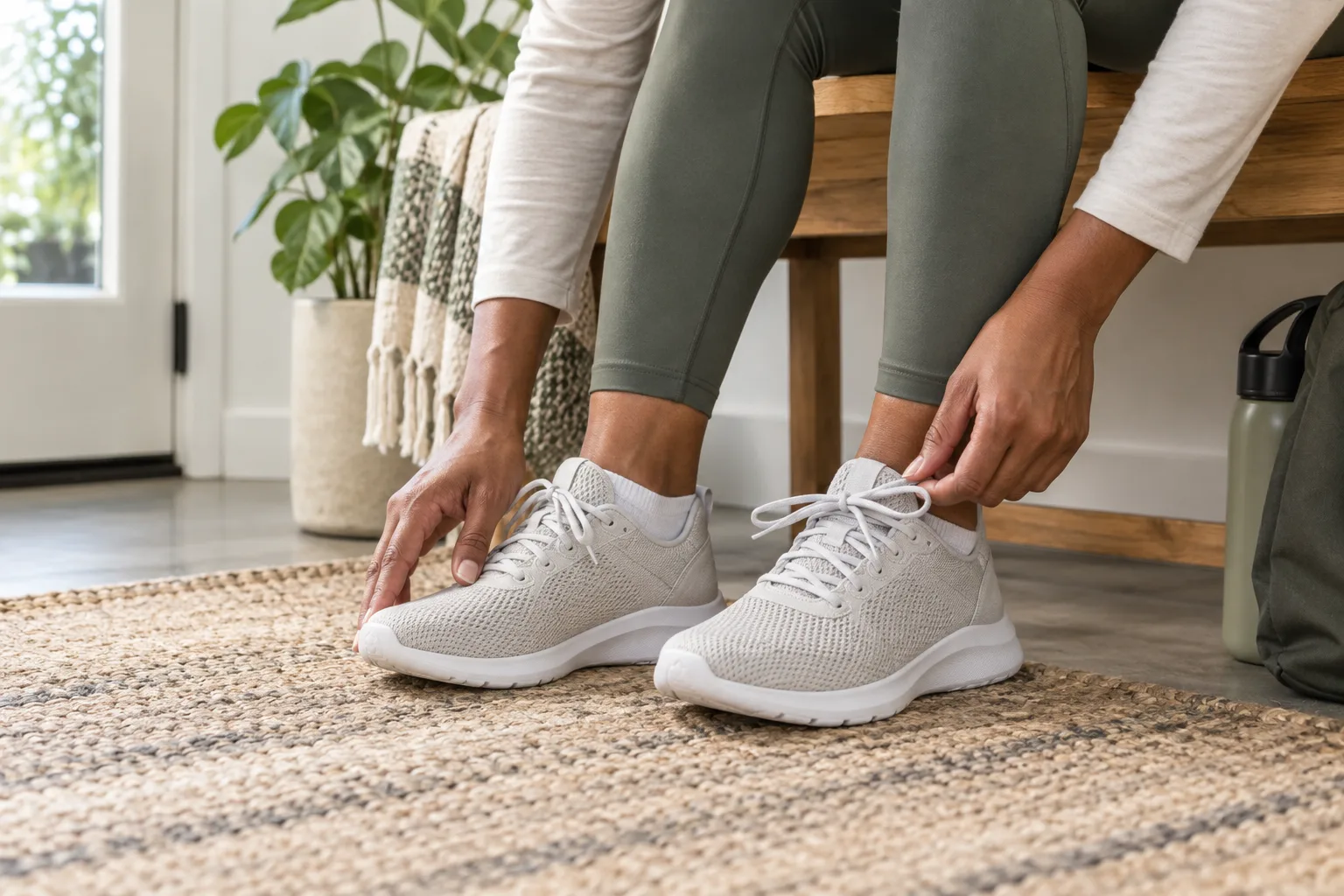
An Athletic Shoe Fit Checklist That Starts With Comfort
Use fit, stability and real movement—not hype or a familiar size number—to choose comfortable athletic shoes.