Jacket zipper problems: stuck sliders and separating teeth
Describe a stuck or separating jacket zipper, compare manufacturer care advice and prepare a useful repair enquiry without assuming a universal lubricant.
On this page
A zipper that will not move and a zipper that moves but leaves the jacket open are different problems. Before adding a product or buying a replacement part, describe what the fastening actually does. That observation can help you find the right care instructions or give a repair service useful information.
This guide concerns ordinary clothing. It does not assess protective clothing, watertight equipment or whether a repaired fastening meets a safety standard.
Describe the movement, not just the broken zip
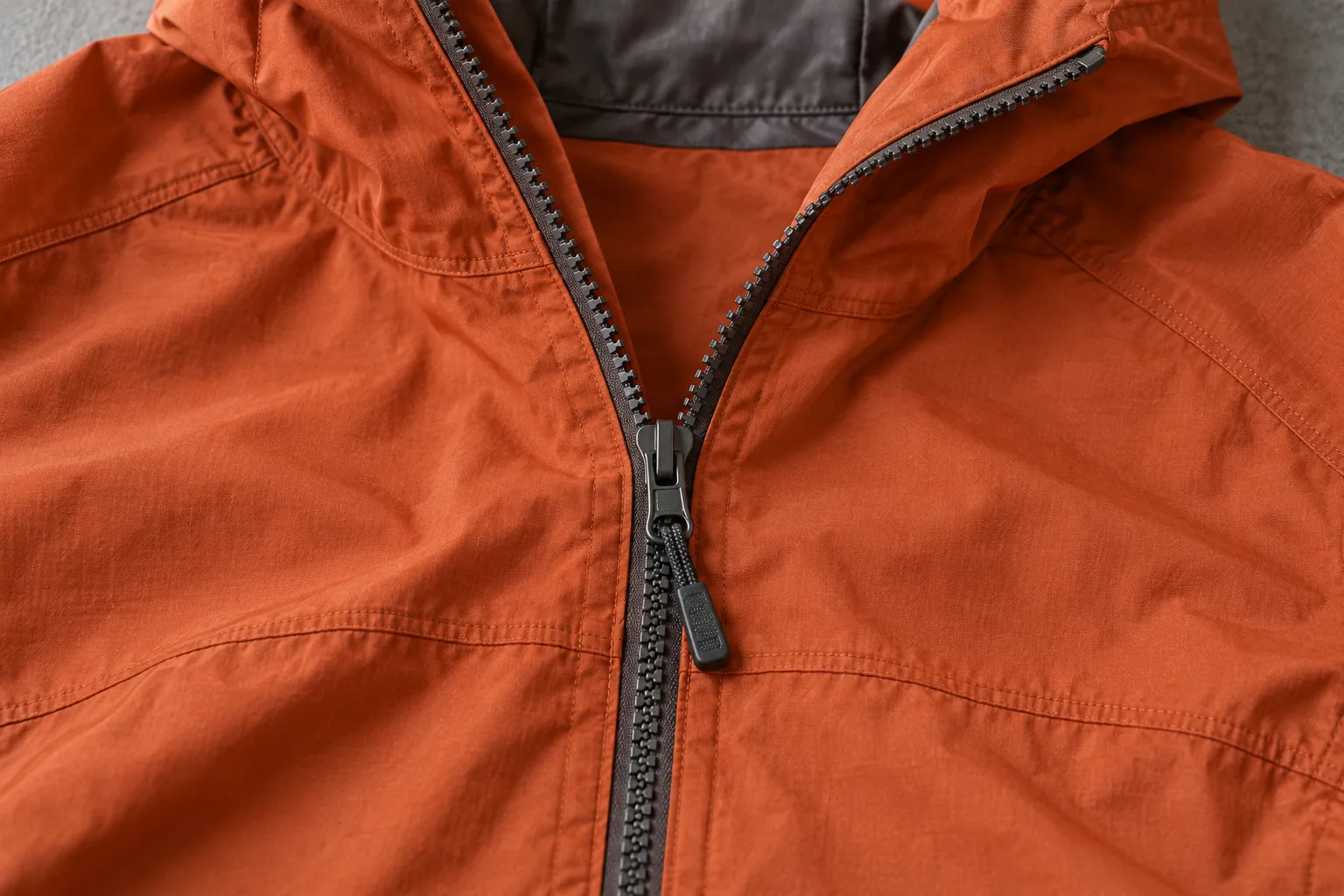
Look at the slider body, its pull-tab, the fastening elements and the fabric tape holding them. The pull-tab is the handle; it is not the whole slider. Our two-way and reversible zipper guide explains why opening arrangements and pull access are separate features.
Without forcing the fastening, note where movement stops and whether fabric is caught. If the slider already moves, record whether the chain stays joined behind it. Do not repeatedly run a damaged fastening up and down just to reproduce a fault for a video.
| What you see | Record | Avoid assuming |
|---|---|---|
| Caught lining | Fabric at slider | More force will help |
| Gritty movement | Visible dirt | Any lubricant is suitable |
| Chain opens behind slider | Where it separates | A pull-tab swap will fix it |
| Damaged teeth or tape | Location of damage | Cleaning replaces missing parts |
These descriptions do not diagnose the cause or identify a compatible spare part. Two faults can also occur together.
Separate trapped fabric from damaged components
Patagonia's zipper-care guide distinguishes coil, moulded plastic-tooth and metal-tooth constructions and explains that repair parts depend on the type. A similar-looking slider is therefore not enough evidence that a replacement fits.
For trapped fabric, Patagonia advises gentle movement while easing the fabric free. YKK's zipper precautions also warn against forcing a slider that has caught fabric. Stop if it does not release gently or the fabric starts tearing. Do not pull harder with a tool or cut into the lining as a general cleaning step.
If teeth are visibly damaged or the tape is torn, photograph that area and seek repair advice. A clean surface cannot replace a missing component.
Keep lubricant advice attached to its source
The two manufacturers do not give one interchangeable recipe. YKK's rough-slider section describes paraffin or wax on the elements. Patagonia's stubborn-zipper section advises against lubrication and favours removing dirt and general cleaning.
Do not combine those statements into “put wax on every jacket zip,” or treat one as permission to ignore your garment maker. Find the instructions for the finished item and the particular fastening. If they are unclear, ask before applying anything. Hand cream, cooking oil and household sprays are not substitutes established by these sources.
The useful question is specific: “What cleaning or lubricant, if any, is approved for this jacket's zipper?” Include the model reference rather than sending only a close-up of an unidentifiable pull-tab.
Check the whole garment before washing
YKK advises closing zippers for machine washing or drying and recommends a laundry net for long or slim pull-tabs that might catch in drum holes. Those component precautions do not make every jacket machine-washable.
Follow the garment's care label for the method, temperature and drying instructions. Our sportswear washing guide covers that broader decision. Do not force a jammed fastening closed simply to satisfy a laundry instruction; resolve the fault or obtain advice first.
Send a clear repair enquiry
Provide the garment model, a wider view of the fastening and close-ups of the fault. Include both the slider and the nearby teeth or coil. Report any product already applied and whether the problem began after cleaning or an obvious snag.
For example, a fictional message might say: “The slider reaches the chest, but the chain opens below it. No fabric appears trapped.” That describes an observation without claiming that a particular slider size, adjustment or replacement will solve it.
Practical takeaway
Locate the fault, avoid force and keep manufacturer-specific care advice intact. Treat cleaning, releasing trapped fabric and replacing damaged components as different tasks. A useful description is the starting point for appropriate help, not a guarantee that the zipper can be repaired at home.
Sources
- How to Fix a Zipper and Keep Your Gear Going, Patagonia
- Precautions — Proper Use of Zippers, YKK Southern Africa
Continue reading
Related articles

Cleaning hook-and-loop tabs: lint, washing and wear
Check clothing tabs for trapped lint, misaligned faces or lifting edges. Follow hook-and-loop care guidance without treating cleaning as a repair guarantee.
Tennis string patterns: mains, crosses and setup
Read tennis string patterns such as 16x19 and 18x20, count mains and crosses, and keep string thickness, full-bed or hybrid setups and tension separate.
Drying a hydration reservoir: bag, tube and bite valve
Dry the reservoir, hose and bite valve as separate parts. Check the complete drinking pathway before storage, with manufacturer-specific care instructions.