Swim Training Basics for New Lap Swimmers
Lap swimming becomes less intimidating when you know the lane etiquette, start with generous rests and focus on calm technique. Build a pool routine one short repeat at a time.
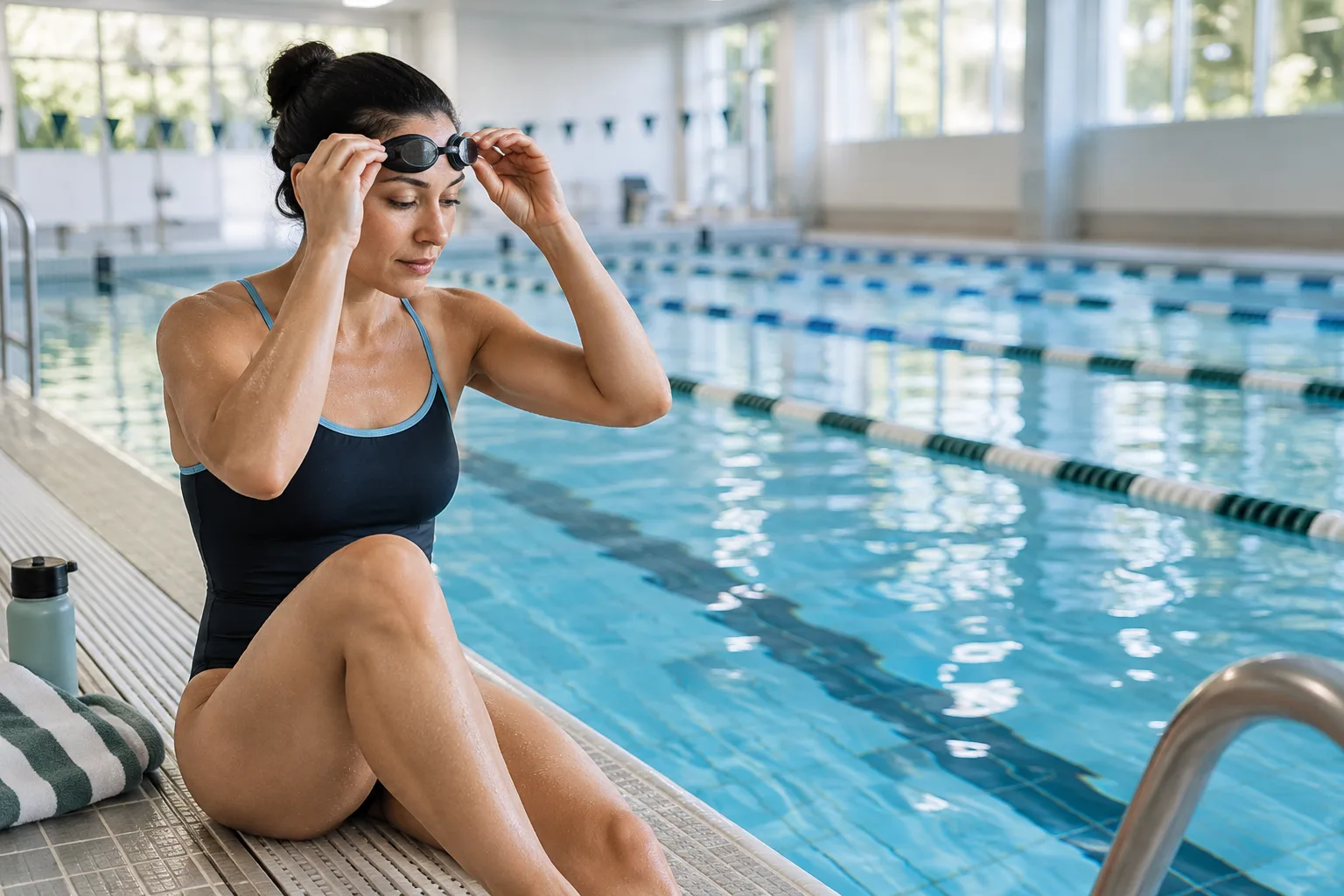
A lap pool can look like a place where everyone already knows the rules. In reality, swimmers pause, change strokes, use training aids and take rests of very different lengths. Your first goal is not to keep up with the fastest lane. It is to move safely and finish with enough energy to want to return.
If you cannot yet swim one pool length comfortably or feel anxious in deep water, begin with instruction rather than unsupervised laps. The World Health Organization’s drowning-prevention guidance treats basic swimming and water-safety skills as learned abilities. Fitness is not a substitute for water competence.
Choose the right setting
Use a supervised pool when possible and learn its rules before entering. Check the lane signs: facilities may organise lanes by speed, stroke or direction. Ask a lifeguard or staff member where a new lap swimmer fits. There is no embarrassment in choosing the slow lane.
The CDC’s healthy and safe swimming guidance notes that pools and other water venues carry risks of illness, injury and drowning. Do not swim when you have diarrhoea, avoid swallowing pool water and follow local hygiene requirements. Showering before entering helps keep contaminants out of the pool.
Understand basic lane etiquette
When two swimmers share a lane, they may split it, each staying on one side. With more swimmers, the pool may require circle swimming in a set direction. Confirm the arrangement before pushing off.
- Enter only when approaching swimmers can see you.
- Leave space before starting behind another swimmer.
- At the wall, move to one side so others can turn or finish.
- If someone repeatedly catches you, let them pass at the wall.
- Pass only under the facility’s rules and when the other swimmer knows your intention.
Courtesy is more useful than guessing. A short conversation prevents most lane confusion.
Build a first session from short repeats
Start with several minutes of easy movement in the shallow end or a few relaxed lengths. Then swim short repeats—perhaps one length at a time—with generous rest. Focus on a smooth exhale into the water, an unhurried stroke and a pace you can reproduce.
A simple session can have three parts:
- Easy warm-up lengths with rest whenever needed.
- A main set of repeated short swims at a comfortable effort.
- Several very easy lengths to finish.
The total distance matters less than keeping the repeats controlled. Stop before technique unravels. U.S. Masters Swimming’s beginner guidance similarly recommends starting with a few laps, increasing gradually and seeking stroke feedback from a coach because swimming is highly technique-dependent.
Use equipment selectively
Comfortable goggles can make it easier to stay relaxed and aware. A swim cap may keep hair contained and reduce distraction. A kickboard, pull buoy or fins can change the session, but each also changes how your body moves. Use facility equipment only as intended and ask an instructor when you are unsure.
Inflatable toys and casual “floaties” are not safety devices. In open water or activities that call for buoyancy protection, use an appropriately approved and fitted life jacket. Pool lap training and open-water swimming involve different hazards; do not treat pool fitness as proof that unfamiliar open water is safe.
Progress one variable
Return once or twice a week until the routine feels familiar. Then add a small number of lengths, shorten a few rest periods or include a little technique practice—but not all three at once. Shoulders often notice sudden volume increases, so resist the urge to match a past distance on day one.
Stop if you feel chest pain, faintness, confusion, unusual breathlessness or pain that changes your stroke. Signal for help rather than trying to reach a distant end alone. People with health concerns should seek individual advice before beginning vigorous pool training.
Practical takeaway
For your first visit, choose a supervised pool, ask which lane to use and swim short, relaxed repeats with plenty of rest. Learn the lane pattern before joining, finish while your technique still feels calm and add only a little distance next time. If basic water confidence is missing, book instruction first.
Sources
- Guidelines for Healthy and Safe Swimming, Centers for Disease Control and Prevention
- How Can I Start a Lap Swimming Routine?, U.S. Masters Swimming
- Preventing drowning: practical guidance, World Health Organization
Continue reading
Related articles

A Beginner’s Guide to Returning to Running Gradually
Returning to running is easier to manage when walking, running and rest each have a role. Build time before speed and let a repeatable week matter more than a fast start.

Choosing a Sport for a Young Person: Interest, Access and Safety First
There is no single best sport for a young starter. Begin with the young person’s interests, access needs and safety, then look for supportive coaching, varied movement and room to change course.

Athletics Throwing Events: Shot Put, Discus, Hammer and Javelin
The standard English term is “throwing events.” Learn how shot put, discus, hammer and javelin differ in equipment, competition area and what makes an attempt valid.