A Gentle Mobility Routine for Stiff Days
A short mobility break can help you explore comfortable movement without turning the session into a performance. Use this calm sequence after sitting or whenever your body wants a reset.

Some days, the most appealing movement is not a workout at all. It is a few unhurried minutes to turn, reach and bend after staying in one position for too long. Mobility practice can be that simple: exploring a comfortable range while paying attention to how the movement feels today.
Flexibility and mobility overlap, but they are not identical. Flexibility describes how far tissues and joints can allow a position; mobility includes the control needed to move through a useful range. Neither requires dramatic poses. The NHS overview of strength and flexibility connects flexibility with the movement needed for daily tasks.
Start with comfort, not maximum range
Use a stable chair or wall for support and clear the floor around you. Move slowly enough to notice tension before it becomes strain. A gentle pulling sensation can be a cue to pause; sharp pain, numbness, dizziness or a feeling of instability is a cue to stop.
Breathe normally and avoid bouncing. Your range may differ from one side to the other and from one day to the next. The goal is not to force the sides to match. It is to move with control.
A simple head-to-toe sequence
Work through the following movements once, then repeat any that feel especially useful. Keep the entire routine easy.
- Head turns: sit or stand tall with relaxed shoulders. Slowly look to one side, return to centre and look to the other side. Keep the movement small if your neck feels sensitive.
- Shoulder circles: lift your shoulders gently, guide them back and let them settle. Reverse the direction after several slow circles.
- Open-and-close reach: bring your hands forward as though holding a large ball, then open your arms comfortably while keeping your ribs relaxed.
- Side reach: with one hand supported, reach the other arm up and slightly over. Think of length through the side rather than leaning as far as possible.
- Standing hip circles: hold a chair and trace small circles with your hips. Keep both feet planted and change direction.
- Ankle circles: sit, lift one foot slightly and draw slow circles with the toes. Repeat on the other side.
- Supported calf stretch: place your hands on a wall, step one foot back and keep that heel comfortably toward the floor. Change sides without forcing the position.
The official NHS flexibility routine includes gentle neck rotation, a side bend and a wall-supported calf stretch, with the advice to build up slowly. Its examples are particularly useful for seeing how modest a mobility session can be.
Add movement where your day needs it
A routine is easier to remember when it has a clear cue. Try two or three movements after a long call, while the kettle boils or before an afternoon walk. You do not have to complete the full sequence every time. A one-minute shoulder and ankle reset still changes position and interrupts a static spell.
Mobility can also prepare you for another activity. Before a walk, use controlled ankle circles, easy marching and small hip movements. Before a home strength session, practise the same patterns you plan to load, but with little or no resistance. The warm-up should leave you ready, not tired.
Know what mobility cannot do
A general routine cannot diagnose the reason for persistent stiffness, and more stretching is not the answer to every discomfort. Recent injury, swelling, loss of strength, altered sensation or pain that does not settle deserves individual assessment. If a clinician has given you movement restrictions, follow that advice rather than a general online sequence.
It is also possible to make mobility too competitive. Photos and videos often show the end of a range, not the preparation or individual anatomy behind it. Measure progress by smoother movement, easier daily tasks and a routine you can repeat—not by copying someone else’s shape.
Build gradually
Repeat the sequence two or three times during the week before adding anything. If it feels comfortable, spend a little longer on each movement or add a second pass. Strength work through a comfortable range can complement mobility practice, while walking and other aerobic activity contribute different benefits.
Keep a simple note of movements you enjoy and those that feel awkward. That personal shortlist will eventually be more useful than a long generic routine.
Practical takeaway
Pick four gentle movements from the sequence and attach them to one daily cue. Move slowly, breathe normally and stay well within a comfortable range. After a week, keep the movements that help you feel ready for the rest of your day and leave out those that do not.
Sources
- Flexibility exercises, National Health Service
- How to improve your strength and flexibility, National Health Service
Continue reading
Related articles
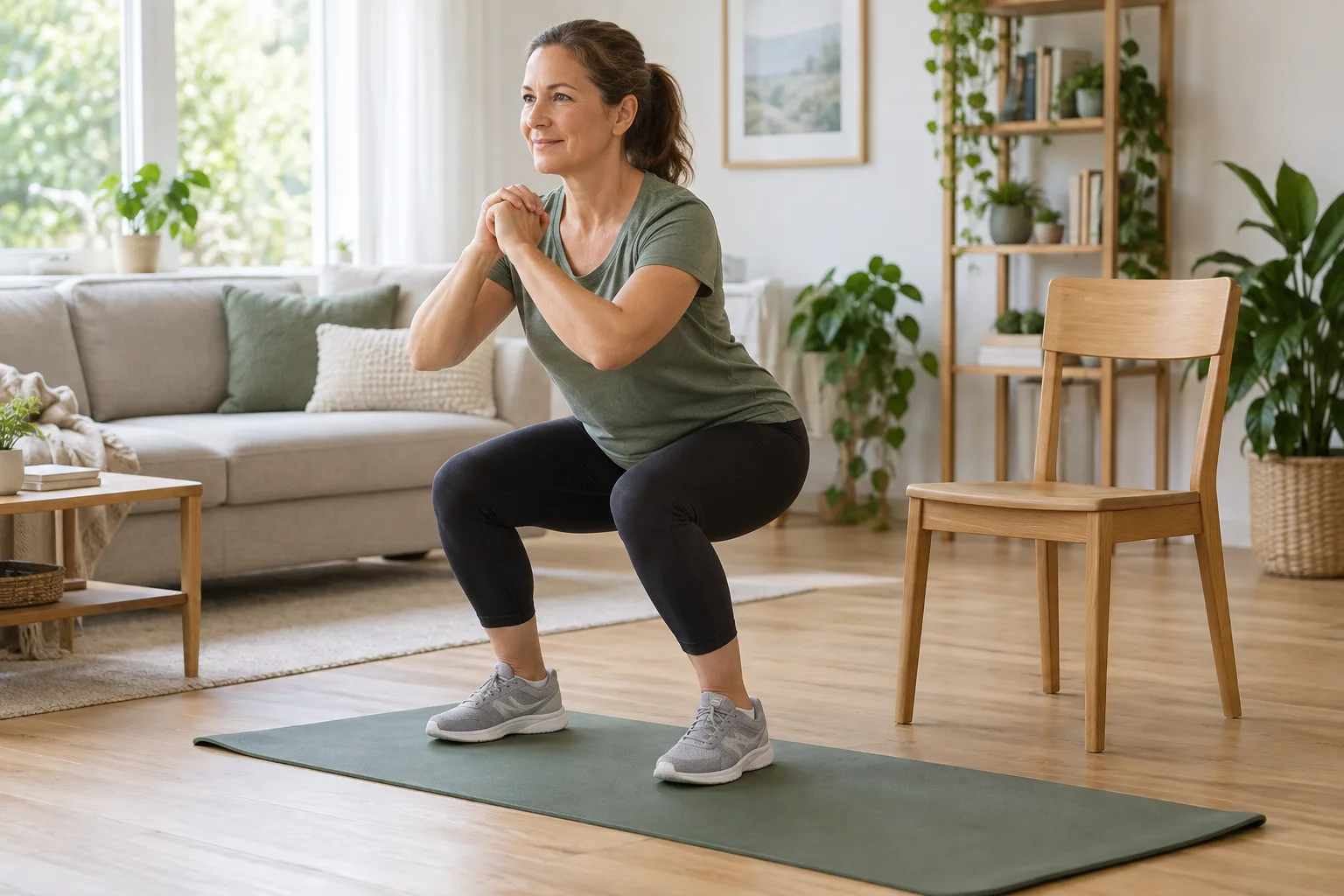
Your First Full-Body Strength Routine at Home
You can learn the foundations of strength training with a chair, a wall and a few controlled movements. This beginner framework focuses on consistency, technique and gradual progress.

A Practical Walking Plan You Can Actually Keep
A useful walking routine does not need an impressive step count or a punishing pace. Start with the time and energy you have, then build a week that is easy to repeat.

Exercising Safely in Hot and Humid Weather
Heat and humidity can turn a familiar workout into a much harder effort. Plan around the conditions, slow the pace and know when the safest decision is to stop.