Plan Snacks That Actually Satisfy
Turn snacks from random grazing into simple, satisfying mini-meals that fit your appetite, schedule, budget, and food preferences.
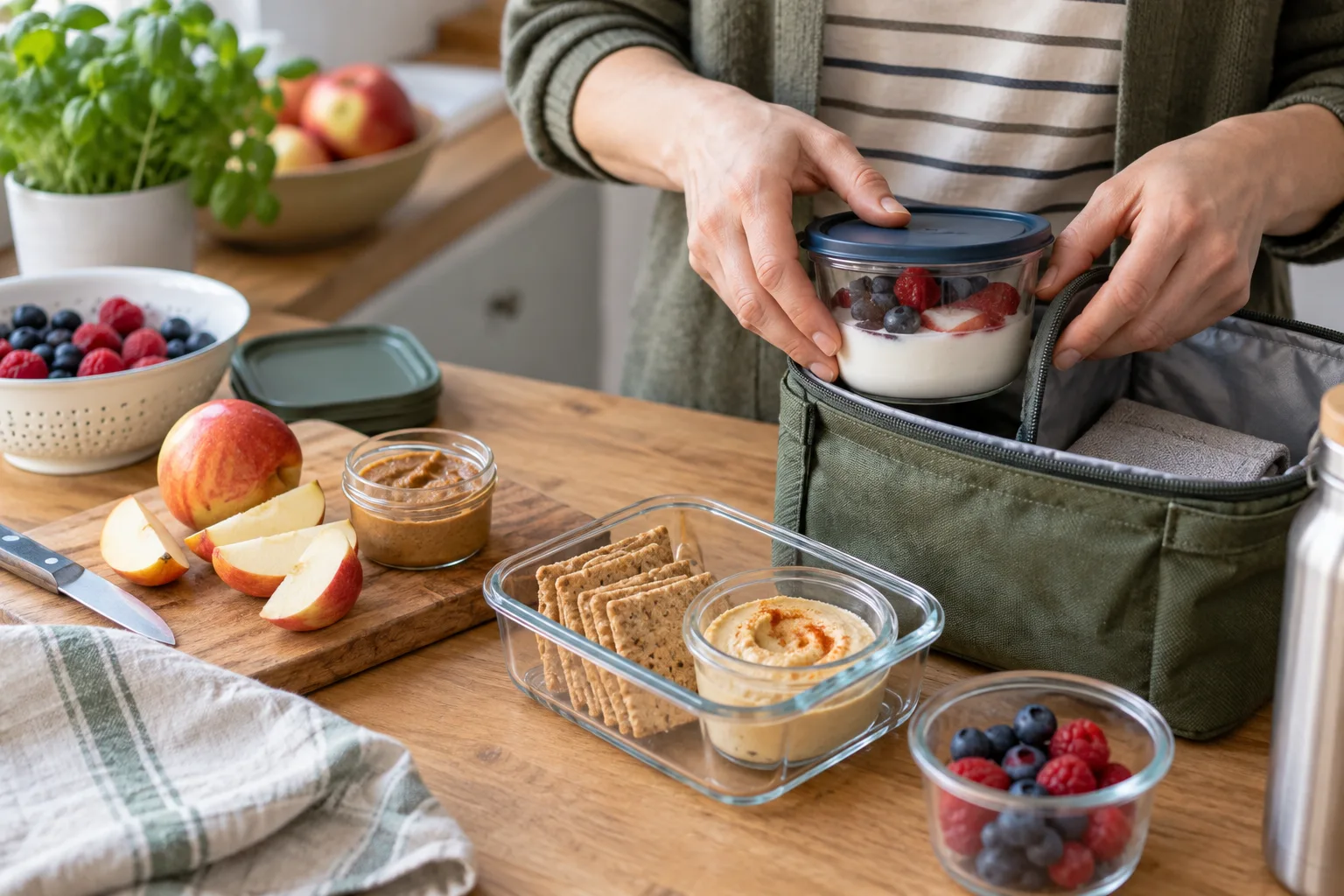
A snack can be a bridge between meals, a response to real hunger, or a convenient way to eat when a full meal is not possible. It can also become something you barely notice while working or scrolling. The difference is not willpower. Planning makes a satisfying option easier to reach before hunger and convenience make the decision for you.
There is no universal requirement to snack. Some people feel best with three meals, while others need food between them because of schedule, activity, medication, life stage, or appetite. The goal is to make snacks useful when you choose them.
Ask what the snack needs to do
If the next meal is an hour away, fruit or a few crackers may be enough. If you need to bridge a long afternoon, a more substantial combination will probably feel better. Think about time, hunger, and what was missing from the previous meal.
A satisfying snack often combines two kinds of food: fruit or vegetables with a protein or dairy food, or a whole grain with a protein food. The USDA's MyPlate snack guide suggests combinations such as yogurt with berries or apple with nut butter. These are examples, not mandatory pairings.
Build a short personal list
Write down five options you genuinely like and can usually afford. Include at least two shelf-stable choices for days when the refrigerator is empty or you are away from home.
- Fruit with yogurt, cheese, nuts, seeds, or a suitable alternative.
- Vegetable sticks with hummus or another bean dip.
- Whole-grain toast or crackers with egg, tuna, tofu, or nut or seed butter.
- Plain popcorn with a piece of fruit.
- A small portion of leftovers when snack foods will not be enough.
Adapt for allergies, cultural preferences, chewing needs, refrigeration, and dietary restrictions. A snack does not need to look traditional. Soup, rice and beans, or half a sandwich may be the most practical choice.
Put convenience in the right place
The CDC's meal and snack guidance recommends keeping nutritious options available at home or work and placing the amount you plan to eat in a bowl or container instead of eating directly from a package. Prepare only as much as your week realistically allows.
Wash a few pieces of fruit, portion crackers into reusable containers, or keep tins of fruit, beans, or fish where appropriate. Put foods that need using soon at eye level. A visible option is more likely to become the easy option.
Check packaged snacks without chasing perfection
Packaged foods can be helpful. Compare similar serving sizes and look at the nutrients relevant to you, such as fiber, sodium, added sugars, or protein. Price, portability, taste, and shelf life also matter. A product does not need the best number in every column to fit an overall eating pattern.
If a large bag tends to disappear during a distracted activity, divide some into a bowl and put the bag away. If a pre-portioned pack prevents food waste or travels well, the extra packaging may be a tradeoff you consciously choose.
Notice the setting as well as the food
Sit down for the snack when possible. Remove one distraction and taste the first few bites. Halfway through, check whether it is meeting the hunger you had. This does not require slow-motion eating or stopping before you are satisfied. It simply helps the snack register as food rather than background activity.
Sometimes the urge to snack is fatigue, boredom, stress, thirst, or the need for a break. You can address that need and still choose to eat. The point of noticing is to expand your options, not to prove that hunger is legitimate.
Protect regular meals
A snack that repeatedly becomes a meal may signal that your schedule needs a planned small meal instead. Conversely, skipping food to compensate for an earlier snack can create a cycle of intense hunger. Aim for a rhythm that keeps energy and appetite manageable.
People managing diabetes, kidney disease, food allergies, pregnancy needs, gastrointestinal conditions, or eating-disorder recovery may need individualized snack guidance from a qualified professional.
Practical takeaway
Choose two satisfying snack combinations and place the ingredients where you will need them this week. Match the size to the time until your next meal, use a bowl or container when a package is large, and eat with enough attention to notice satisfaction. A planned snack is not a dietary loophole or a failure of discipline; it is simply one more way to care for hunger in a busy day.
Sources
- How to Have Healthier Meals and Snacks, U.S. Centers for Disease Control and Prevention
- Healthy Snacking With MyPlate, U.S. Department of Agriculture
Continue reading
Related articles
Portion Awareness Without Rigid Food Rules
Learn the difference between a serving and a portion, then use appetite, context, and simple visual cues without measuring every meal.

Sport and Weight Management Across Life: Start Safely and Build Consistency
Sport can support health and enjoyment at many ages, but one plan does not fit children, adults and older adults. Choose appropriate activity, start gradually and value benefits beyond weight.

Intimacy, Physical Activity and Weight: Keep Calorie Claims in Perspective
Sexual activity uses energy, but narrow studies do not justify calorie tables, position rankings or weight-loss promises. Put consent, comfort, pleasure and health ahead of exercise metrics.