Rain-jacket 2L and 3L labels: what the layers mean
Understand bonded layers in rain jackets, read a 3L product example, and keep lining, insulation and DWR separate when comparing shell specifications.
On this page
A jacket described as “3L” is still one jacket. In a rain-shell specification, the number usually describes its fabric construction, not a base layer, fleece and coat supplied together. Confusing those two meanings can make a thin shell sound like an insulated outfit.
The useful question is what has been bonded together. Start there, then check insulation, fit and the finished garment separately. This guide explains the 2L and 3L constructions below; it is not a ranking of every waterproof fabric.
Count the bonded components
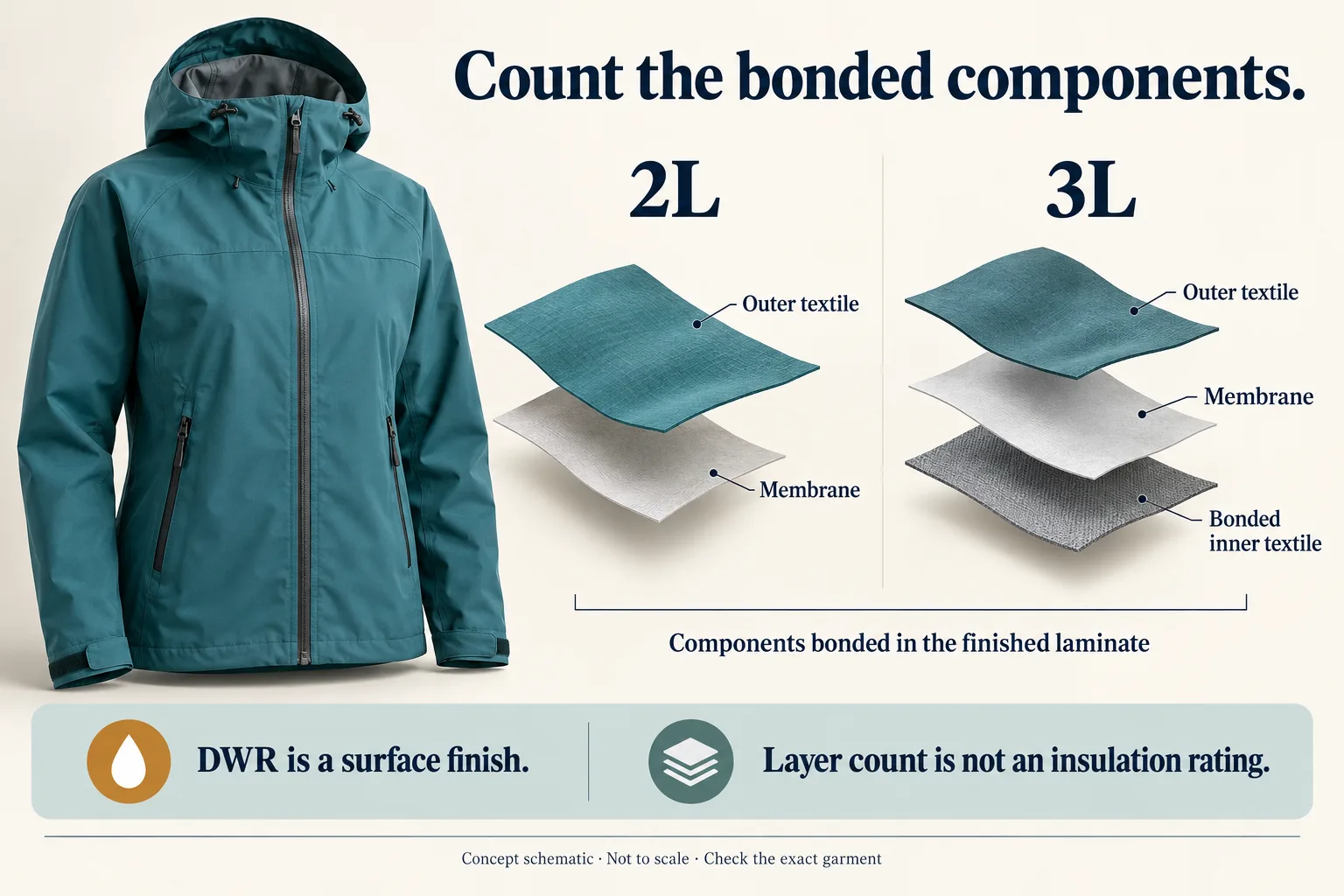
The GORE-TEX technology FAQ describes a two-layer combination of outer textile and membrane, and a three-layer combination that also includes an inner textile. Lamination bonds the components together.
For that 2L construction, count the outer textile and membrane as the pair. Do not count every piece found inside the finished jacket and then rename its fabric. A separately attached lining, if present, is a different construction detail from a textile bonded into the laminate.
For 3L, look for the outer textile, membrane and bonded inner textile. These are not three removable jackets. “Three layers” also does not specify three equal thicknesses or three equally weighted components. A diagram that separates them is explaining their relationship, not showing a measured cross-section.
Keep a backer separate from an outfit
Montane’s GORE-TEX construction explanation describes the membrane bonded to both the outer fabric and inner lining in its three-layer section. It also describes a knit polyester backing material. “Backer” here identifies the inner part of the fabric construction.
That is different from the fleece you might choose to wear underneath. Ask separately whether a jacket includes insulation or a removable inner garment. A 3L designation alone does not answer either question or supply a temperature rating.
When checking fit, consider the clothing you actually plan to wear beneath the shell. Our outdoor clothing-layer guide discusses that separate outfit decision. Do not transfer its base, middle and outer-layer terminology onto the three components of a laminated fabric.
Read an exact product’s materials
The Patagonia Men’s Torrentshell 3L, style 85241, provides a concrete example. Its materials section identifies a nylon ripstop face, a polyurethane membrane and a tricot backer. It also lists a durable water repellent finish.
Read those as named parts and treatment, rather than treating every item in the sentence as another numbered fabric layer. The DWR mention does not turn the product into a “4L” jacket. Nor does the nylon description automatically describe the membrane and backer.
Use the exact style reference when comparing details. Do not assume another jacket with a similar name, a different generation or a different fabric uses the same arrangement. This example explains the listing; we have not cut open, worn or rain-tested the product.
Distinguish the surface finish
Gore’s DWR explanation distinguishes the treatment on the face textile from the waterproof membrane. The treatment helps water bead on the outer surface. The membrane performs a different role within the construction.
A change in surface beading does not, by itself, identify a failed membrane. Equally, beads on a fabric are not a complete test of the jacket’s seams, closures or overall rain protection. For diagnosis or care, use the exact garment’s instructions rather than selecting a wash, heat or reproofing treatment from its layer count.
Make a short comparison card
Keep these questions beside the model name when comparing two listings:
| Field | Record | Ask |
|---|---|---|
| Laminate | 2L or 3L | Which parts are bonded? |
| Inside | Lining; insulation | Bonded or separate? |
| Finish | DWR details | Which care instructions? |
Gore’s FAQ also identifies seam sealing and garment construction as relevant to the finished product. A layer number is therefore only one field, not a substitute for the complete specification. If a seller gives only “three-layer protection”, ask what that phrase refers to before treating it as a laminate description.
Practical takeaway
Read 2L and 3L as construction information in context. Identify the bonded components, then check lining, insulation, closures and fit independently. Keep unknown details visible instead of inferring warmth or performance from the larger number. Explore more product-description explainers in Activewear & Gear.
Sources
- GORE-TEX frequently asked questions, GORE-TEX
- GORE-TEX technology, Montane
- Men’s Torrentshell 3L Rain Jacket — style 85241, Patagonia
- Durable Water Repellent (DWR), GORE-TEX Professional
Continue reading
Related articles
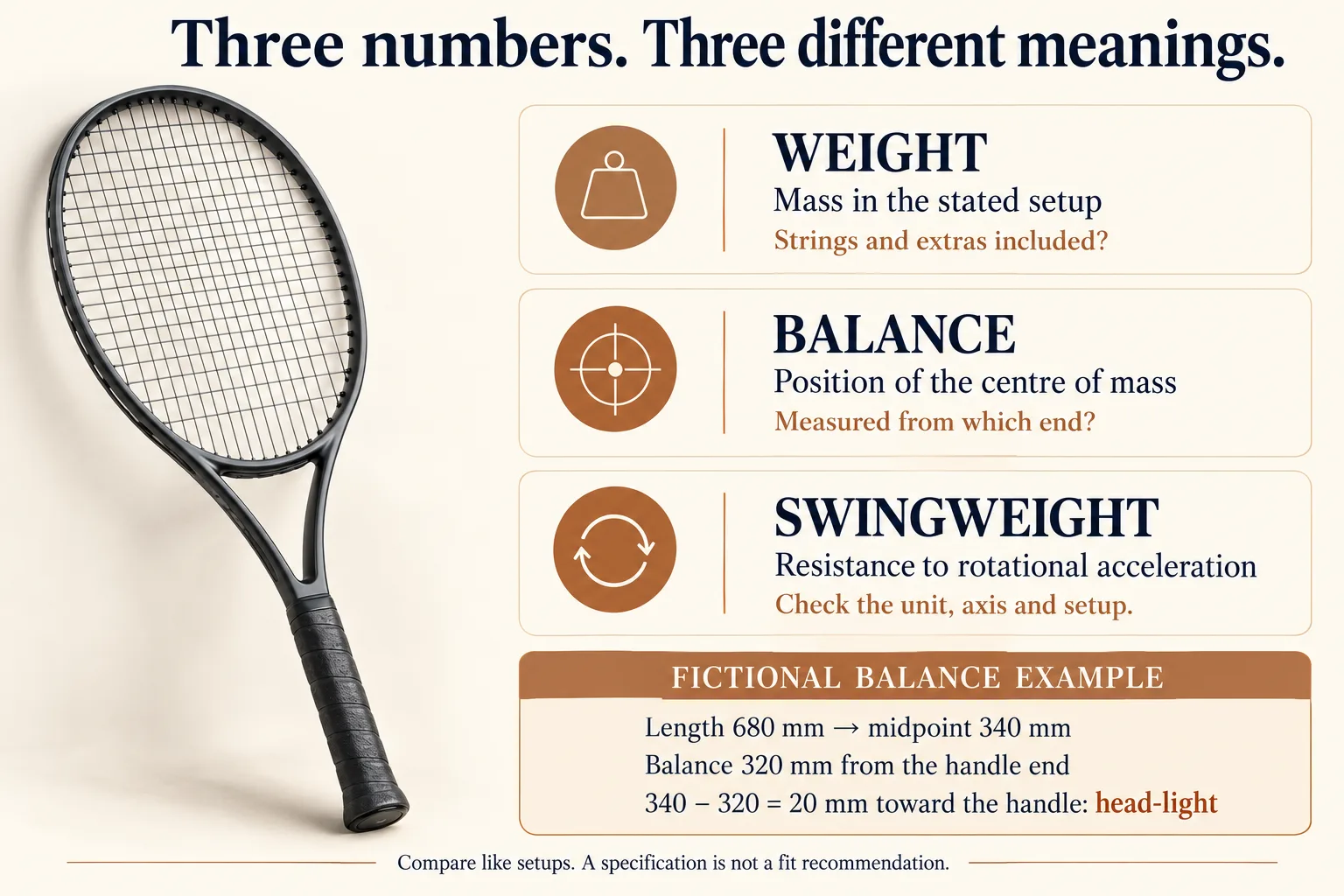
Tennis racket weight, balance and swingweight explained
Compare racket weight, balance and swingweight without mixing units or setups. Read strung and unstrung labels and work through a simple balance example.

Shoe weight: per shoe, per pair and reference size
Compare shoe-weight labels without mixing pairs, single shoes or reference sizes. Read three manufacturer examples and work through simple fictional totals.
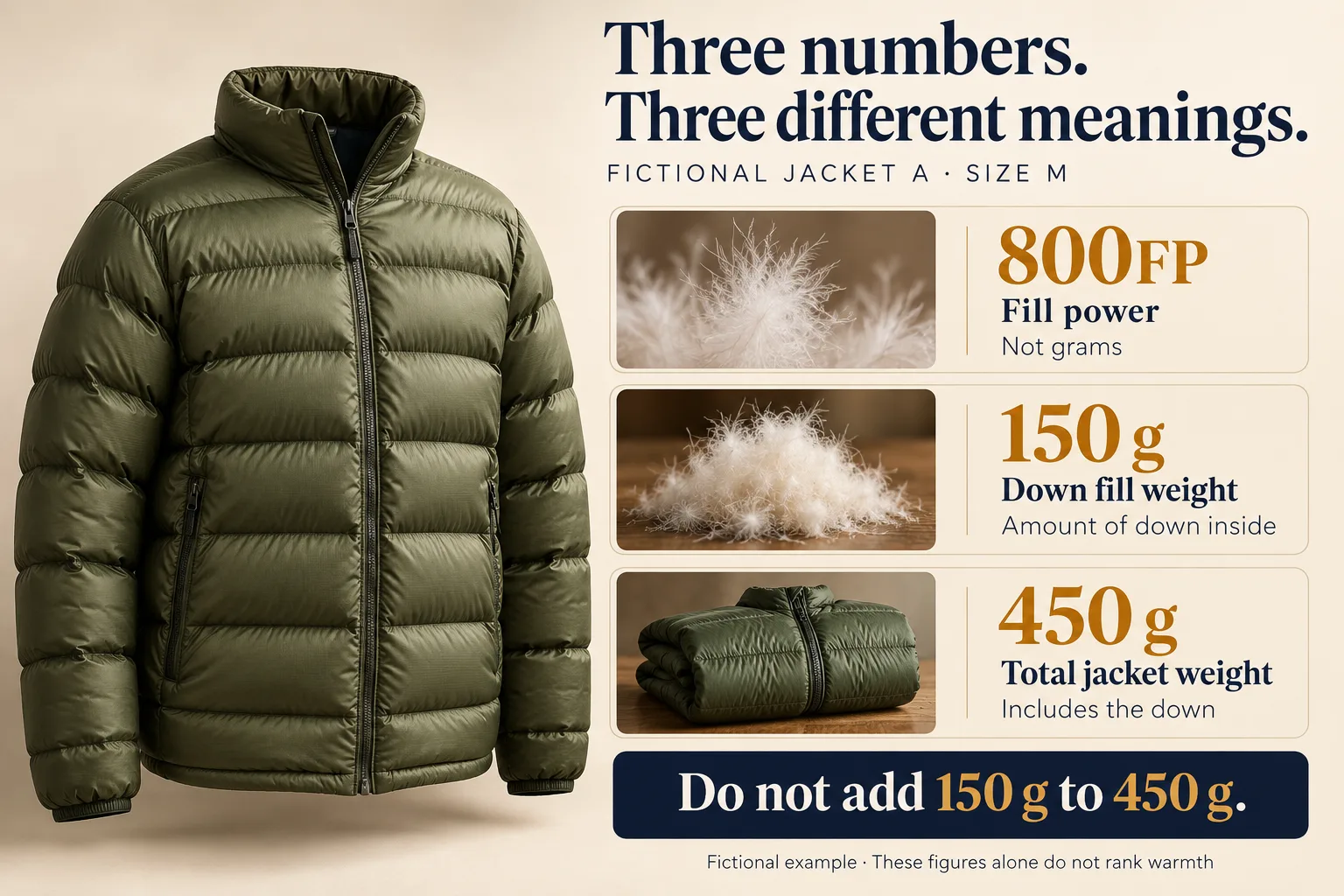
Down-jacket labels: fill power, fill weight and total weight
Read down-jacket fill power, fill weight and total weight separately, using a current Rab example and a fictional comparison without inventing warmth ratings.