Tennis racket weight, balance and swingweight explained
Compare racket weight, balance and swingweight without mixing units or setups. Read strung and unstrung labels and work through a simple balance example.
On this page
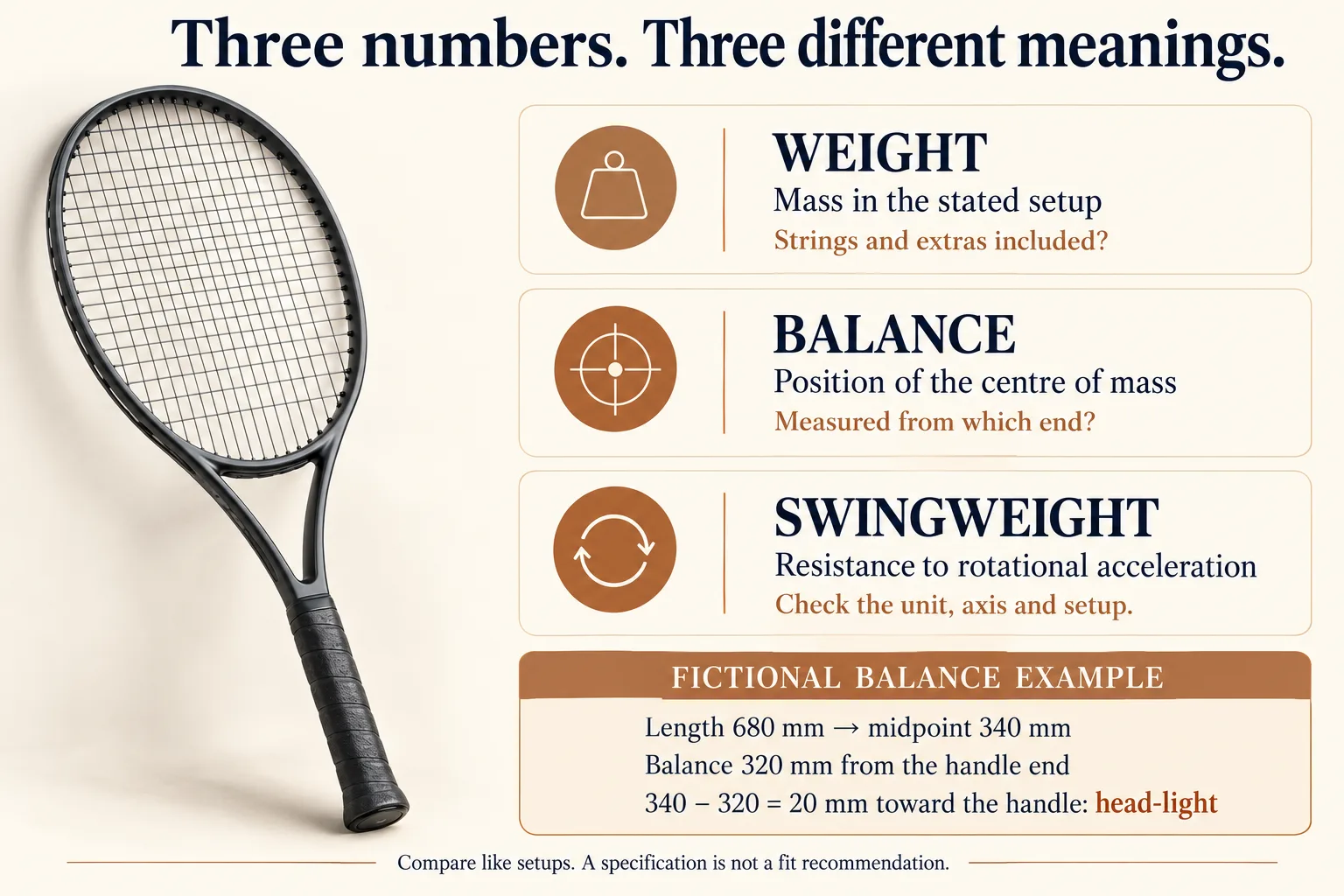
A racket can be listed as 300 grams, have a balance point of 320 millimetres and carry a swingweight number near 300. Those figures are not three versions of the same measurement. They describe mass, its distribution and resistance to a change in rotational motion.
Read them together, but keep their units and measurement conditions separate. This guide explains how to compare listings; it does not prescribe a racket weight, promise injury prevention or report a hands-on test.
Match the weight to the setup
Product listings commonly call mass “weight.” The gram figure describes the racket in the stated configuration. An unstrung figure excludes strings; it is not the mass of the same racket after strings and extra accessories have been added.
For example, the Babolat Pure Drive Gen11 listing gives 300 g ± 7 under its unstrung weight heading and 320 mm ± 7 under unstrung balance. Keep those qualifications in your notes. Do not turn the nominal 300 g into a promise that every individual racket weighs exactly that amount.
If comparing a shop measurement with that listing, ask whether the measured racket includes strings, an overgrip or other accessories. A difference between unlike setups does not establish a manufacturing error. Nor should you subtract a guessed, universal string weight to make the numbers agree.
Check what “strung” describes
The Boost Strike Strung page illustrates a separate trap. It identifies the product as strung, while its technical weight and balance headings say unstrung. The sale configuration and the specification conditions answer different questions.
That page also contains conflicting weight figures across its descriptive and technical sections, so we are not using it to compare numeric weights. Ask for clarification rather than selecting whichever figure looks preferable. Even a manufacturer’s page needs to be read as a whole.
Locate the balance point
Crawford Lindsey’s Tennis Warehouse University explanation defines the balance point as the position where the racket balances on a narrow support. It is the centre of mass. A distance measured from the handle end locates that point along the racket.
Compare it with half the racket’s length. At the midpoint the balance is even; toward the handle it is head-light; toward the tip it is head-heavy. These terms locate the centre of mass. They do not simply count how much material lies in each half.
Consider a fictional racket 680 mm long, with its balance point 320 mm from the handle end. Half its length is 340 mm, so the balance lies 20 mm toward the handle: head-light. The 320 mm figure is neither the handle length nor the distance from the tip. This is an arithmetic example, not a specification for either Babolat model above.
Keep swingweight separate
Swingweight concerns resistance to changing rotational motion about a specified axis. It depends on where mass is distributed relative to that axis, not just the total grams. It is not a second scale reading, and a lower total mass alone does not establish a lower swingweight.
A 2025 racket study’s methods show why conditions matter: the researchers reported mass in grams and swingweight in kg·cm², tested strung rackets with grip tape removed, and specified their rotational reference. Those are that experiment’s conditions, not universal factory specifications.
The Pure Drive page lists “Swing Weight 290” without an explicit unit or strung/unstrung qualifier beside that entry. Do not silently borrow the neighbouring headings. Ask which setup and measurement convention produced it before comparing it with another source.
Build a comparison card
Start with the exact model, generation and grip variant. Then keep these three rows separate:
| Field | Record | Confirm |
|---|---|---|
| Weight | Mass and unit | Strings or extras? |
| Balance | Distance; length | Measured from which end? |
| Swingweight | Value and unit | Setup and method? |
Mark missing answers as unknown. Our racket grip guide explains the separate size labels and grip layers; a matching grip code does not confirm a matching overall setup.
Practical takeaway
Compare like configurations, keep each number with its heading and resolve contradictions before ordering. Specifications help describe equipment, but do not establish how a particular racket will suit you. Explore more label-reading guides in Activewear & Gear.
Sources
- Pure Drive Gen11 Unstrung, Babolat
- Boost Strike Strung, Babolat
- Weight, Balance and Swingweight, Tennis Warehouse University
- Definition of feel-related impact parameters of tennis rackets and correlations with racket properties, Sports Engineering
Continue reading
Related articles
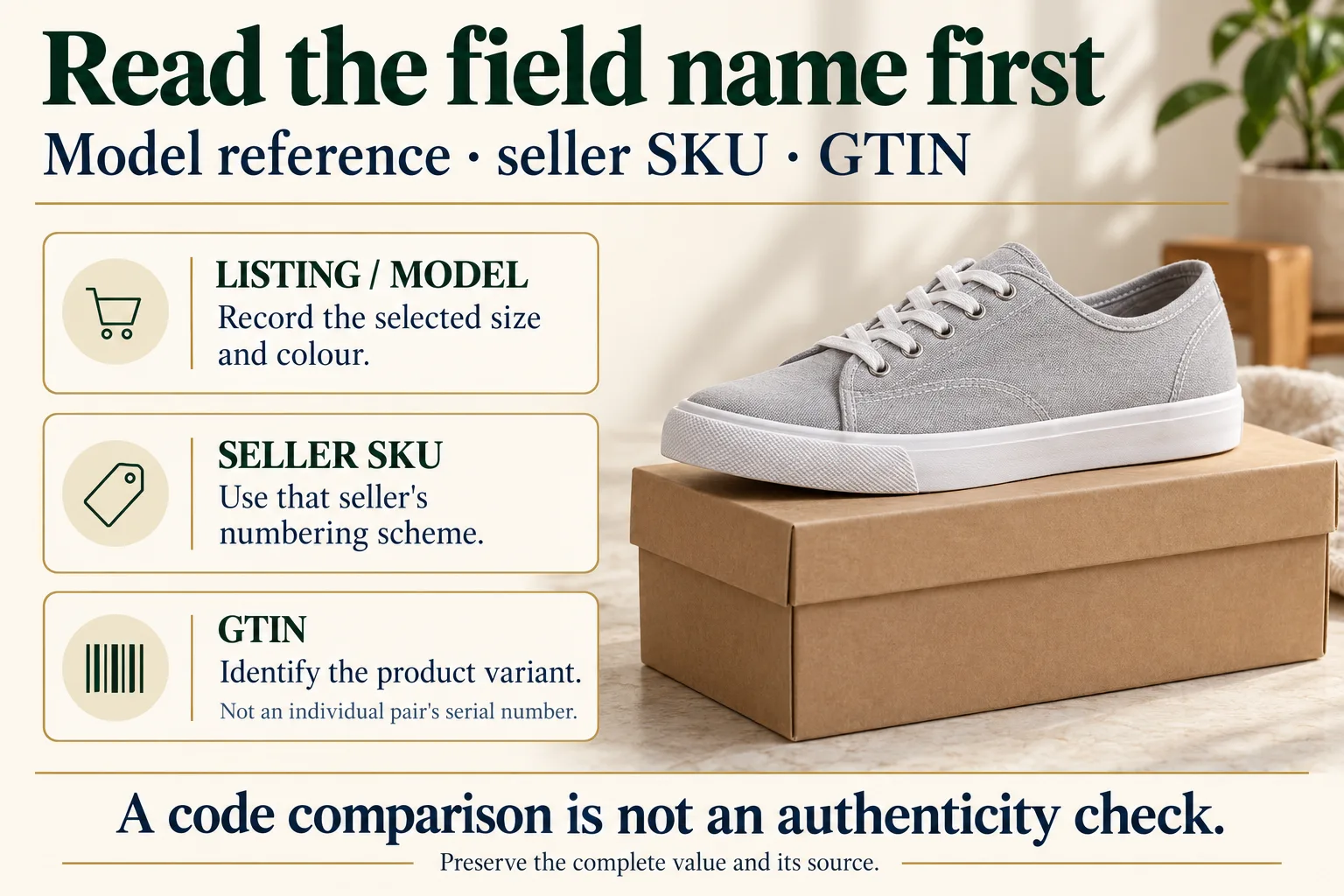
Shoe product codes: model references, SKUs and GTINs
Understand model references, seller SKUs and GTINs. Compare exact shoe variants, keep size labels intact and ask useful questions when product codes differ.
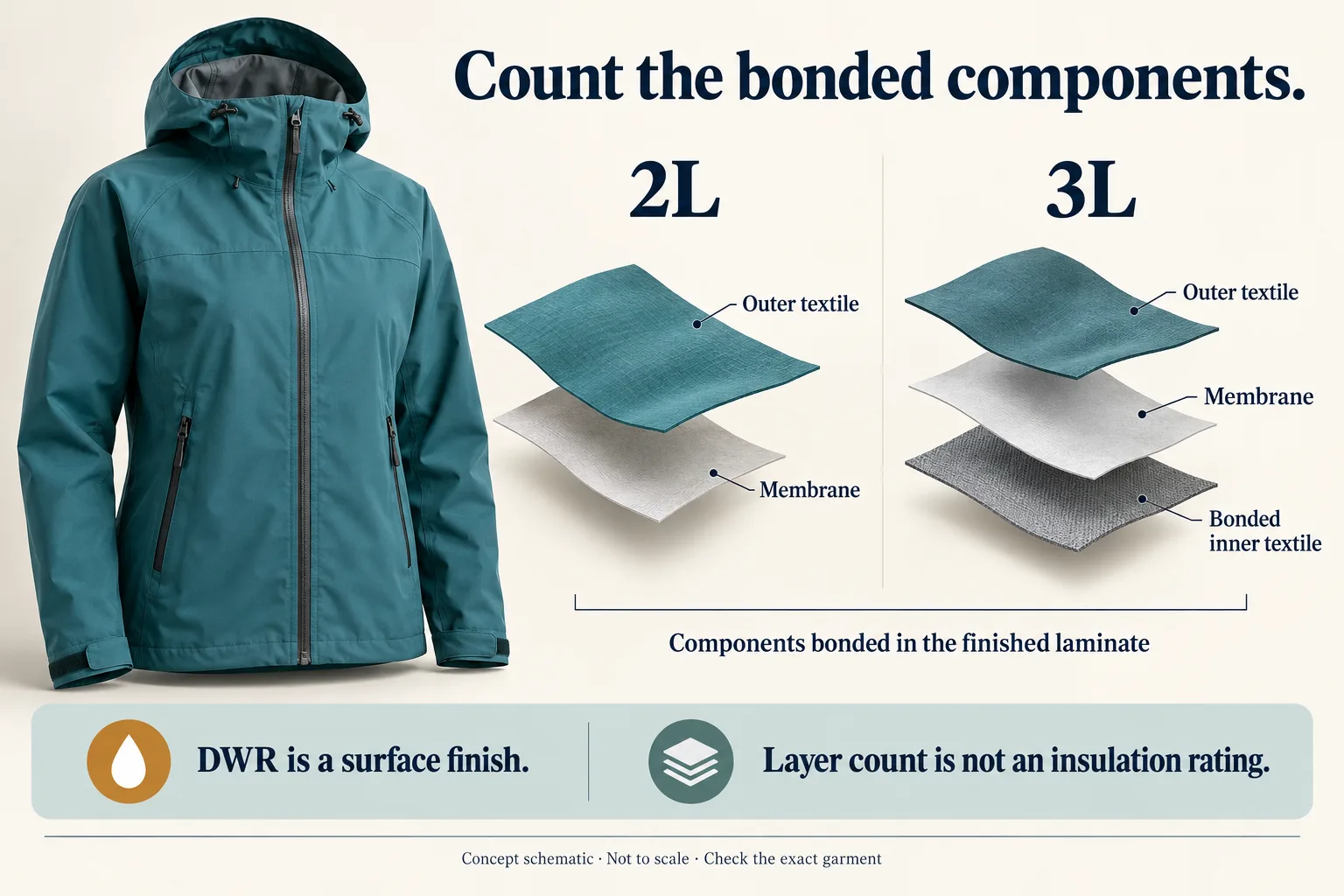
Rain-jacket 2L and 3L labels: what the layers mean
Understand bonded layers in rain jackets, read a 3L product example, and keep lining, insulation and DWR separate when comparing shell specifications.
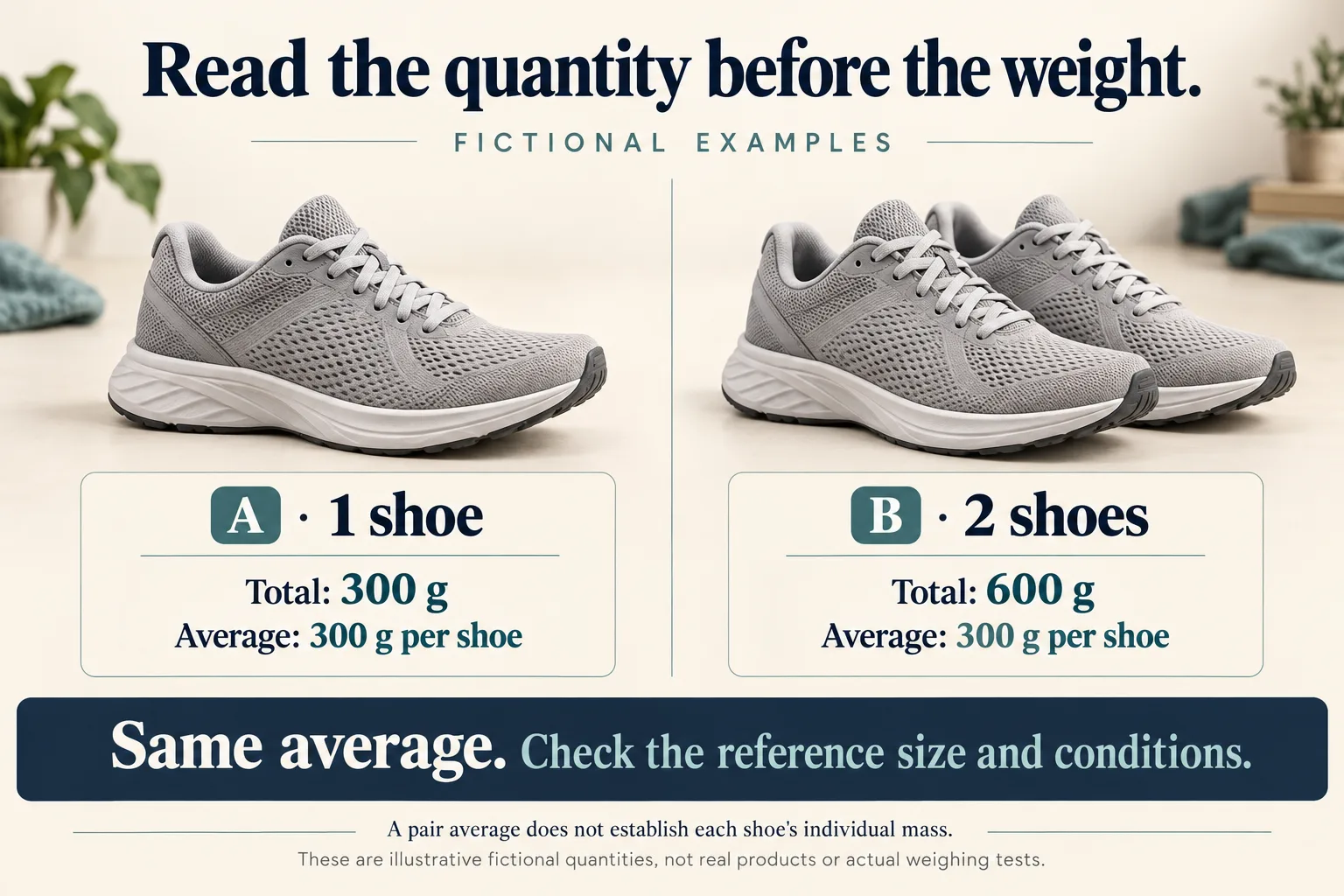
Shoe weight: per shoe, per pair and reference size
Compare shoe-weight labels without mixing pairs, single shoes or reference sizes. Read three manufacturer examples and work through simple fictional totals.