Shoe product codes: model references, SKUs and GTINs
Understand model references, seller SKUs and GTINs. Compare exact shoe variants, keep size labels intact and ask useful questions when product codes differ.
On this page
A shoe listing, a box label and a receipt can show several different codes. Copying the first one you see may identify the model without identifying the size and colour you meant to buy. Before comparing two references, keep the label beside each code: “SKU,” “style,” “GTIN” and “order number” do not automatically mean the same thing.
This guide explains how to organise those references when checking a listing or asking a seller about an item. It does not authenticate shoes, inspect a physical label or decode a particular brand’s complete numbering system.
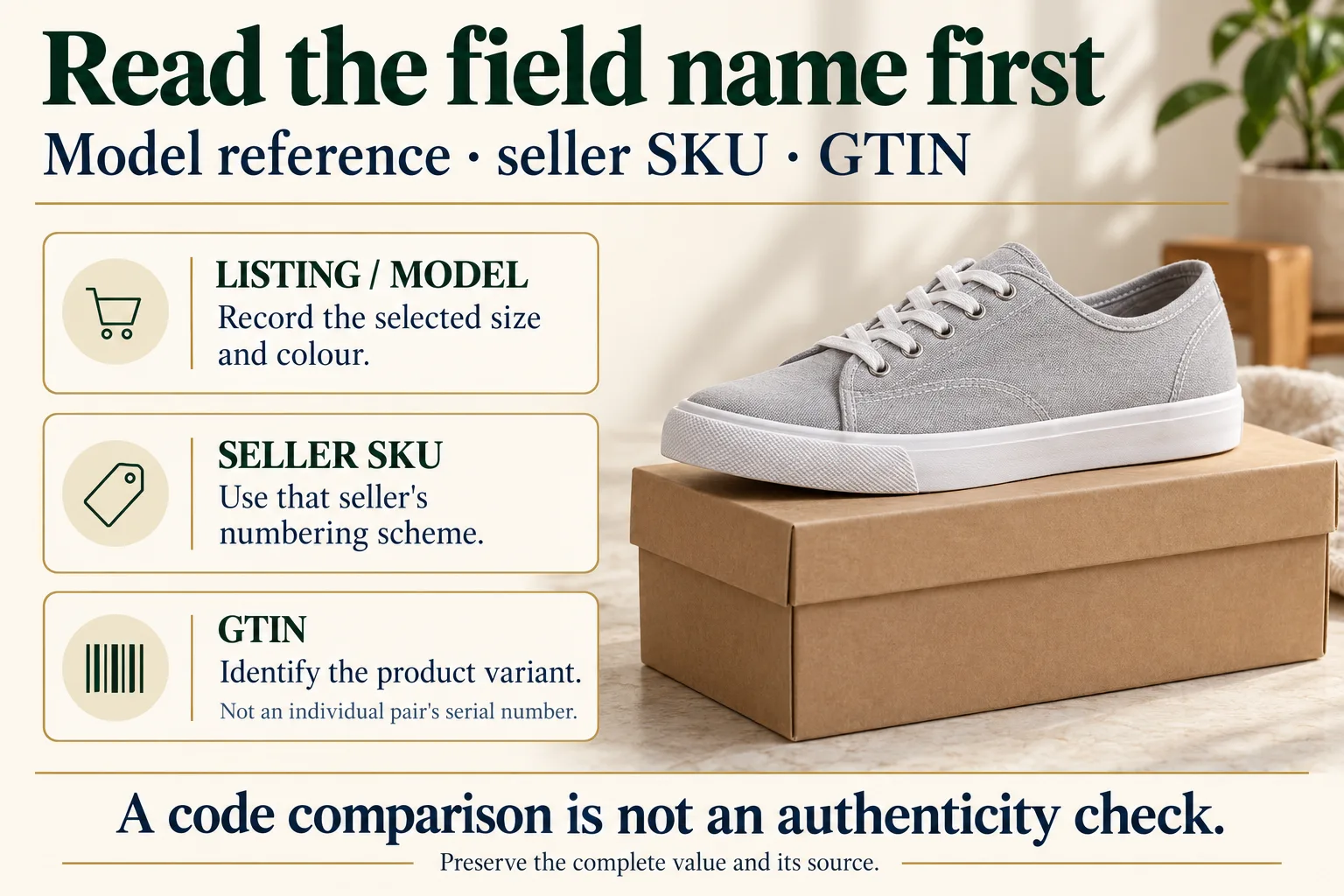
Start with the field name, not the digits
The US Classic Clog listing displays “SKU 10001,” while colour and size remain separate choices on the page. Record those choices too. The number shown beside the model is not a substitute for checking which option is selected.
Keep the wording used by that source. If a shop calls a field “item number,” do not silently rename it “GTIN” in your notes. Our Classic and Crocband comparison uses model references to distinguish the two listings; that is a different task from identifying an exact size-and-colour variant.
Know what the reference is meant to identify
GS1 US explains that a Global Trade Item Number identifies a product across businesses, whereas a stock keeping unit is an internal inventory reference. Businesses can use different SKU schemes. Do not assume another retailer’s SKU must look the same, or that every field labelled SKU describes the same level of detail.
| Reference | Useful comparison | Keep separate |
|---|---|---|
| Listing or model code | The named model on the exact listing. | Selected size and colour. |
| Seller’s SKU | The seller’s own item record. | Another business’s numbering scheme. |
| GTIN | The product variant identified by that number. | An individual pair’s serial or your order reference. |
A barcode is a way of carrying data for a scanner; the GTIN is an identifier that can be carried in it. A standard GTIN is not an individual pair’s serial number. GS1 describes serialised identification separately. Seeing the same product identifier on two units is therefore not, by itself, an error.
Check the variant even when the name matches
GS1’s size-and-colour guidance says each combination needs its own GTIN. That is a rule about product identification, not a promise that every seller’s listing or physical label is correct.
Imagine two listings for the same named shoe, both blue, but one is size 7 and the other size 8. The matching name and colour have not established an exact variant match. Now imagine two shops offering the same variant with different internal SKUs. That difference alone does not establish that the products differ. In both cases, the field’s purpose matters more than whether two strings look similar.
Compare like with like
Put the references side by side with their origins: product page, attached label or receipt. Copy the full value, including leading zeros and punctuation, before asking someone to interpret it. Keep size labels exactly as printed, including any country or gender heading; a bare “7” loses useful context.
If the values differ, first check whether you are comparing the same kind of identifier. A model reference and an order number answer different questions. Do not remove digits, guess a missing character or search for a matching photograph and treat that as a resolved discrepancy.
Record an unreadable field as unreadable. A clear close-up may help, but neither a copied number nor a matching online result is an authenticity finding. This guide makes no judgement about whether a particular pair is genuine.
Ask one question about the unresolved field
A focused message could say: “Your listing shows [field and value], while my item label shows [field and value]. Are these references for the same model, size and colour? Please confirm which identifier I should use.” Include only the details needed through the seller’s verified private channel.
Our support-photo guide explains how to show the item and its markings clearly without exposing personal paperwork. Keep order references and receipts private. A product-code question does not need a public photo of your address or payment details.
Practical takeaway
Read the field name, preserve the full code, and check the selected variant separately. Use a discrepancy to ask a precise question rather than forcing unlike references to match. Product identification helps organise the conversation; it does not replace a fit check, the seller’s instructions or an authenticity assessment.
Sources
Continue reading
Related articles

Yoga mat sizes: plan floor space and packed storage
Compare yoga mat length, width and thickness separately. Check three named variants, bag openings and the difference between folding for travel and storage.
Cleaning a backpack: separate the pack, frame and rain cover
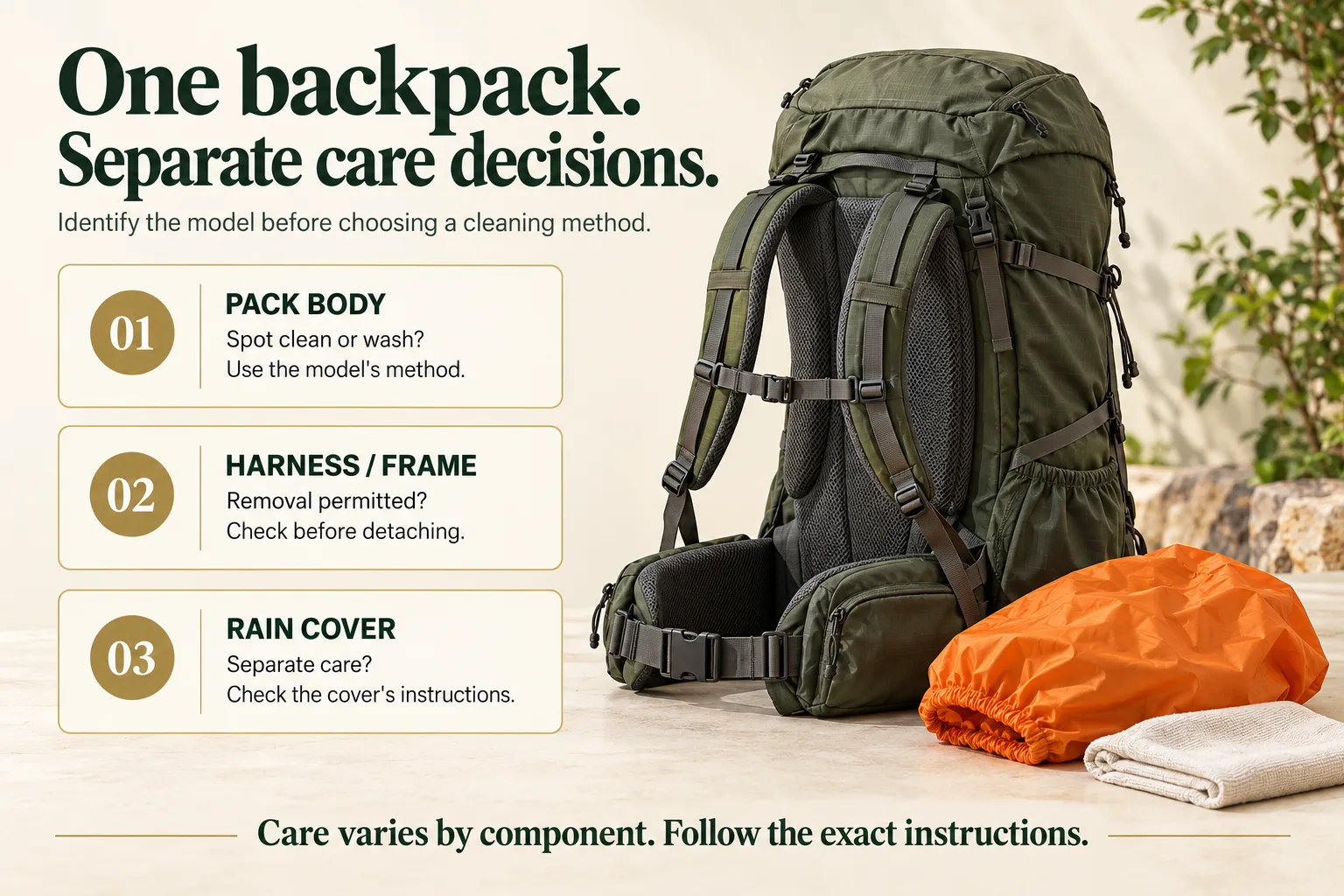
Plan backpack cleaning by component. Check removable parts, separate rain-cover care, manufacturer exceptions and drying before choosing a washing method.
Tennis racket weight, balance and swingweight explained
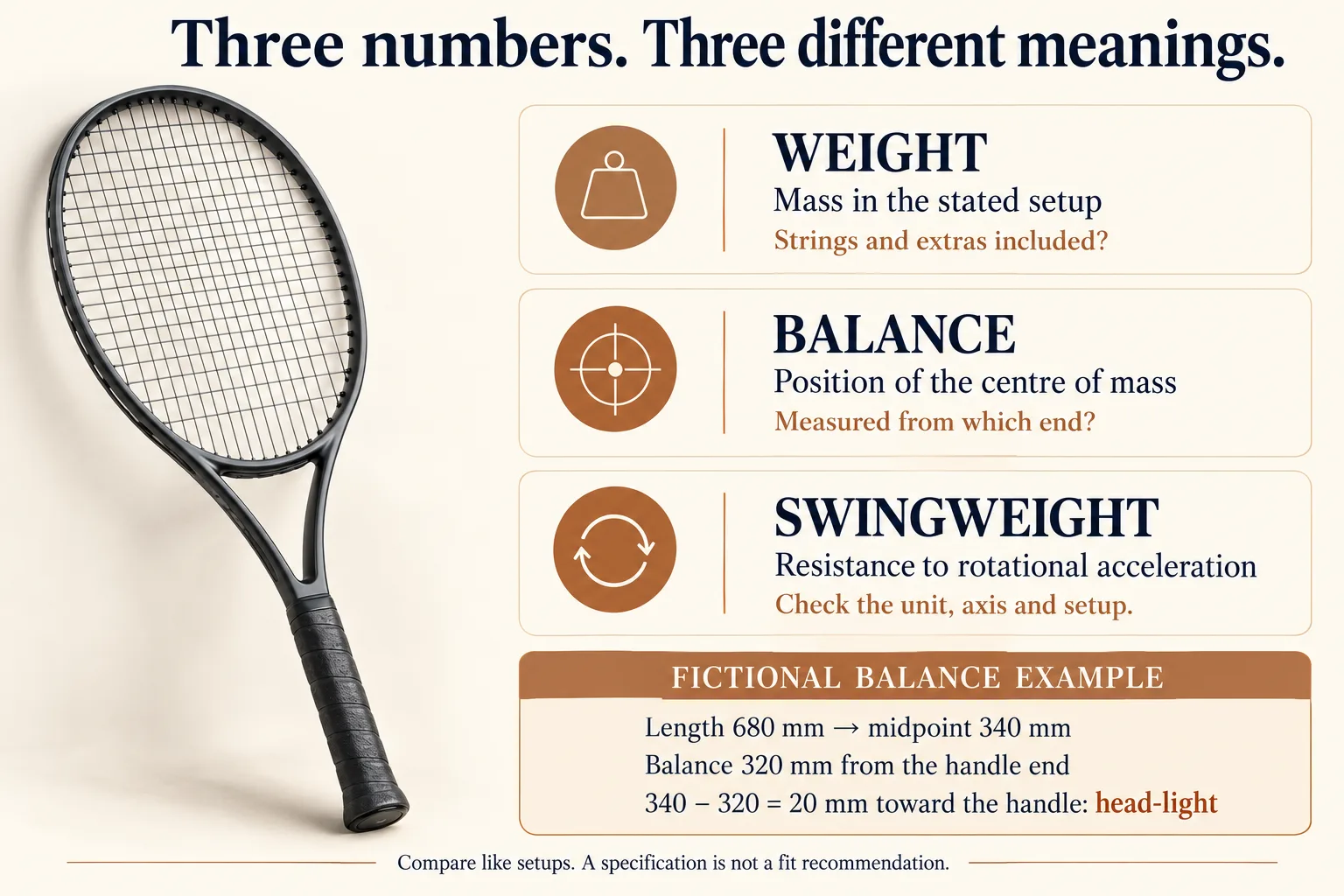
Compare racket weight, balance and swingweight without mixing units or setups. Read strung and unstrung labels and work through a simple balance example.