Cleaning a backpack: separate the pack, frame and rain cover
Plan backpack cleaning by component. Check removable parts, separate rain-cover care, manufacturer exceptions and drying before choosing a washing method.
On this page
Cleaning a backpack is easier to plan when you stop treating it as one washable object. The pack body, rain cover, harness and frame may have different care requirements. An adjustment buckle is not proof that a component should come off, and a fabric that tolerates hand washing does not tell you what to do with the structure behind it.
This guide is for ordinary recreational backpacks. It does not cover child carriers, avalanche equipment, contaminated gear or cleaning a drinking reservoir. Find the exact model’s instructions before using water or removing parts.
Decide whether the whole pack needs washing
Empty every pocket and set the contents aside. Check the main compartment, small zipped pockets and any separate rain-cover pocket. Photograph the model label so you can find the right manual without relying on the pack’s colour or advertised litre capacity.
deuter’s cleaning guidance distinguishes light surface dirt, which can be wiped with a damp cloth, from heavier soiling that calls for more thorough cleaning. That gives you a useful first decision: address the affected area before assuming the entire pack needs a bath.
For example, dust on one outer pocket and a spill inside the main compartment are different cleaning jobs. Describe where the problem is when asking the manufacturer for advice. A photograph of the affected part and the model label is more useful than “Can I wash my backpack?” alone.
Separate adjustable from removable
Osprey’s cleaning guide says to detach the harness and hipbelt if they are removable. This is conditional: it is not permission to unpick stitching, force a frame out or dismantle another brand’s back system.
deuter specifically advises against removing its frame or rods for cleaning. Put these statements beside each other rather than combining them into a universal “remove the frame” step. Our torso-fit guide explains why a pack’s adjustment system needs its own instructions.
Before detaching anything, find both the removal and refitting directions. If you cannot identify the part or understand how it goes back, leave it attached and ask for model-specific guidance. Keep a note of which instructions you followed; a video for a similar-looking pack may show a different construction.
Give the rain cover its own decision
For its packs, deuter tells owners to detach the rain cover before washing the backpack, clean the cover separately with a damp cloth and dry it completely before storing. It warns against submerging that cover. Do not put it into the same bath simply because it normally lives inside the bag.
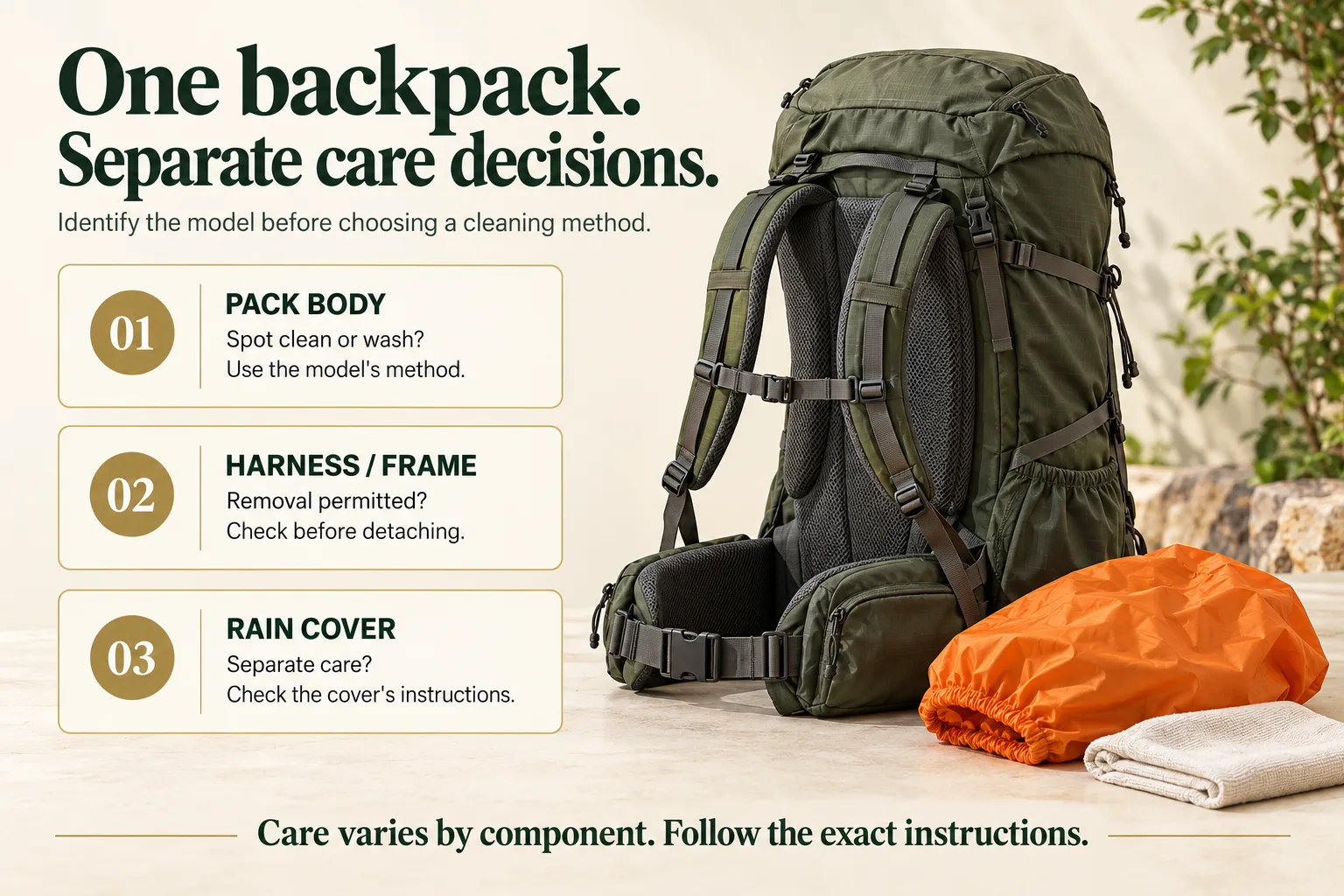
| Component | Question | Record |
|---|---|---|
| Pack body | Spot clean or wash? | Model’s method |
| Harness / frame | Removal permitted? | Exact instructions |
| Rain cover | Separate care? | Cover’s method |
This is a planning checklist, not a shared washing prescription for all three rows. An attached component can still need different treatment. If a method is unknown, leave that box unresolved rather than copying the answer from the pack body.
Keep the product type attached to the method
Osprey describes hand cleaning with mild soapy water and a sponge or soft brush, followed by thorough rinsing. It does not advise machine washing. Its guide also says not to immerse travel packs with the High Road wheeled chassis.
deuter’s separate trail-running-vest section includes a limited machine-washing exception. That section is about vests; it does not change the page’s instruction against machine washing backpacks. Read the section heading as carefully as the cleaning steps.
The Gregory care page recommends mild soap for its pack-cleaning routine and says not to use detergents or solvents. Its reservoir section gives different instructions. Keep the product and component beside each recommendation, including the cleaner: do not merge wording from separate sections into a homemade recipe.
Finish with drying, not heat
Gregory advises rinsing dirt from zippers and buckles, wiping excess water with a towel and leaving zipped pockets open while the pack air-dries away from direct sun and heat. It rules out tumble dryers, hair dryers and heat guns. Excessive brushing can also damage its fabric coatings.
Plan where the pack and any permitted detached parts will dry before starting. Do not set a guaranteed drying time from this guide. Check each pocket and padded area before refitting or storing the pack, following the manufacturer’s directions. Our sportswear washing guide covers the separate clothing load; its garment-care steps should not be transferred automatically to your bag.
Practical takeaway
Identify the model, locate the dirt and make a separate care decision for each component. Remove only what the instructions allow, keep rain-cover and specialist-product guidance separate, and allow complete drying before storage. A short component checklist helps prevent a familiar laundry routine from becoming the wrong treatment for a backpack.
Sources
- Cleaning your backpack, deuter
- How to Clean Your Osprey Backpack, Osprey
- Pack care & cleaning, Gregory
Continue reading
Related articles
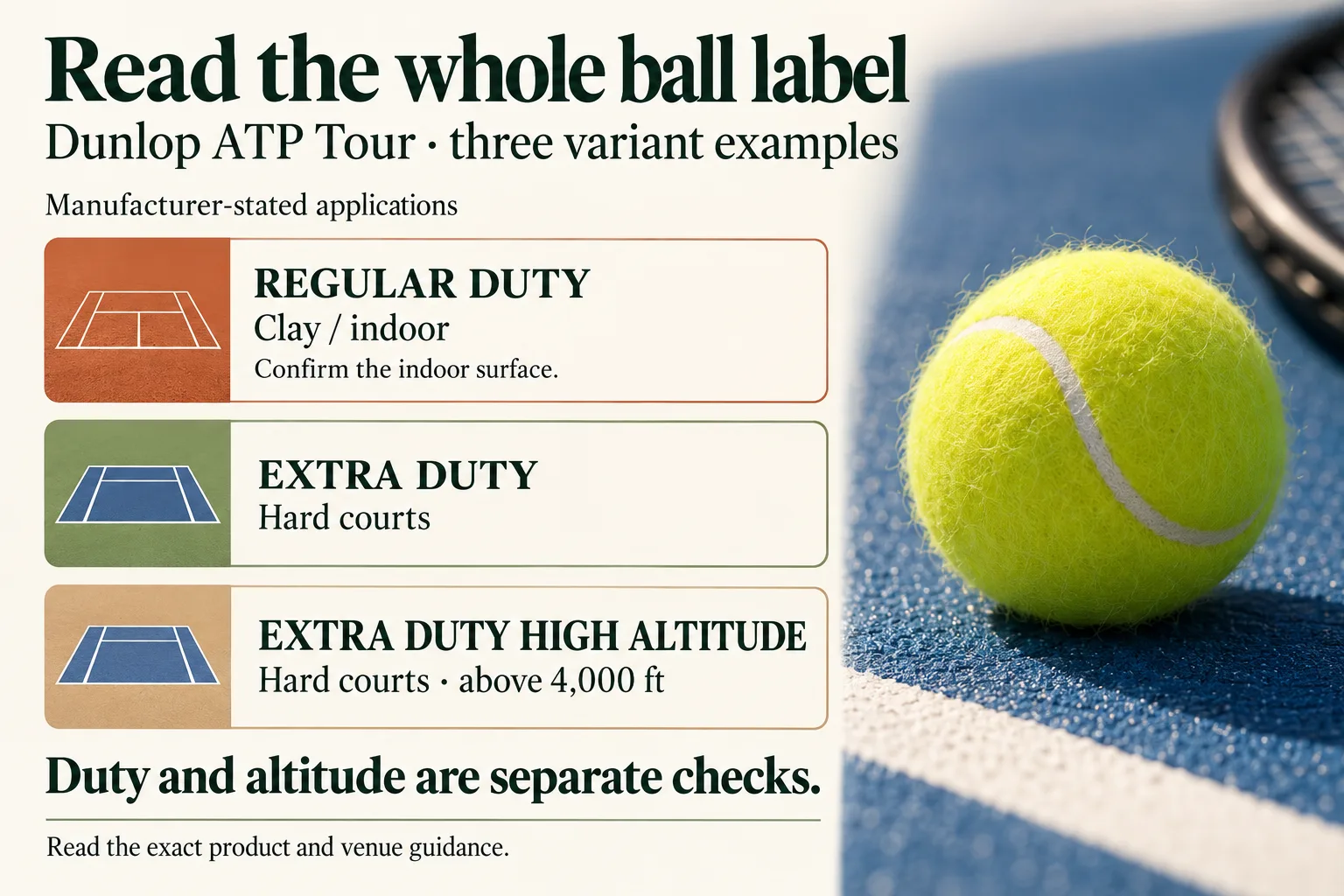
Tennis ball labels: regular duty, extra duty and altitude
Understand regular-duty, extra-duty and high-altitude tennis-ball labels. Compare exact variants, court surfaces and manufacturer-specific elevation guidance.

Yoga mat sizes: plan floor space and packed storage
Compare yoga mat length, width and thickness separately. Check three named variants, bag openings and the difference between folding for travel and storage.

Shoe product codes: model references, SKUs and GTINs
Understand model references, seller SKUs and GTINs. Compare exact shoe variants, keep size labels intact and ask useful questions when product codes differ.