Backpack torso length: choose fit size separately from capacity
Separate backpack torso fit from litre capacity. Find the measuring landmarks, understand overlapping size ranges and check what the harness actually adjusts.
On this page
A backpack’s litre capacity tells you about storage, while its torso-length range helps you shortlist a fit size. A larger capacity is not automatically the right choice for a taller person. Start by separating the load you want to carry from the measurements used to fit the pack to your body.
This guide focuses on adult backpack sizing and manufacturer instructions. It does not establish a safe carrying weight or guarantee comfort. Our backpack capacity and dimensions guide covers the separate question of whether your belongings will fit inside.
Measure the wearer, not the bag
ONE PLANET’s sizing guide defines back length from the C7 vertebra at the base of the neck to a point on the centre of the back level with the top of the hip bones. That is a body measurement. It is not the pack’s total height, the length of a loose shoulder strap or a clothing size.
The manufacturer recommends a tape measure and another person’s help. Locate the prominent neck landmark by tilting the head down, then measure standing upright with the head up. Follow the lower landmark around from the top of the hip bone to the centre of the back rather than ending the tape at a trouser waistband.
If you are unsure where the landmarks are, ask a knowledgeable pack fitter to demonstrate. Repeating a measurement from different endpoints will not produce a useful comparison, even if the tape gives a precise-looking number.
Keep the lower reference level
deuter’s back-length instructions suggest a belt placed horizontally at the upper hip-bone level as a measuring aid. The relevant endpoint is where the tape meets that reference at the centre of the back. The belt is a temporary marker, not a recommendation to use whatever position your everyday belt happens to occupy.
Write down the unit alongside the result. Keep your standing height separate: it describes a different distance. Likewise, do not measure the backpack’s back panel and substitute that figure for a manufacturer’s stated range of wearer torso lengths.
A measurement can fall in two sizes
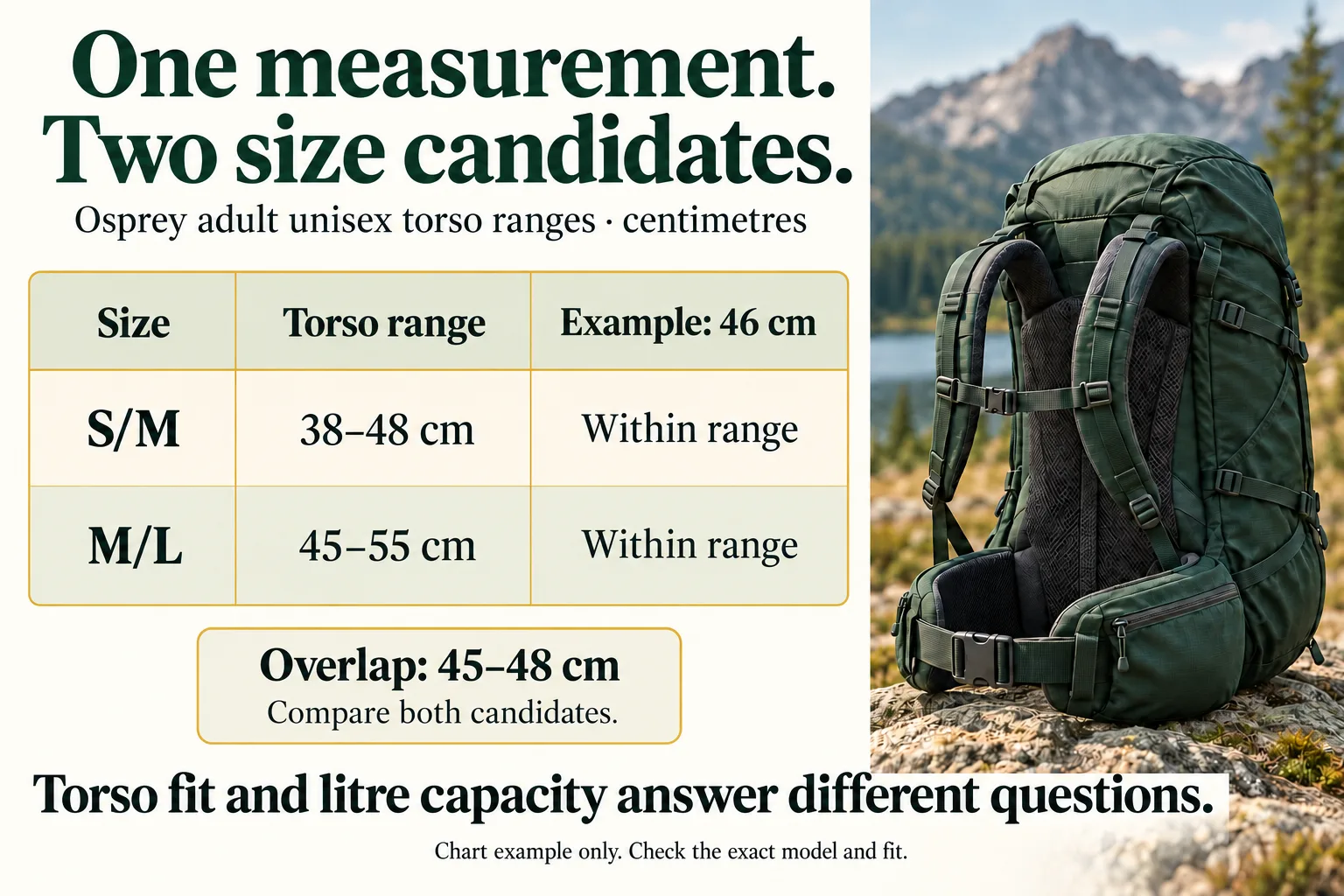
The Osprey Canada size guide lists the following adult unisex torso ranges. These are chart examples, not universal backpack sizes:
| Size label | Torso range | Example: 46 cm |
|---|---|---|
| S/M | 38–48 cm | Within range |
| M/L | 45–55 cm | Within range |
The overlap is 45–48 cm. A hypothetical 46 cm torso therefore sits inside both rows. That arithmetic creates two candidates to investigate; it does not prove that both packs will fit equally well. Osprey explicitly notes that product-specific sizing can vary with activity or style.
Keep “unisex” attached to this example. The same page has different ranges under other fit-profile headings. The original illustration compares these two rows only; it is not a conversion between brands or a way to choose a size from standing height.
Check what actually adjusts
Osprey distinguishes packs offered in one size without torso-length adjustment from packs with an adjustable torso length, multiple size options, or both. A single-size label therefore does not establish whether the back system adjusts.
For the model you are considering, identify the adjustment instructions and the stated range. Do not assume that tightening the free ends of the shoulder straps changes the pack’s torso-size range. Ask the seller to show which adjustment changes the harness position and which simply changes strap tension.
ONE PLANET describes adjustable fits for its own bushwalking packs. That brand-specific statement should not become a claim that every backpack adjusts in the same way. A demonstration for one harness is not an instruction to pull apart another model’s fastening system.
Use the shortlist for a fitting check
A torso figure does not describe every contact point. deuter notes that shoulder width and pelvis shape can matter when fit categories overlap. Treat the chart as a starting point for checking the actual shoulder straps and hipbelt, following the selected model’s guidance.
For an in-store comparison, bring the exact model names and your measurement notes. Ask to try the candidate sizes with staff-guided adjustment. Record what remains uncertain rather than choosing the row with the largest numbers. Our clothing measurement guide explains the broader difference between wearer and finished-item measurements.
Practical takeaway
Choose storage capacity for the contents, then investigate fit using the wearer’s torso measurement and the exact pack’s chart. Preserve the fit-profile heading, size label and units. Where ranges overlap, compare the actual candidates; where adjustment is unclear, get a model-specific demonstration before deciding.
Sources
- Backpack sizing & fitting, ONE PLANET
- How to measure your back length for the perfect pack fit, deuter
- Osprey Size Guide, Osprey
Continue reading
Related articles
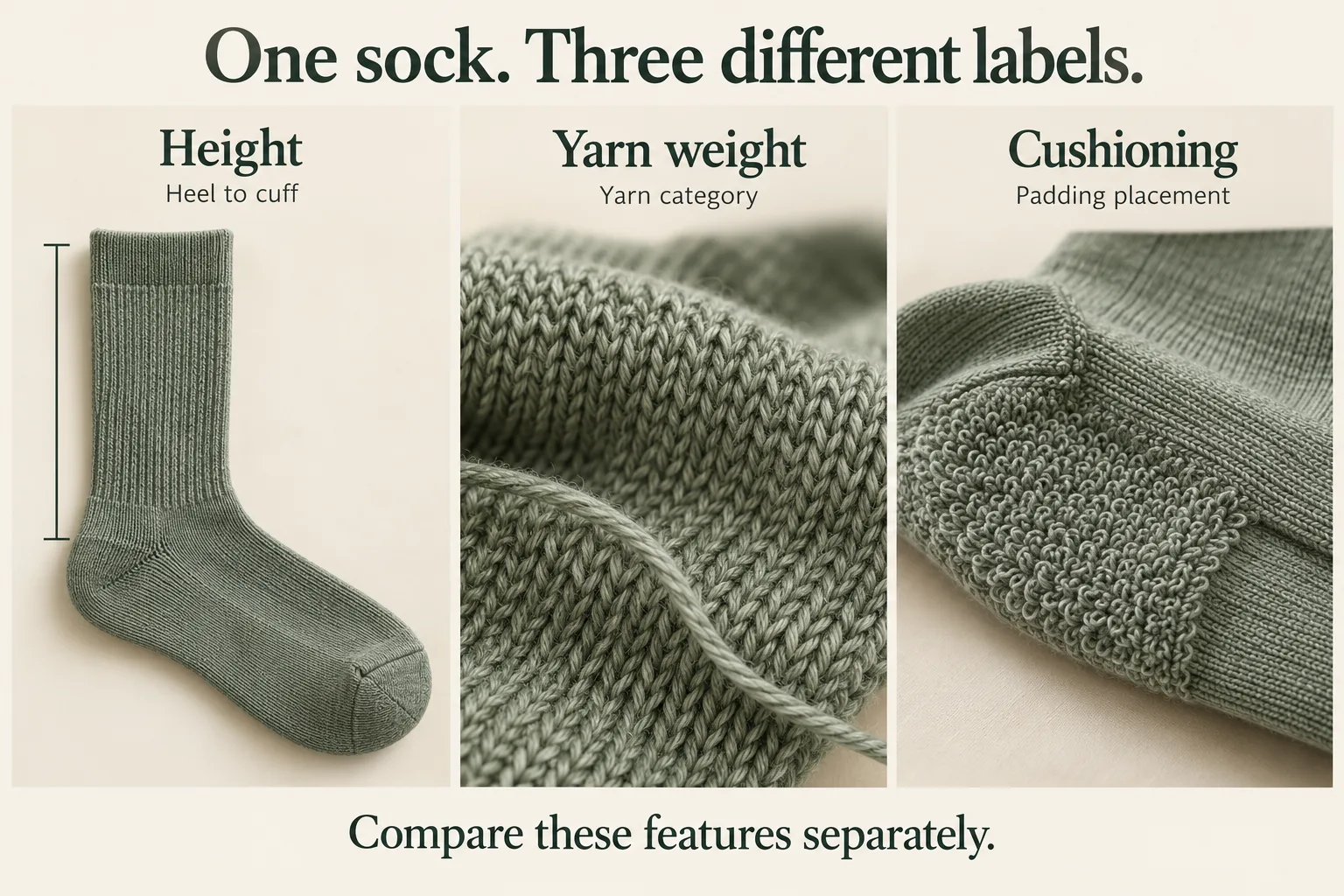
Sock height, yarn weight and cushioning explained
Understand crew height, lightweight yarn and sock cushioning as separate choices. Compare heel-to-cuff measurements and padding zones without assuming fit.
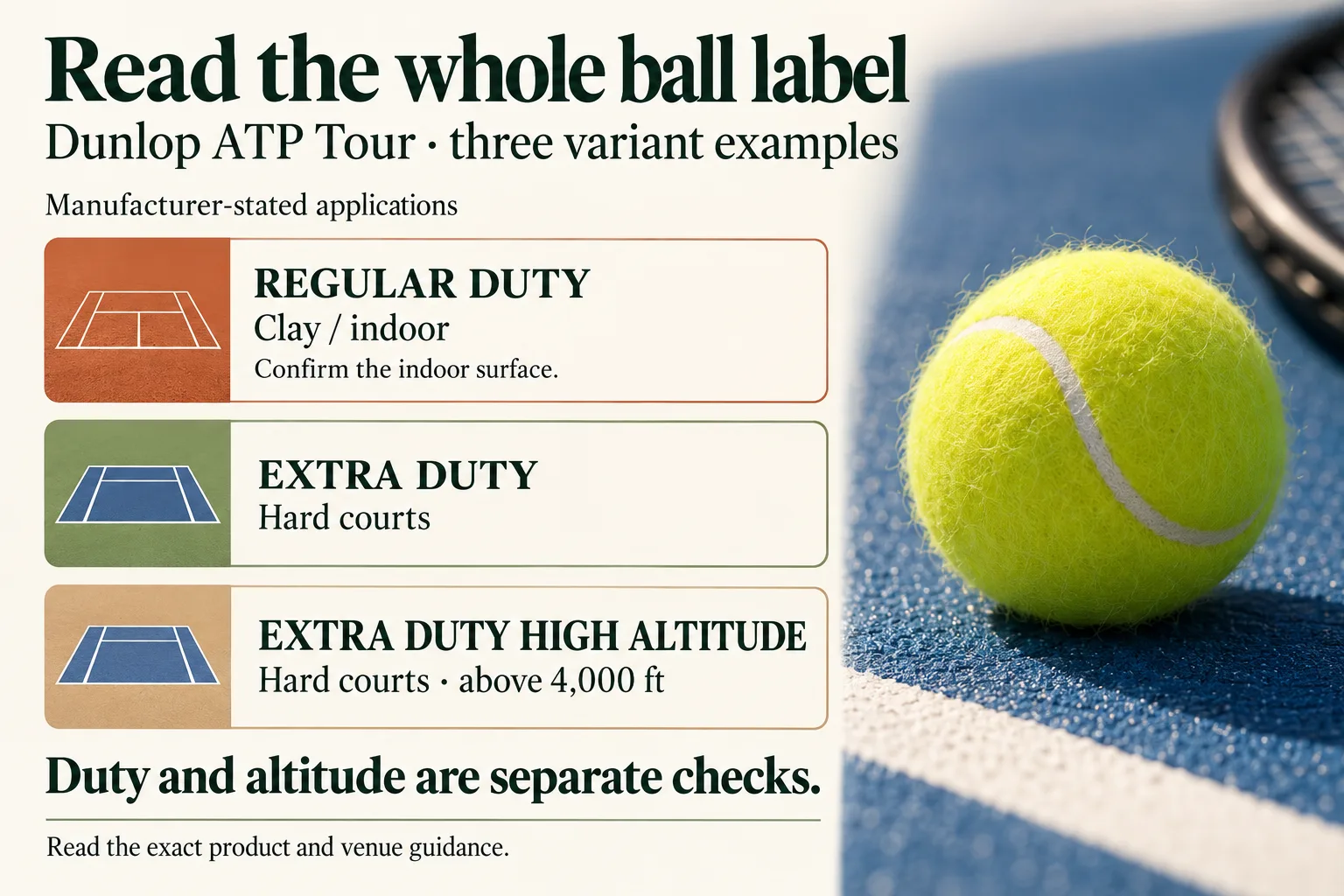
Tennis ball labels: regular duty, extra duty and altitude
Understand regular-duty, extra-duty and high-altitude tennis-ball labels. Compare exact variants, court surfaces and manufacturer-specific elevation guidance.
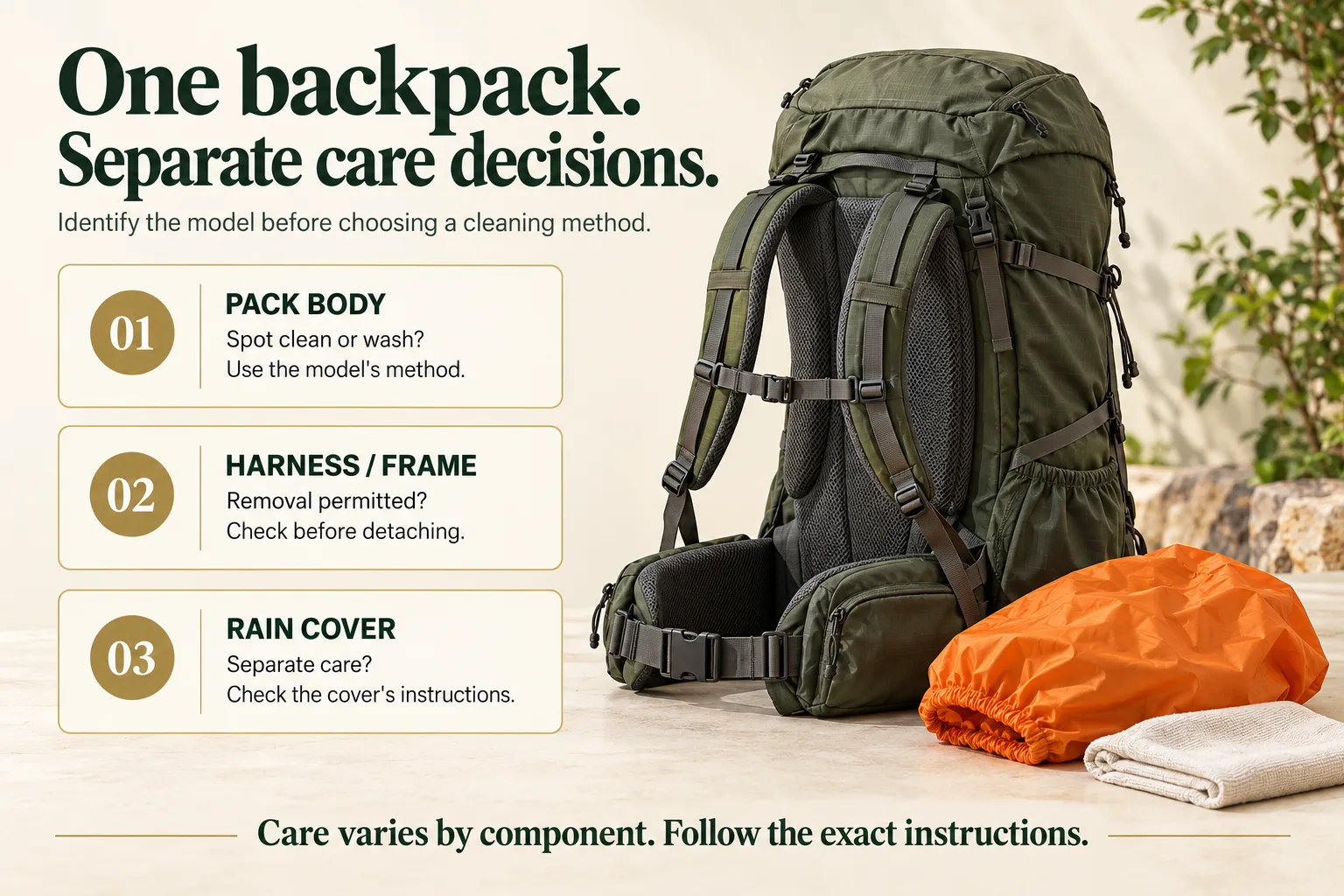
Cleaning a backpack: separate the pack, frame and rain cover
Plan backpack cleaning by component. Check removable parts, separate rain-cover care, manufacturer exceptions and drying before choosing a washing method.