Sock height, yarn weight and cushioning explained
Understand crew height, lightweight yarn and sock cushioning as separate choices. Compare heel-to-cuff measurements and padding zones without assuming fit.
On this page
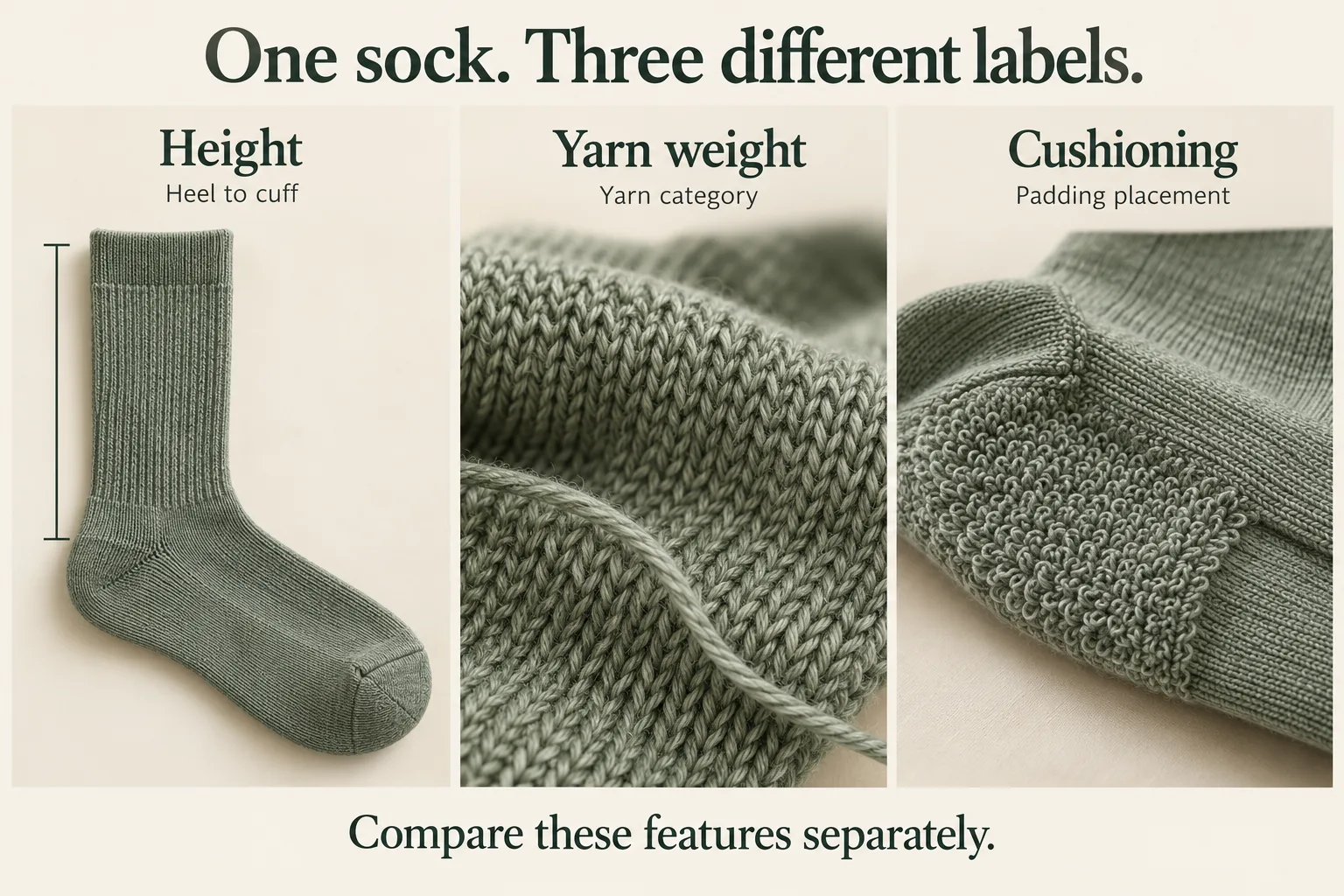
A sock can be lightweight, crew height and cushioned at the same time. Those labels answer different questions. Height describes coverage up the leg; yarn weight describes the yarn used; cushioning describes added padding and where it sits. Treating all three as one scale from “thin” to “thick” can hide the feature you actually want to change.
This guide uses Darn Tough and Smartwool’s own descriptions to explain the labels. The comparison examples and illustration are hypothetical, not product tests or promises that a particular sock will fit your footwear.
Read height from heel to cuff
Darn Tough’s sizing chart measures sock height from heel to cuff. Its men’s/unisex Micro Crew entry is 8.5 inches, compared with 10.5 inches for Crew. The women’s entries are 7.5 and 8.5 inches respectively. Keep the chart heading attached to the number: “crew” alone does not supply one measurement for every version.
Those figures help compare coverage within that brand’s chart. They are not the length of the foot section or a guarantee of where the cuff will sit on your leg. The manufacturer notes that individual leg length affects the result. A size such as medium is another field, selected using the appropriate shoe-size chart.
Lightweight does not mean uncushioned
Darn Tough’s choosing-socks FAQ defines its weight labels by the fineness or thickness of the yarn used in the knit. It lists Ultra-lightweight, Lightweight, Midweight and Heavyweight separately from its cushioning levels. These names do not give the finished pair’s mass in grams.
That distinction explains why “lightweight with cushion” is not contradictory. A lighter yarn can still form added cushioning loops in selected areas. If you are comparing carrying weight, look for an actual product-mass specification rather than converting a descriptive label into grams. Our denier and GSM guide explains why yarn and finished-item measurements also need separate units.
Find where the padding goes
In Darn Tough’s cushioning explanation, the padding comes from knitted terry loops. Its standard profile places them underfoot, over the toe and up the back of the heel and ankle. Other profiles can add or reshape coverage, including a shin pad or extra toe-box cushioning.
The brand also explains that targeted cushioning can be added to another cushioning profile. “Targeted” therefore does not automatically mean that the rest of the sock has no padding. Read the specific model’s description or diagram before deciding where the extra material is.
If you own the sock, turning it inside out can reveal the looped areas described by the manufacturer. This is a visual check, not a measurement of impact absorption. Do not infer a performance rating from how plush a section looks.
Keep each manufacturer’s terminology
Smartwool’s cushioning guide separately describes Zero, Targeted, Light and Full cushioning, among other levels. Its Light description places cushioning along the footbed without cushioning on top; its Full description extends cushioning around the sock.
The same guide describes targeted running-sock padding at the forefoot and heel, while its hiking explanation names the toe and heel. The activity and model matter. Do not turn either description into a universal definition for every targeted sock, or assume that similarly named levels from different brands have identical construction.
| Detail | Question | Keep separate |
|---|---|---|
| Height | Where does the cuff reach? | Foot size |
| Yarn weight | Which yarn category? | Pair mass in grams |
| Cushioning | Which areas are padded? | Cuff height |
Compare one change at a time
Imagine two listings both say lightweight crew, but one says no cushion and the other shows padding underfoot. Changing between them addresses padding while keeping those two descriptive labels the same. It does not establish identical dimensions, yarn composition or fit; those details still need checking.
Now imagine the padding feels suitable, but the cuff ends below the top of your shoe. The next useful comparison is a taller profile with similar cushioning, rather than automatically choosing heavier yarn. Conversely, wanting less material underfoot is a reason to inspect cushioning, not simply to buy a shorter sock.
Use the socks with the footwear you intend to wear when assessing fit. A product description can narrow the choice, but it cannot establish comfort for you. Keep a familiar pair as a reference and note the actual difference you want to address.
Practical takeaway
Choose the correct size chart, then read height, yarn weight and padding coverage independently. Keep brand and model names beside those details. Ask where a sock is cushioned when a label is vague, and avoid treating more padding as an automatic upgrade. Find related equipment explanations in Activewear & Gear.
Sources
- Sock Sizing Chart, Darn Tough Vermont
- FAQ: Choosing Socks, Darn Tough Vermont
- Our Sock Cushions: A Complete-ish Guide, Darn Tough Vermont
- A Guide to Cushioned Socks, Smartwool
Continue reading
Related articles
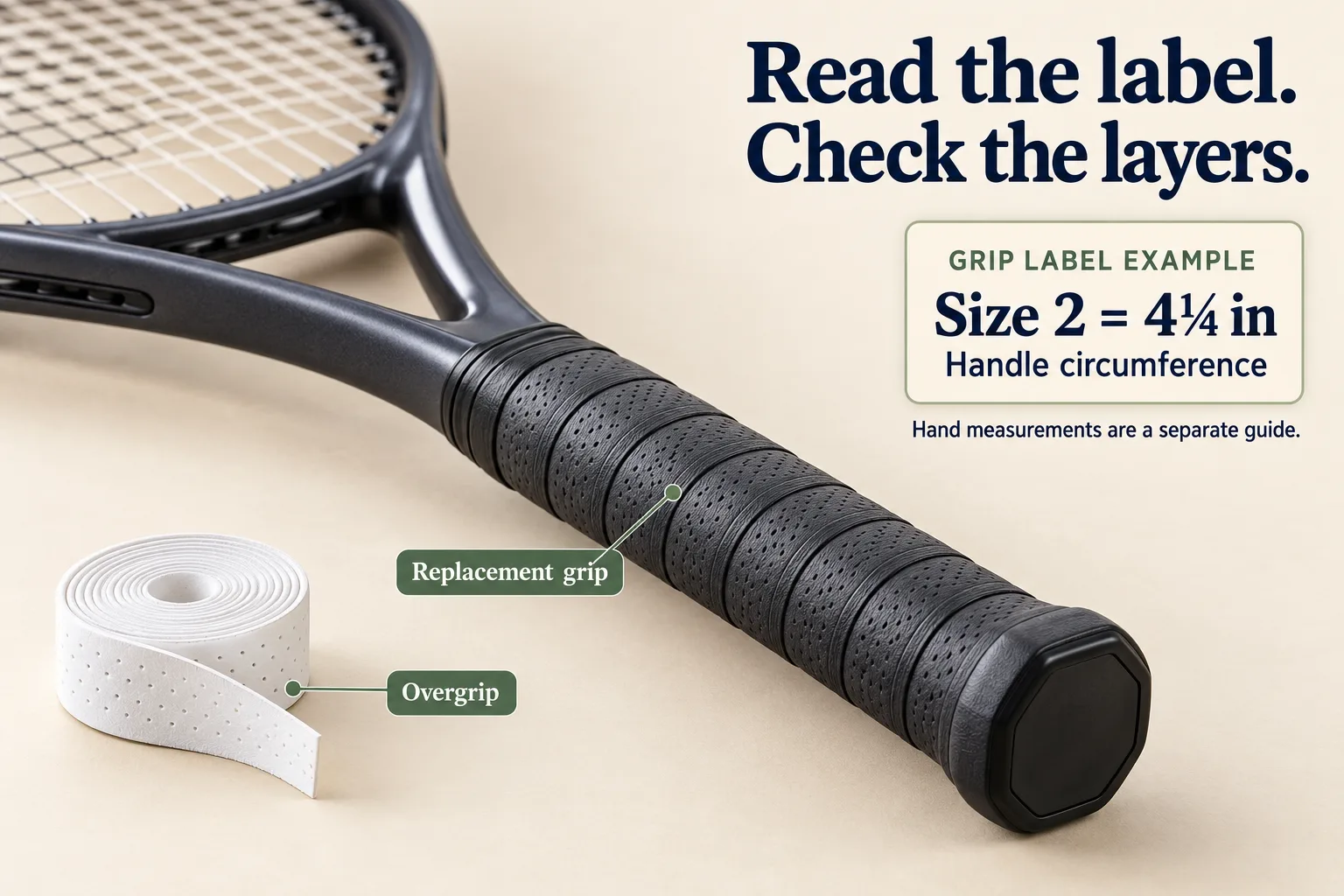
Tennis grip sizes: numbers, inches and overgrips
Decode tennis grip size 2 and 4¼-inch labels, distinguish Babolat hand-measurement ranges, and tell a replacement grip from an overgrip.
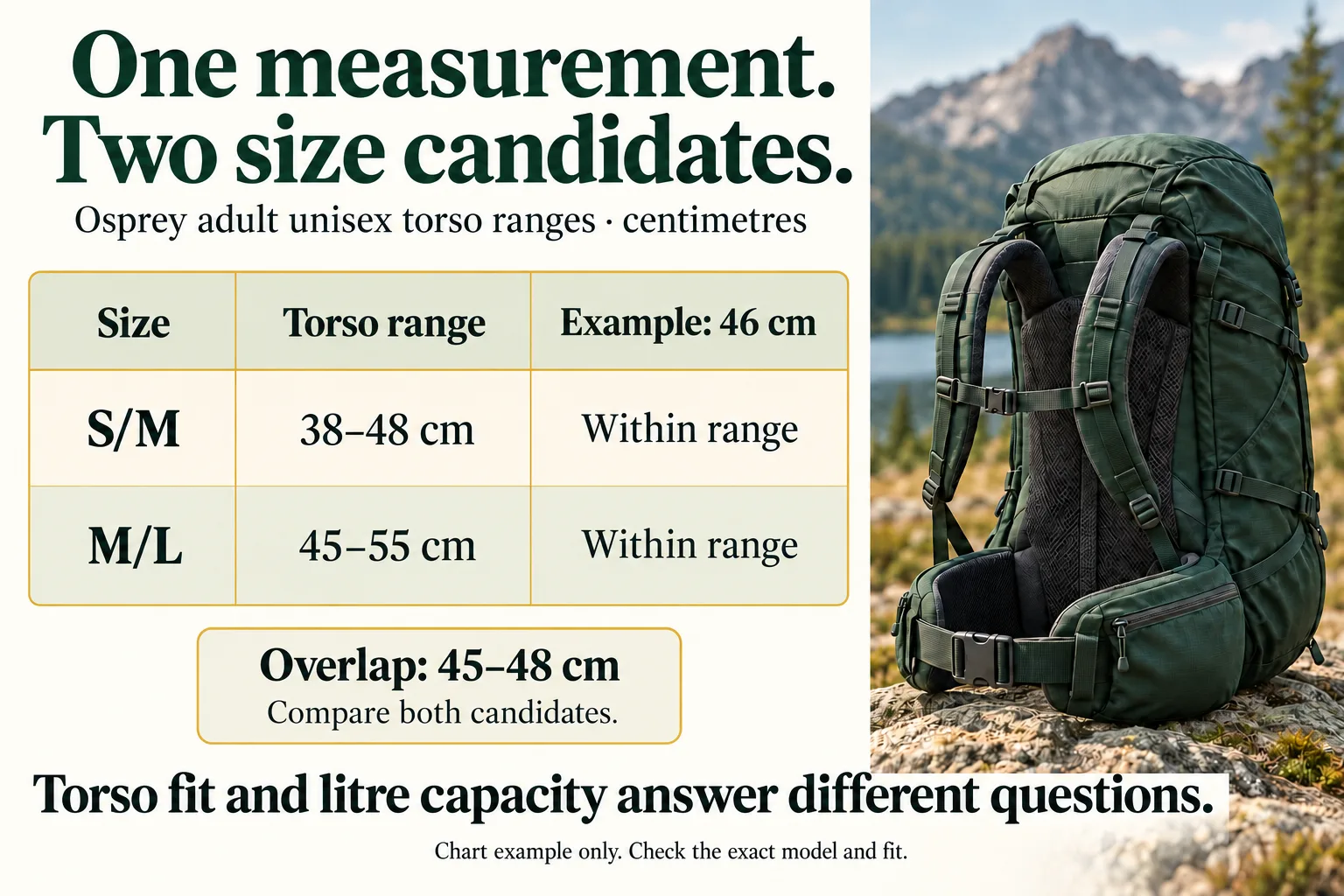
Backpack torso length: choose fit size separately from capacity
Separate backpack torso fit from litre capacity. Find the measuring landmarks, understand overlapping size ranges and check what the harness actually adjusts.
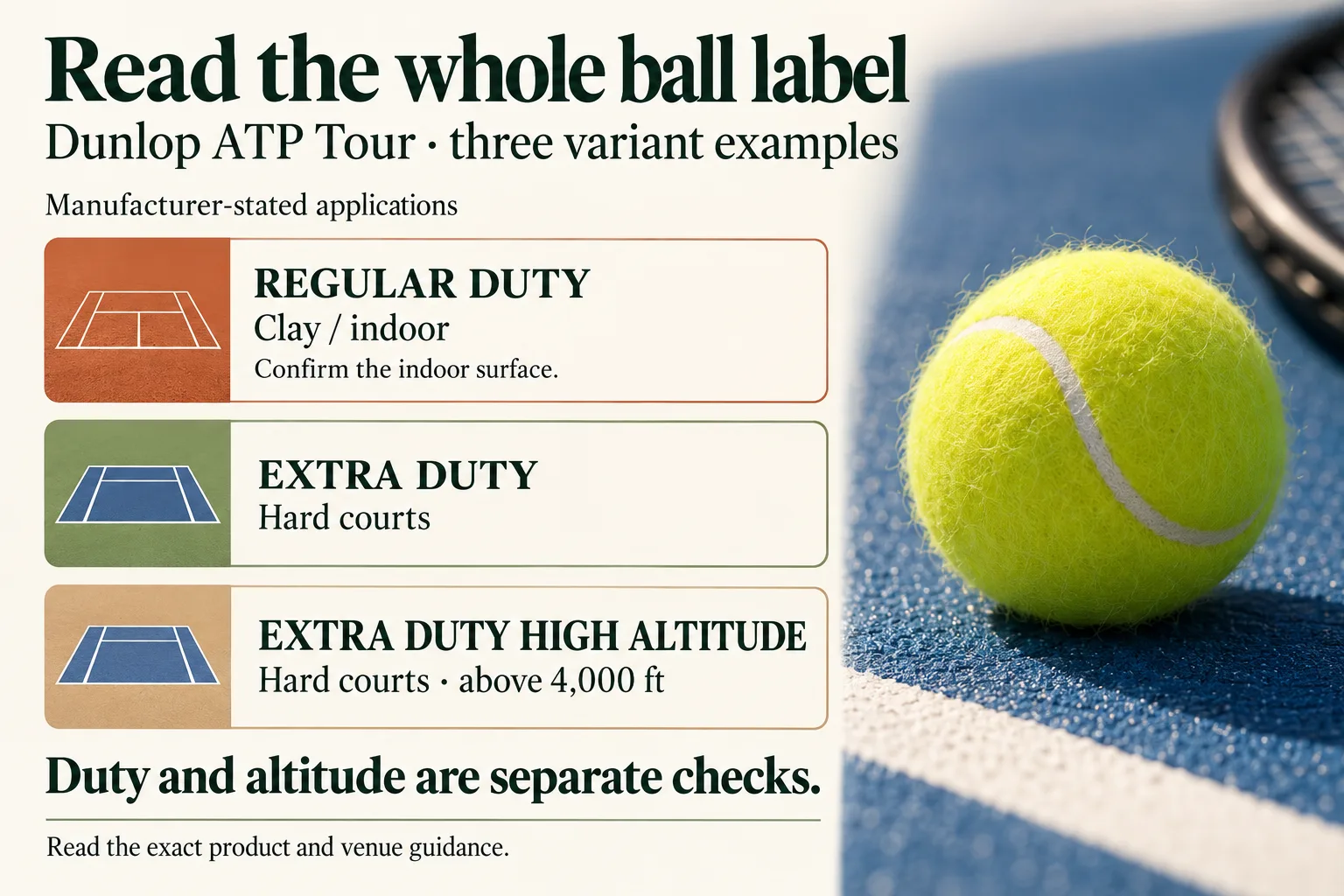
Tennis ball labels: regular duty, extra duty and altitude
Understand regular-duty, extra-duty and high-altitude tennis-ball labels. Compare exact variants, court surfaces and manufacturer-specific elevation guidance.