Denier vs GSM: understand fabric weight labels
Learn what denier and GSM measure, why they cannot be directly converted, and how a worked fabric-area example helps you compare clothing and bag specifications.

On this page
A fabric listing marked 210D and another marked 180 GSM are giving you different kinds of information. Comparing 210 with 180 will not tell you which fabric is heavier, tougher or better suited to a jacket or bag. First identify what each number measures.
Denier concerns yarn mass over a specified length. GSM concerns fabric mass over a specified area. The fictional examples below show how to keep those quantities separate and what extra information would make a comparison useful.
Denier: follow a length of yarn
Coats defines denier as the mass in grams of 9,000 metres. A yarn specified at 210 denier therefore corresponds to 210 grams for that length. The abbreviation D is often used beside the number; keep the stated unit when recording a specification.
This is a mass-per-length measurement, not a direct measurement of diameter. STOLL's yarn conversion guidance notes that differences between fibres affect yarn volume. Do not turn a denier number into a thickness in millimetres or a guaranteed strength rating.
GSM: consider an area of fabric
GSM means grams per square metre, also written g/m². CottonWorks uses this unit in its explanation of home-textile specifications. Here, the unit is useful for a simple distinction: it describes mass relative to area, rather than relative to yarn length.
For an idealised, uniform fabric rated at 180 g/m², one square metre corresponds to 180 grams. Half a square metre corresponds to 90 grams. Both pieces have the same GSM even though their total masses differ. These are arithmetic examples, not measurements of a real product.
Three numbers that should stay separate
| Listing detail | What it describes | What remains unknown |
|---|---|---|
| Shell yarn: 210D | Yarn mass per 9,000 metres. | Fabric mass per square metre. |
| Shell fabric: 180 g/m² | Fabric mass per square metre. | Finished jacket mass. |
| Finished jacket: 420 g | Total mass of the stated item. | The shell's denier and GSM. |
The 420-gram jacket figure cannot be divided by 180 to discover its shell area unless the whole mass belongs to that shell fabric. A real item can include other components. Retain the stated size and what is included in a finished-item weight instead of treating it as a fabric specification.
A small-area calculation, with its limits
Suppose an imaginary rectangular fabric sample is 20 centimetres by 25 centimetres and has a mass of 9 grams. Convert both lengths to metres before multiplying: 0.20 × 0.25 = 0.05 square metres. Dividing 9 by 0.05 gives 180 g/m².
If you work in centimetres instead, the area is 500 square centimetres and the result is 0.018 grams per square centimetre. That is not 0.018 GSM. There are 10,000 square centimetres in one square metre, so multiplying 0.018 by 10,000 gives the same 180 g/m². Keep the area unit beside each calculation.
This example explains the unit; it is not a laboratory test method. Do not cut an item you own to reproduce it. Nor does weighing a whole bag reveal the mass or area of its individual fabrics. If a seller supplies a sample measurement, ask what was measured and how rather than presenting your calculation as an independent product test.
Make a comparison that answers your question
There is no single conversion factor from denier to GSM: you also need information about how much yarn forms a given fabric area and what the measured fabric includes. Ask for the same specification for both listings. If one supplies only denier and the other only GSM, leave the missing entries blank.
Keep the section name with each value, such as shell or lining. The fabric-composition guide explains a separate question: which fibres make up a section. For carrying weight, use the finished item's mass and the day-hike packing checklist, rather than ranking bags by denier alone.
Practical takeaway
Read D as a yarn specification, g/m² as fabric mass per area, and g alone as a mass that needs a named subject. Compare matching quantities and keep unknowns visible. Neither a denier figure nor GSM alone establishes the durability, warmth or waterproof performance of a finished item.
Sources
- Thread Numbering, Coats
- Conversion table, STOLL / KARL MAYER
- Cotton Home Buyer's Guide, CottonWorks / Cotton Incorporated
Continue reading
Related articles
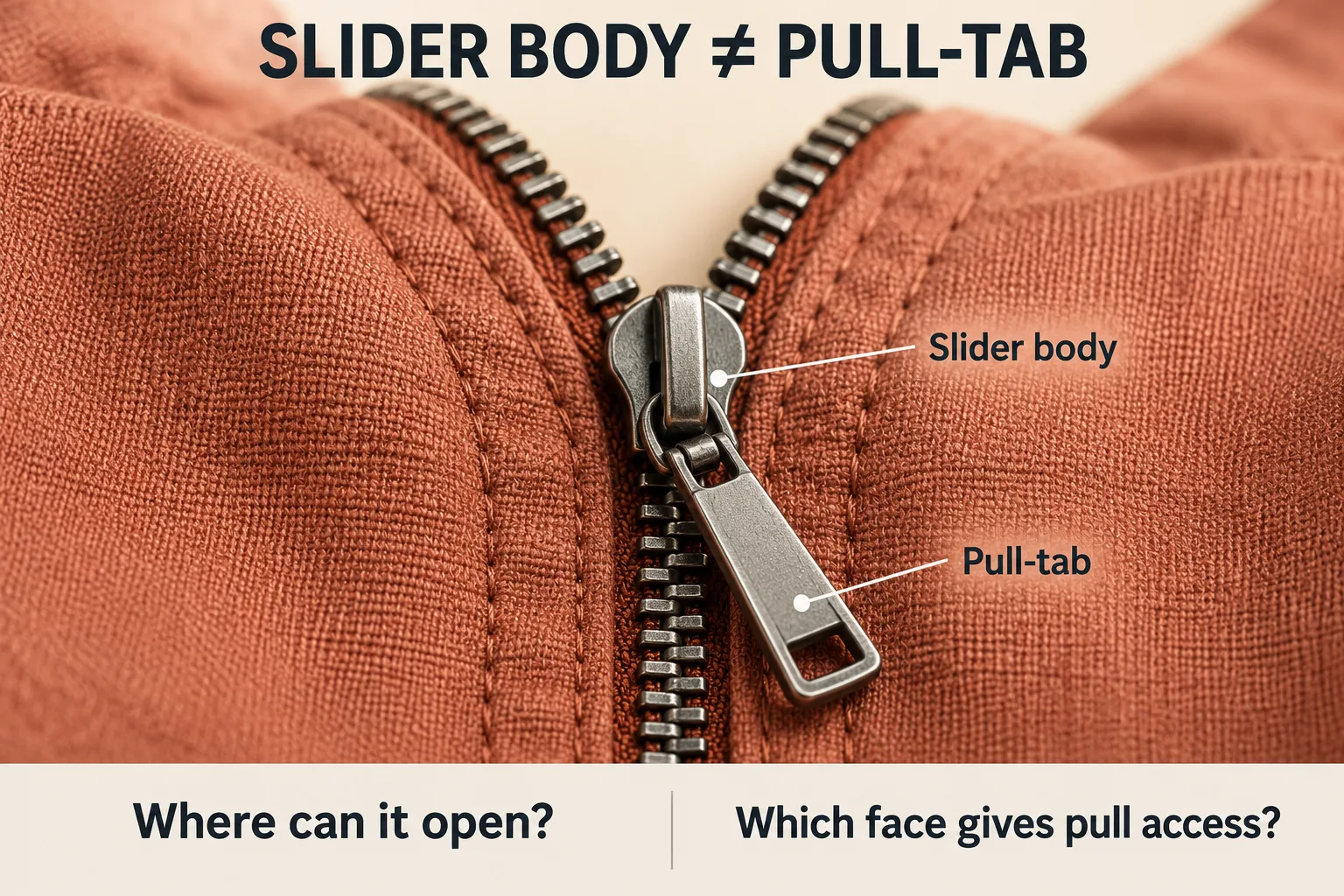
Two-way and reversible zips: check different features
Separate a zipper’s opening arrangement from front-or-back pull access. Compare two-way, separating and reversible descriptions before choosing a jacket.
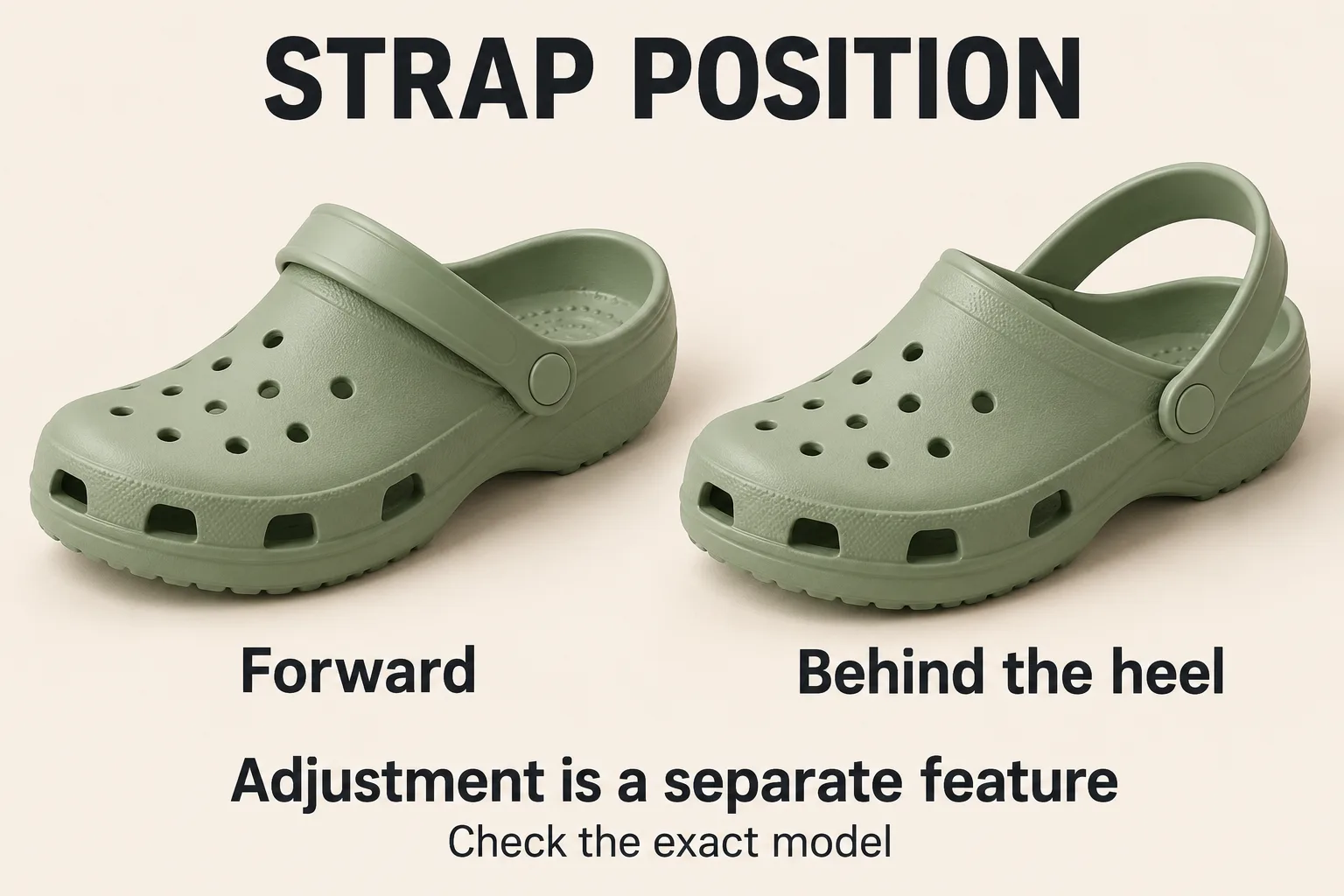
Crocs heel straps: pivoting, adjustable and sport mode
Understand pivoting and adjustable Crocs heel straps, what sport mode describes, and which details to confirm on an exact model before buying.
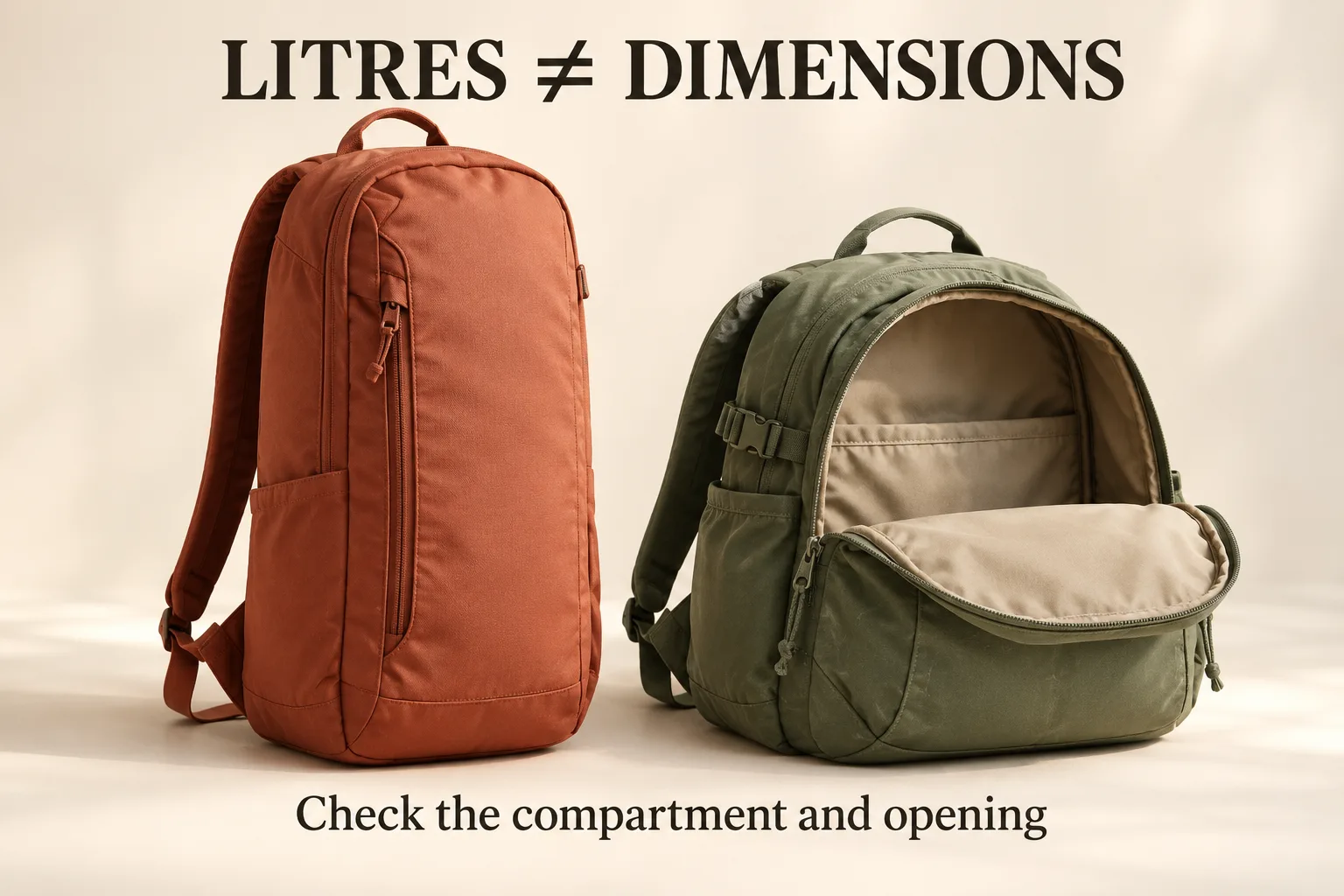
Backpack litres vs dimensions: compare capacity and fit
Learn why two 20-litre backpacks can have different dimensions, how a box-volume calculation differs from bag capacity, and what to check for your gear.