Backpack litres vs dimensions: compare capacity and fit
Learn why two 20-litre backpacks can have different dimensions, how a box-volume calculation differs from bag capacity, and what to check for your gear.
On this page
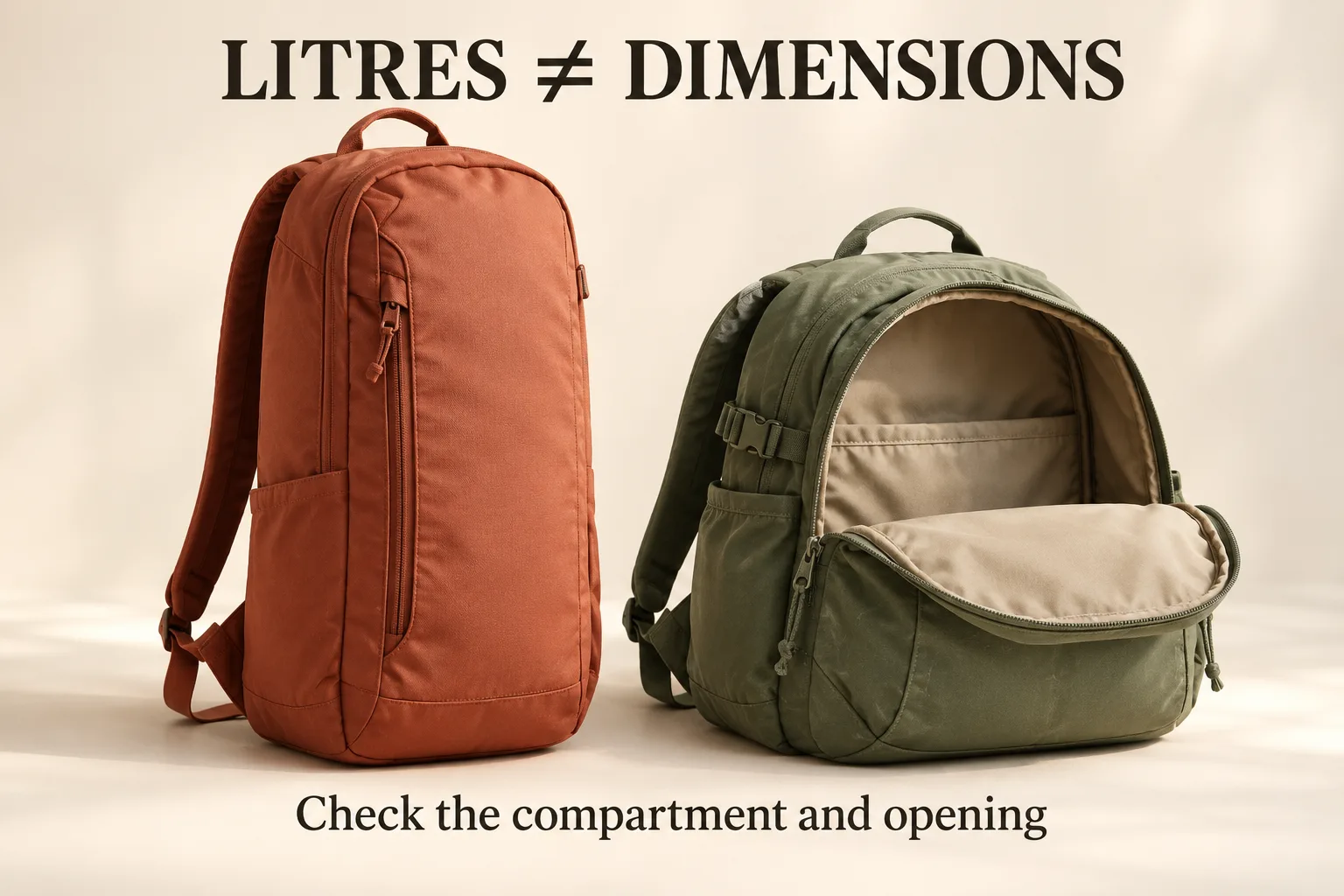
A backpack’s litre rating and its dimensions answer different questions. A 20-litre label describes a volume; it does not give you a particular height, width or opening size. Two bags with that label can have different shapes and compartment layouts. If you need room for shoes, a laptop and a change of clothes, record the capacity and the dimensions separately. Then check whether the items can enter the right compartment and whether the loaded bag fits the space where you will carry or store it.
Capacity needs a measurement method
Osprey’s volume explanation describes filling pack components with 20-millimetre plastic balls, then measuring the combined balls in a volume cylinder. It explains why a pack with curved sides cannot simply be treated as a rectangular box. This is Osprey’s published method, not evidence that every manufacturer counts exactly the same spaces.
When a capacity figure matters to your decision, ask what it includes. Does it describe the main compartment alone, or other compartments too? Is an expandable section open or closed? Record the manufacturer’s answer for the exact model instead of adding guessed pocket volumes to the advertised total. A missing explanation is an unknown, not proof that the label is wrong.
The same litres can form different shapes
NIST’s volume reference gives the conversion: 1 litre equals 1,000 cubic centimetres. For a rectangular space, multiply its three dimensions in centimetres and divide by 1,000 to obtain litres.
Consider two imaginary boxes, measured internally. One is 40 × 25 × 20 centimetres: 20,000 cubic centimetres, or 20 litres. The other is 50 × 20 × 20 centimetres and also holds 20 litres. Their side lengths and proportions differ even though their internal volumes are equal. Equal volume therefore does not mean equal dimensions, nor does it mean the same rigid object will fit in the same orientation. These are geometry examples, not measurements of backpacks.
Read the specification headings separately
Two manufacturer listings make the distinction visible. The Thule Malaysia Lithos listing and Thule Ireland Accent listing each state 20 litres but give different bag dimensions:
| Model number | Volume | Dimensions, L × W × H |
|---|---|---|
| Lithos 3204835 | 20 L | 28 × 21 × 44 cm |
| Accent 3205380 | 20 L | 26 × 23 × 45 cm |
These are regional listing examples, not a product test or a recommendation between the bags. Both pages separately identify laptop-compartment dimensions. Keep that heading with those measurements: dimensions for one compartment are not dimensions for the whole bag. Check the exact model and the order of the axes when comparing a seller’s description with the manufacturer’s information.
Why multiplying bag dimensions can mislead
Multiplying the Lithos listing’s three bag dimensions gives 25,872 cubic centimetres, or 25.872 litres. That calculation describes a rectangular space with those dimensions. It does not measure the bag’s internal storage, and the difference from its stated 20 litres is not a measurement of padding or “lost space.” The listed dimensions alone do not provide enough information to calculate either quantity. Keep the arithmetic separate from a capacity test.
Test the fit question you actually have
For a rigid item, measure its outer dimensions including the case you plan to use. Check the intended compartment and its opening, rather than relying on the overall litre rating. A roomy cavity is of little use if the item cannot pass through the opening. If the listing does not explain either measurement, ask the seller or try the actual combination before deciding.
For a load of mixed items, use a realistic packing trial. Our Crocs packing checklist helps you include the actual shoes and the rest of the load without forcing the footwear into shape. For a hike, choose the necessary equipment first using the day-hike checklist; a larger number on the bag does not decide what the outing requires. This guide does not establish airline acceptance, carrying comfort or a safe load weight.
Practical takeaway
Keep three separate notes: the stated capacity and what it includes, the bag’s dimensions, and the usable compartment or opening measurements for your important items. Use litres to compare stated volumes and matching dimensions to investigate shape. Finish with the actual load where possible. A capacity label is useful information, but it cannot replace the fit check you need.
Sources
- Volume & Packing, Osprey
- SI Units — Volume, NIST
- Thule Lithos 20L — model 3204835, Malaysia, Thule
- Thule Accent 20L — model 3205380, Ireland, Thule
Continue reading
Related articles
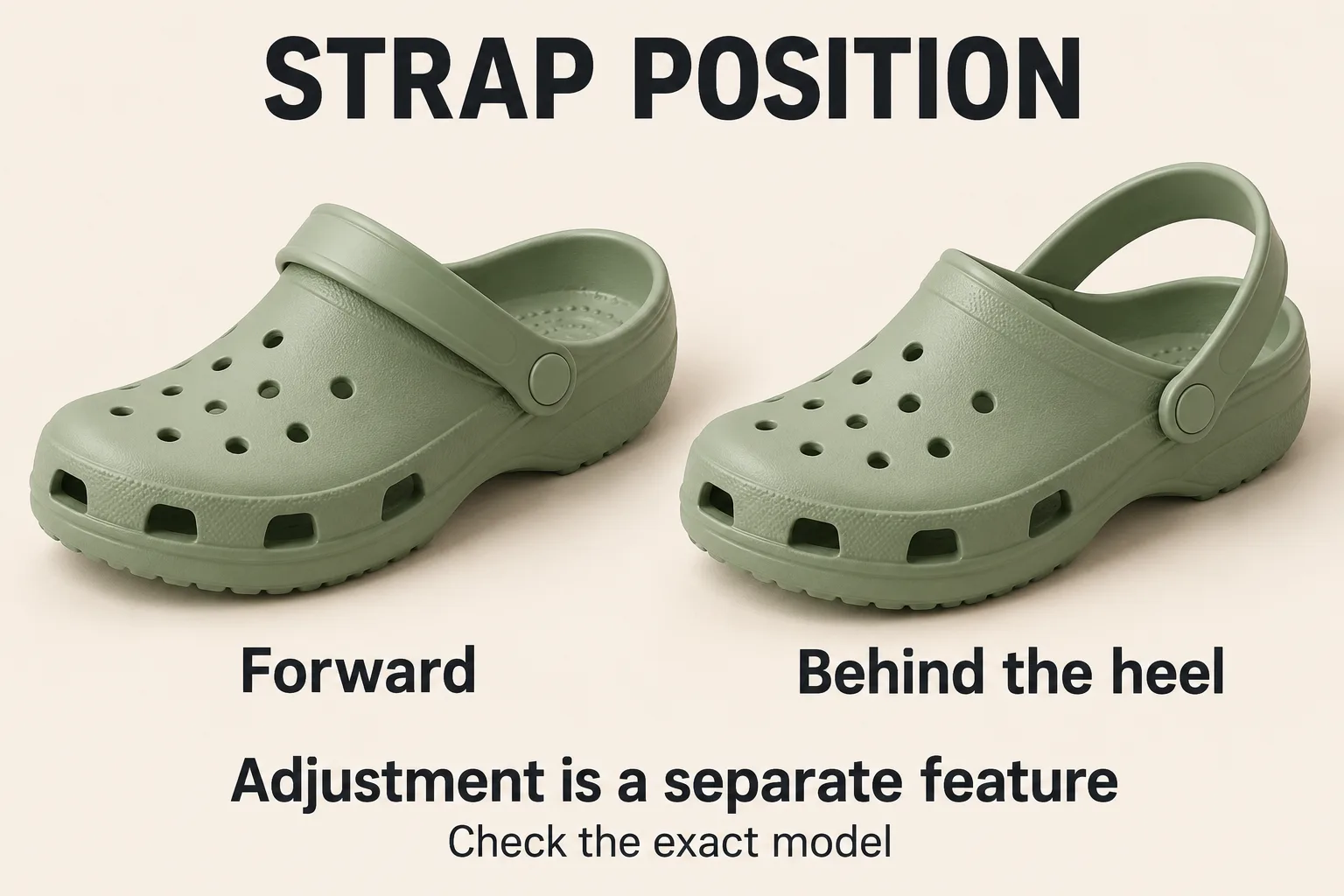
Crocs heel straps: pivoting, adjustable and sport mode
Understand pivoting and adjustable Crocs heel straps, what sport mode describes, and which details to confirm on an exact model before buying.
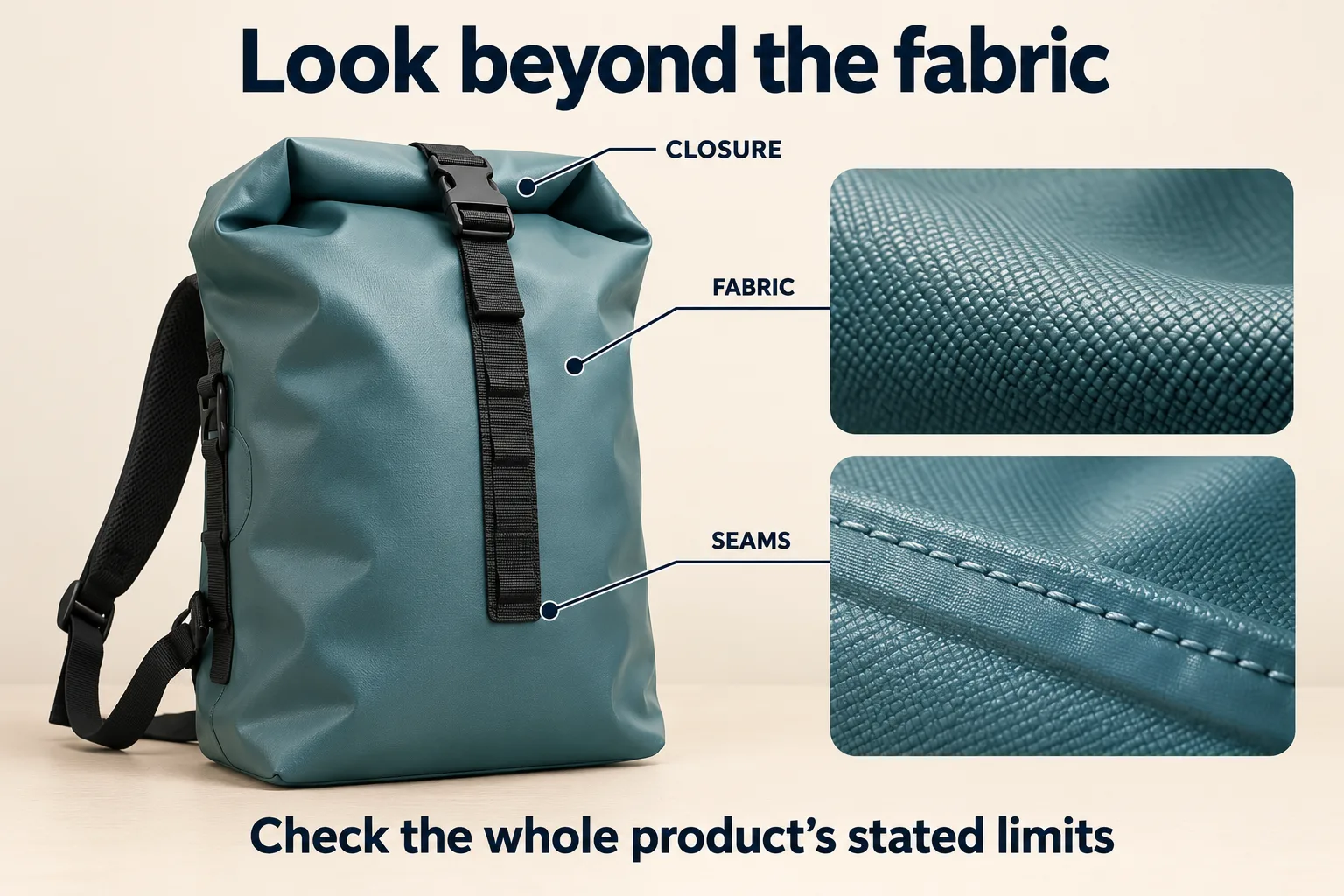
Waterproof bag claims: fabric, closures and IP ratings
Separate waterproof fabric from whole-bag protection. Read IP64 and IP67 examples, closure conditions and the limits to check before packing your belongings.
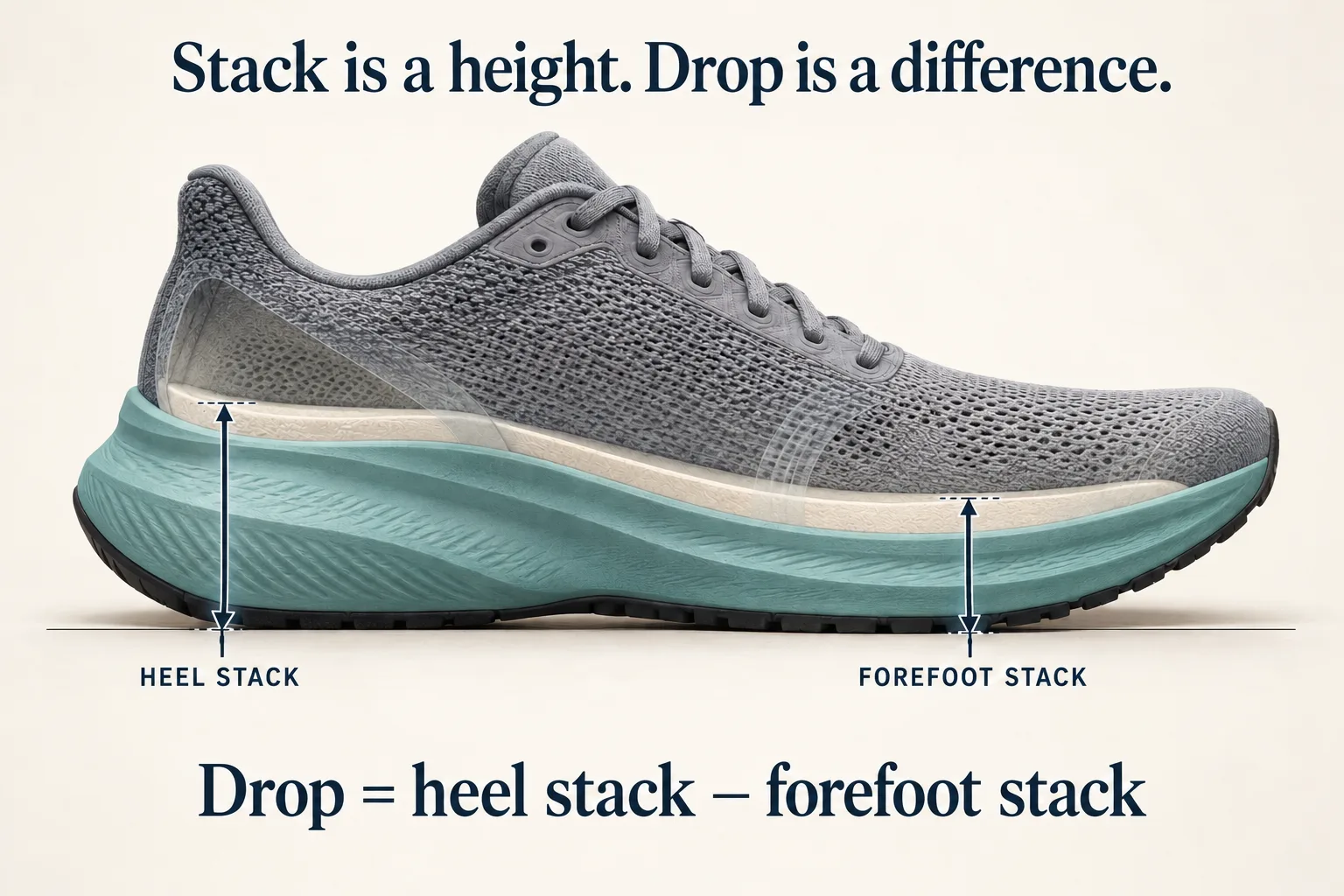
Stack height and heel-to-toe drop: read shoe specs
Compare shoe stack height and heel-to-toe drop using named manufacturer figures, a zero-drop example and a practical check for missing measurement labels.