Waterproof bag claims: fabric, closures and IP ratings
Separate waterproof fabric from whole-bag protection. Read IP64 and IP67 examples, closure conditions and the limits to check before packing your belongings.
On this page
A bag described as waterproof still needs a closer look. Is the claim about its fabric, its closed compartment or a particular kind of water exposure? Those details matter when you pack spare clothing, documents or electronics. A material specification does not answer every question about the finished bag, and a familiar-looking closure does not give every product the same limits.
Start with the exact model and the conditions you expect. Keep rain and splashes separate from immersion, then look for a stated rating and the instructions attached to it.
A fabric number describes the fabric
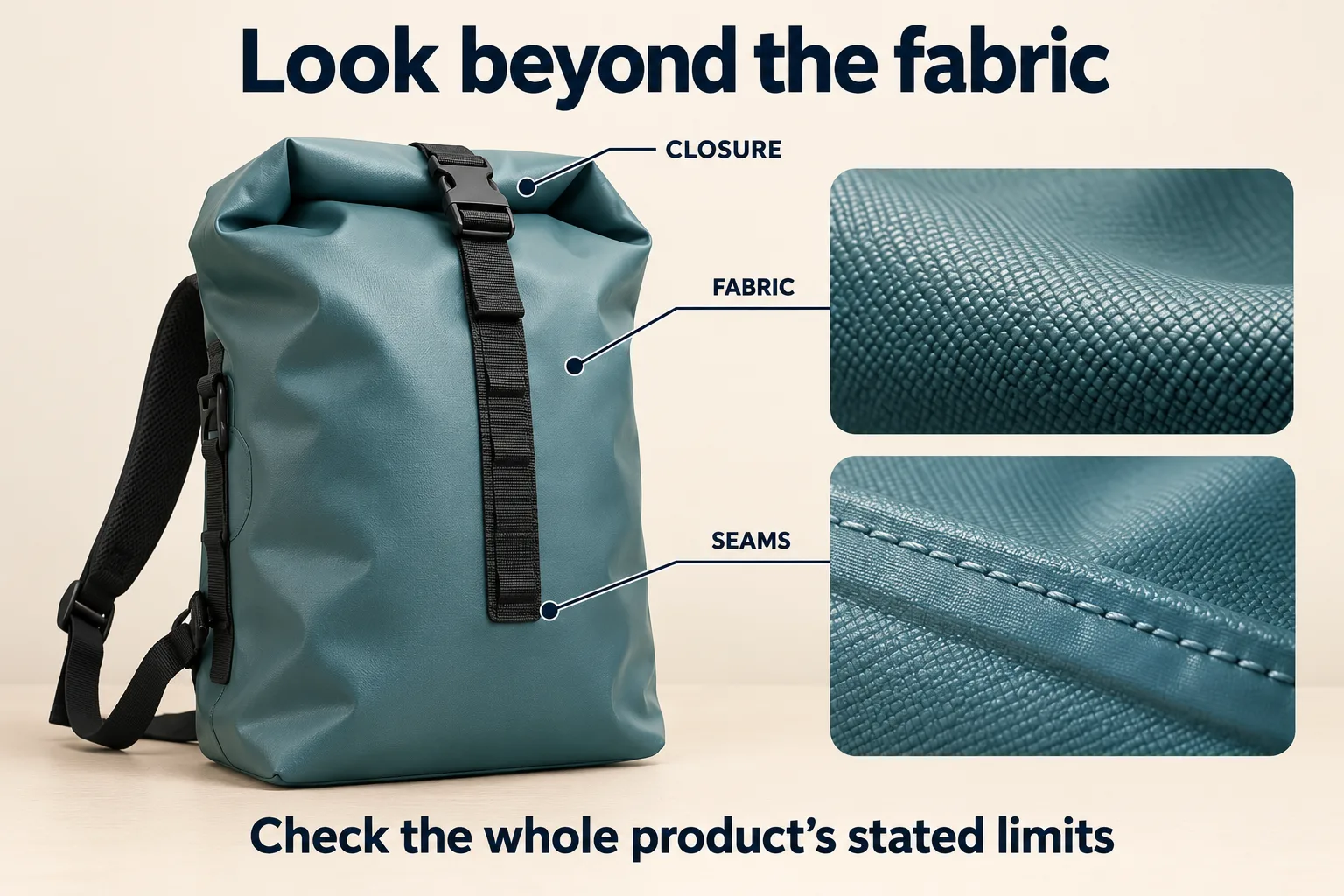
Sea to Summit’s waterproofing explanation describes hydrostatic head as resistance to water pressure. Its illustration uses a fabric sample sealed beneath a column of water; the height is expressed in millimetres. That is a way to describe a material’s performance, not the depth to which you may safely submerge a packed bag.
The same explanation distinguishes the fabric from seams and the roll-top closure. A high fabric figure cannot tell you whether water can enter elsewhere. When a listing provides a number, keep its subject beside it: fabric, coating or complete product. If that subject is unclear, ask rather than transferring the number to the whole bag.
Read the product’s rating, not the page’s glossary
Two ORTLIEB US listings show why this needs care. The Safe-it pouch page assigns that product IP64. Its explanatory panel also lists IP67, IP54 and IP53. Those other entries are a glossary, not additional ratings earned by the Safe-it.
The Atrack backpack page assigns IP67. ORTLIEB describes IP64 as dust-tight and protected against splashes from all directions; it describes IP67 as dust-tight with temporary immersion protection up to one metre for 30 minutes. These are the manufacturer’s stated conditions, not results of a CrocsDeal product test.
Keep the closure condition beside the claim
| Product | Stated rating | Closure condition |
|---|---|---|
| Safe-it pouch | IP64 | Roll down 3–4 times and secure downward. |
| Atrack backpack | IP67 | Fully close the zipper, with its slider correctly seated in the end stop. |
The Safe-it instructions warn that water may enter through the closure if the product is fully submerged. The Atrack instructions also describe zipper care, including keeping it clean and following the specified lubrication instructions. Read those complete instructions for the version you own; the table is a comparison of claims, not a replacement manual or a recommendation between unlike products.
A roll-top shape is not a universal promise
Sea to Summit’s closure guidance gives a particular folding and buckling sequence and tells owners to inspect the fabric and inner coating before use. It also warns that dry bags are not guaranteed to protect electronics in heavy submersion conditions. Follow the instructions for your actual bag rather than assuming another brand’s fold count applies.
If a description only says waterproof fabric, leave immersion protection unconfirmed. An unknown is a question for the manufacturer, not a reason to assume the strongest rating. Equally, a missing published IP code does not by itself prove that a product leaks.
Make a comparison that matches your load
For each candidate, write down the model, the part covered by the claim, the stated exposure limits and the required closure. Then record the care instructions and any exclusions relevant to your belongings. Compare those answers before comparing prices. For valuable electronics, ask specifically about that use and the expected exposure; do not resolve uncertainty with a home immersion experiment containing the device.
Water protection and packing space are separate checks. Our guide to backpack litres and dimensions explains capacity and fit, while the day-hike checklist helps plan the wider load. A bag rating does not establish that a route, river crossing or activity is safe, and this article offers no such assurance.
Practical takeaway
Keep three things together: what was rated, the stated exposure conditions and how the product must be closed and maintained. Read the exact product heading before borrowing a number from a glossary. A waterproof label becomes more useful when its limits stay attached.
Sources
- Just how waterproof is waterproof?, Sea to Summit
- Safe-it — US product information, ORTLIEB
- Atrack — US product information, ORTLIEB
- How should I correctly close a dry bag roll-top closure?, Sea to Summit
Continue reading
Related articles
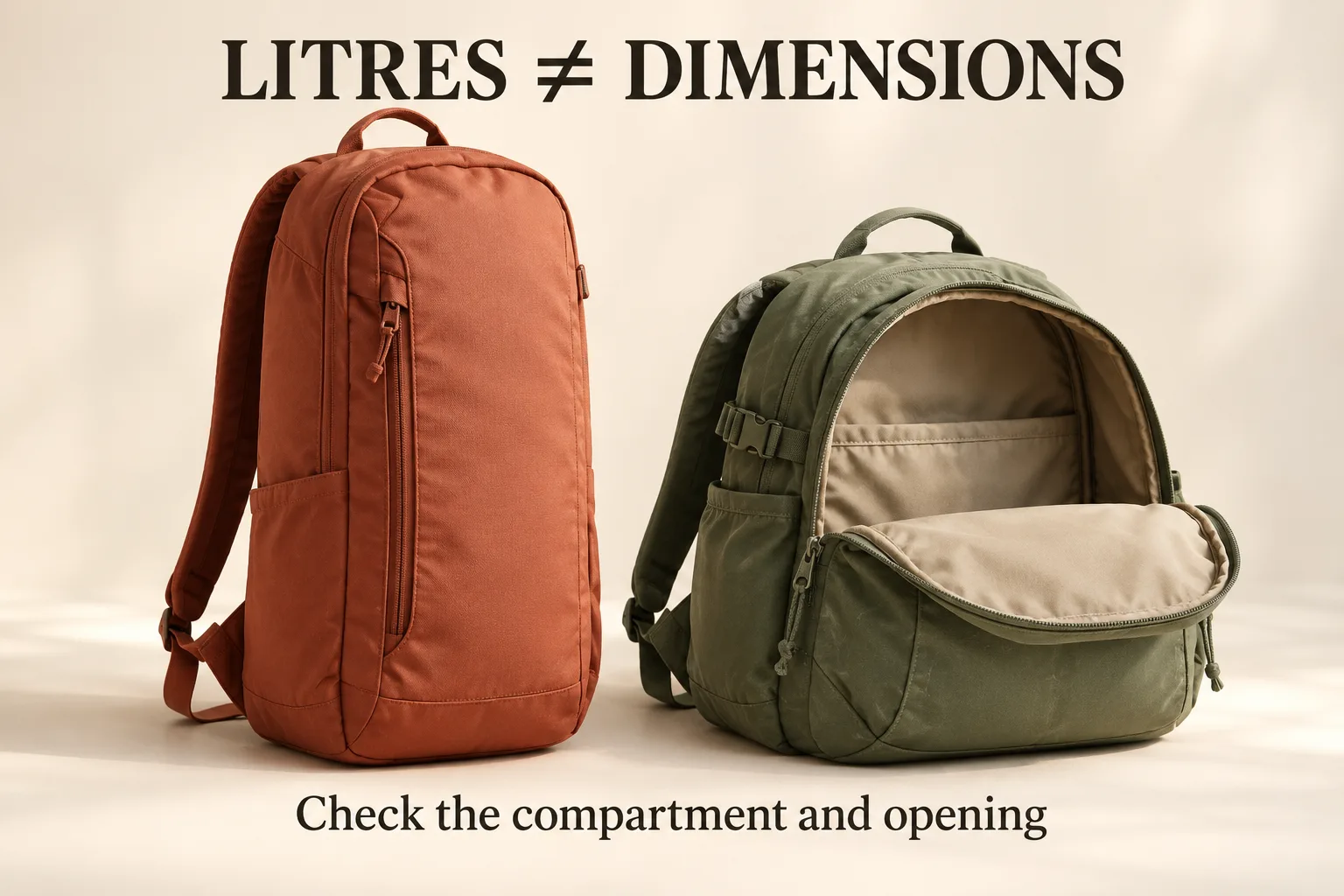
Backpack litres vs dimensions: compare capacity and fit
Learn why two 20-litre backpacks can have different dimensions, how a box-volume calculation differs from bag capacity, and what to check for your gear.

Stack height and heel-to-toe drop: read shoe specs
Compare shoe stack height and heel-to-toe drop using named manufacturer figures, a zero-drop example and a practical check for missing measurement labels.
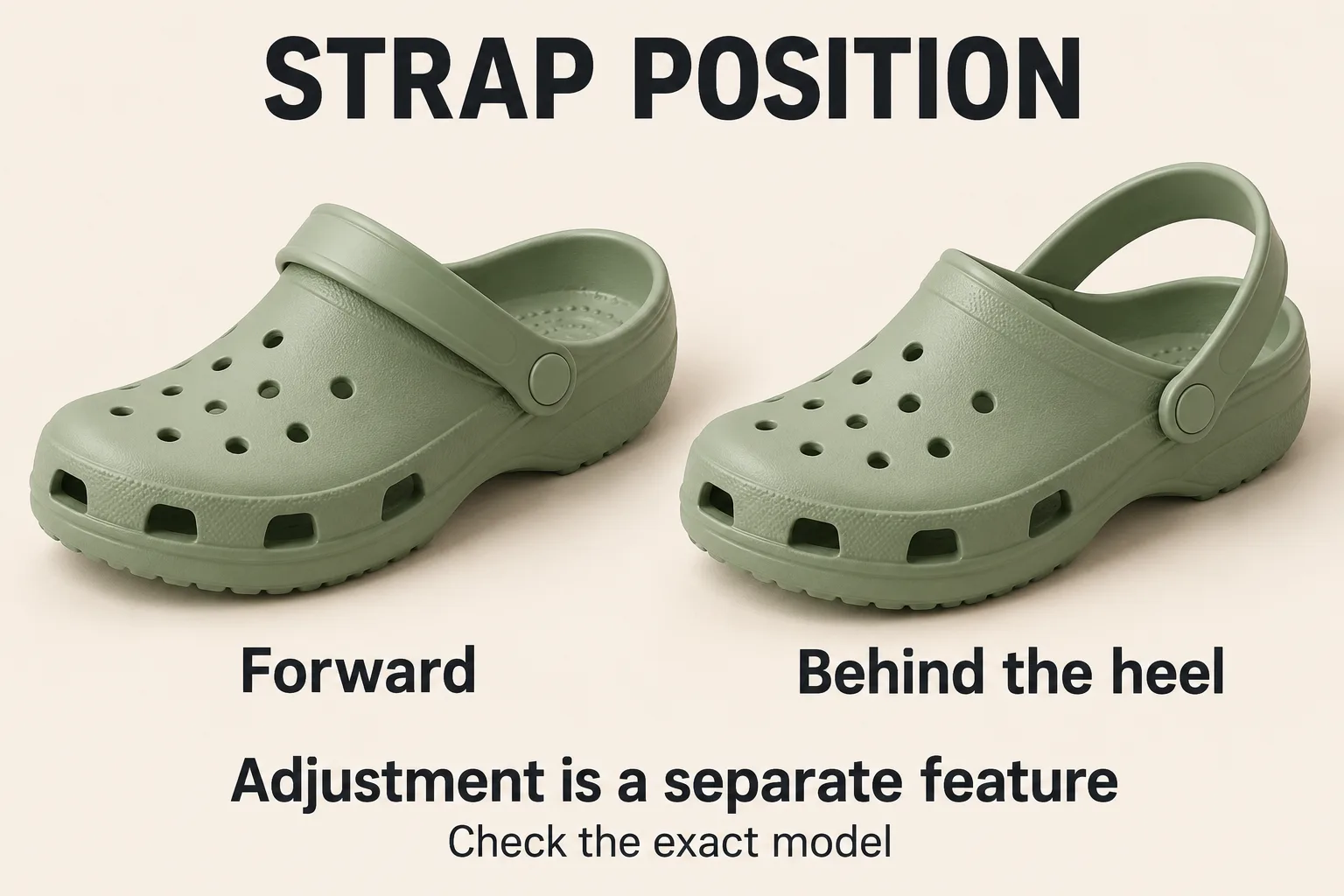
Crocs heel straps: pivoting, adjustable and sport mode
Understand pivoting and adjustable Crocs heel straps, what sport mode describes, and which details to confirm on an exact model before buying.