Stack height and heel-to-toe drop: read shoe specs
Compare shoe stack height and heel-to-toe drop using named manufacturer figures, a zero-drop example and a practical check for missing measurement labels.
On this page
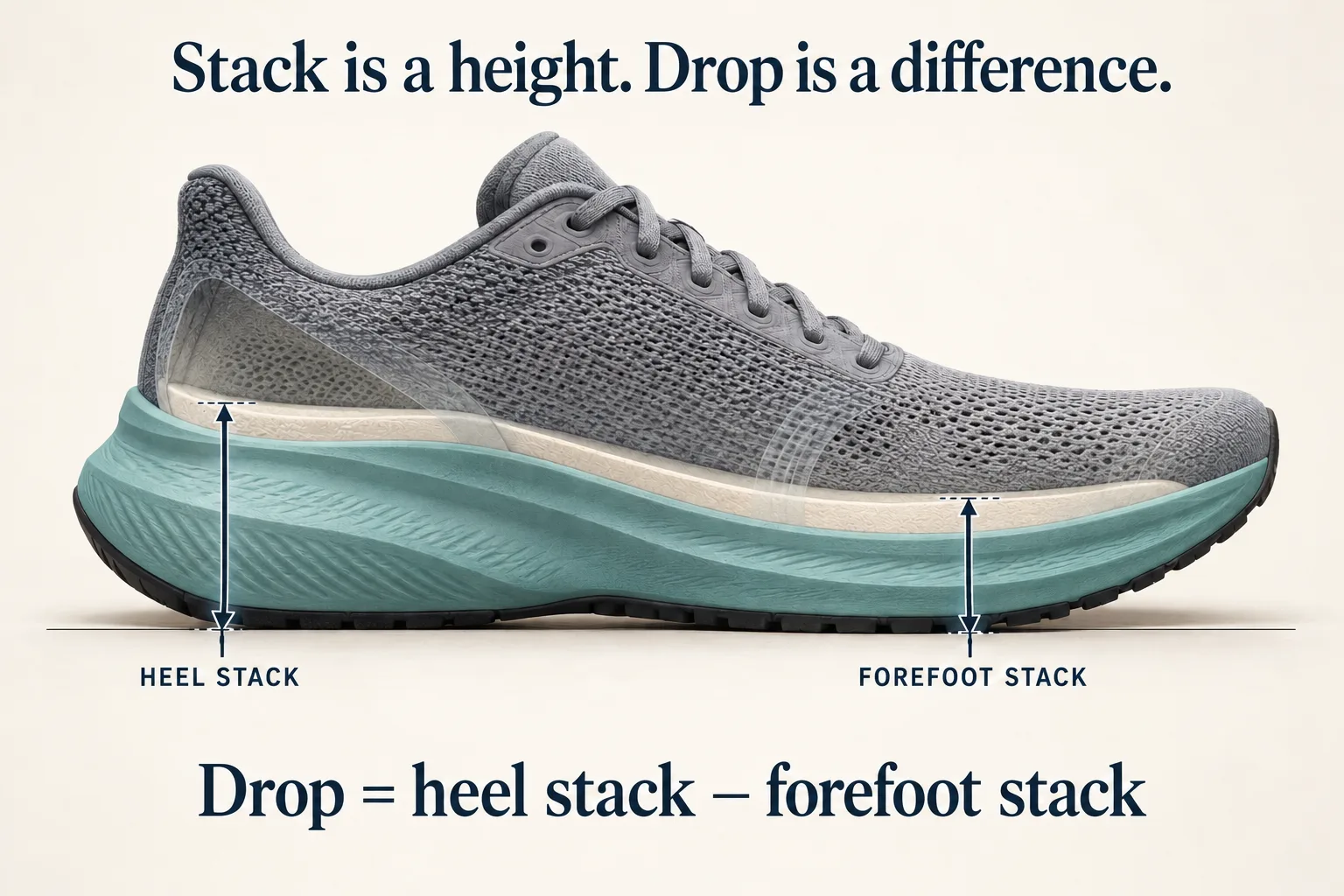
A shoe listing can show a large stack height and a small heel-to-toe drop without contradicting itself. The two figures answer different questions: how high are the specified points under the foot, and how far apart are those heights? Reading them separately helps you compare specifications without turning a number into a verdict about comfort.
This guide works through manufacturer examples and a missing-information check. CrocsDeal has not measured, cut open or run in these shoes. The arithmetic compares published figures; it is not a recommendation to change footwear or running technique.
Read height and difference as separate fields
Heel-to-toe drop is a difference between the heel and forefoot levels. Brooks’ gear glossary also calls it offset and illustrates it by subtracting the forefoot figure from the heel figure. For a positive drop, the heel measurement is larger.
Stack height concerns the height of the shoe underfoot at the point being described. Look for a heel value, a forefoot value, or an explicitly labelled pair. A single number without its location is less informative. Do not confuse a length measurement used for shoe sizing with either of these vertical dimensions.
ASICS’ explanation of drop and stack height makes the useful distinction that shoes with different cushioning heights can have the same drop. A matching difference does not mean matching heights.
Compare two published pairs of heights
The adidas US Hyperboost comparison lists a heel stack of 45 mm and forefoot stack of 39 mm for Hyperboost Edge. It lists 38 mm and 32 mm respectively for Hyperboost Run. Keep the model names attached to their figures.
| Model | Heel / forefoot | Calculated difference |
|---|---|---|
| Hyperboost Edge | 45 / 39 mm | 45 − 39 = 6 mm |
| Hyperboost Run | 38 / 32 mm | 38 − 32 = 6 mm |
Both subtractions give 6 mm. Yet the Edge figures are 7 mm higher at both listed points. Adding the same amount to both heights leaves their difference unchanged. That is why a drop-only filter cannot tell you which of these two specifications has the taller stack.
The last column is our calculation from the cited numbers, not an independent measurement. The table makes no claim about cushioning softness, energy return, durability or which model is better for a particular person.
Zero drop does not mean zero height
The English-language Czech-region Altra men’s Torin 8 listing, product code AL0A85QE000, gives a 0 mm heel-to-toe drop and a stack-height pair of 30 mm/30 mm. Equal heights produce a zero difference; they do not disappear.
In this example, zero describes the relationship between the two levels. It does not mean that the shoe has no sole or that the foot sits directly on the ground. Keep this particular listing separate from other Torin versions, and do not extend its figures to every Altra model.
Leave an unlabelled height unresolved
Suppose a hypothetical listing says only “stack: 32 mm; drop: 6 mm”. If 32 mm means heel height, subtracting the drop gives a 26 mm forefoot figure. If it means forefoot height, adding the drop gives a 38 mm heel figure. Without the location label, choosing either interpretation would be a guess.
Ask which point the stack number describes and whether the two values use the same measurement basis. If the seller cannot confirm that, record the missing detail instead of inventing a complete pair. A side photograph is not a substitute for the omitted specification.
Make a specification note before a fit decision
Save the exact model or product code, regional page, heel and forefoot labels, units and stated drop together. Keep any calculated result in a separate field. Record the measurement size or method when supplied; leave it unknown when it is not stated.
Our Crocs platform-height guide covers a different measurement: the stated floor-to-heel-rest height. The athletic shoe fit checklist covers assessing a pair. Neither fit nor activity suitability follows from the subtraction alone.
Practical takeaway
Read the locations first, then the numbers. Stack describes a height; drop describes a difference. Keep the manufacturer's figures separate from your arithmetic, resolve missing labels and use the result as one part of a comparison, not a ranking of shoes or a promise about your body.
Sources
Continue reading
Related articles
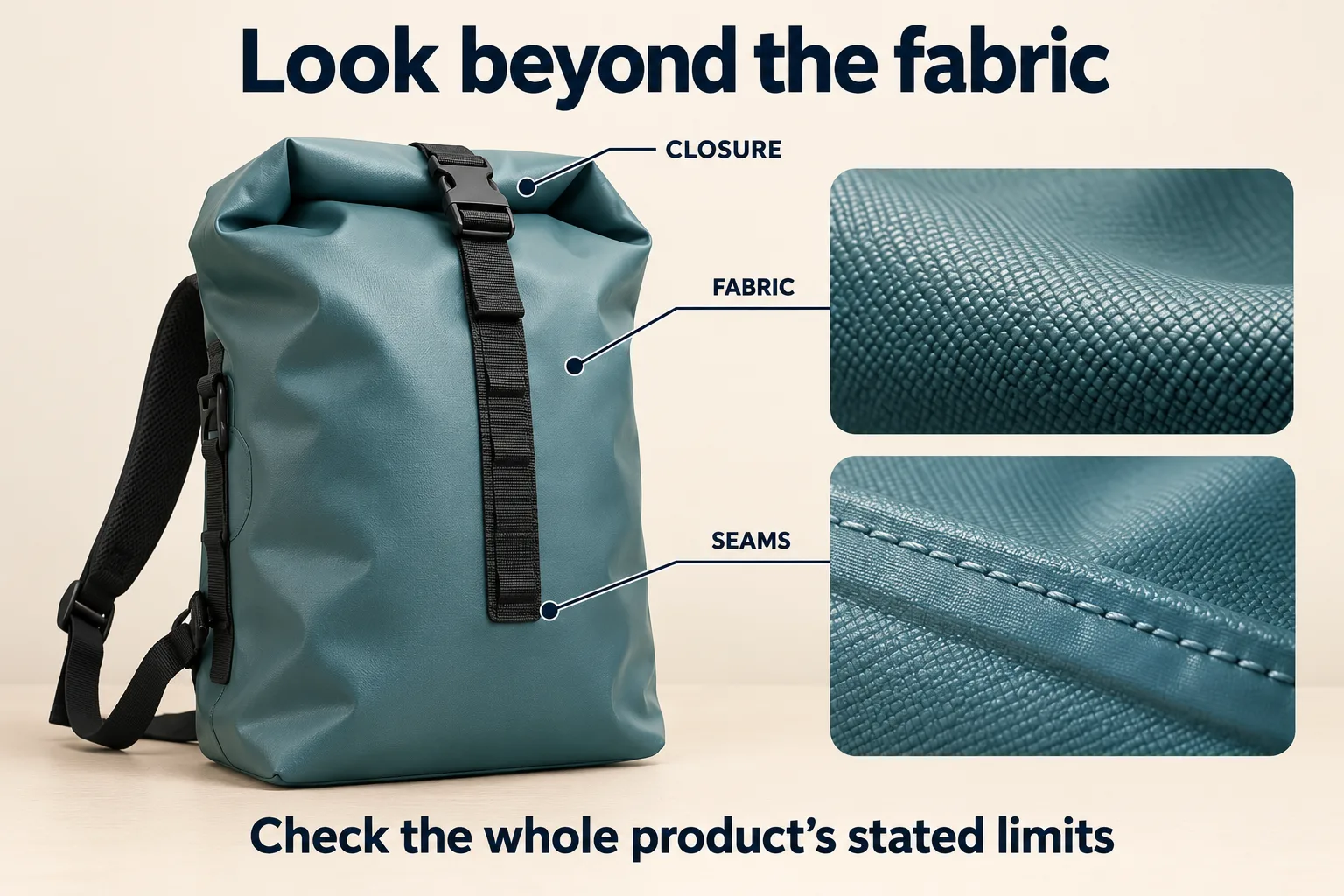
Waterproof bag claims: fabric, closures and IP ratings
Separate waterproof fabric from whole-bag protection. Read IP64 and IP67 examples, closure conditions and the limits to check before packing your belongings.
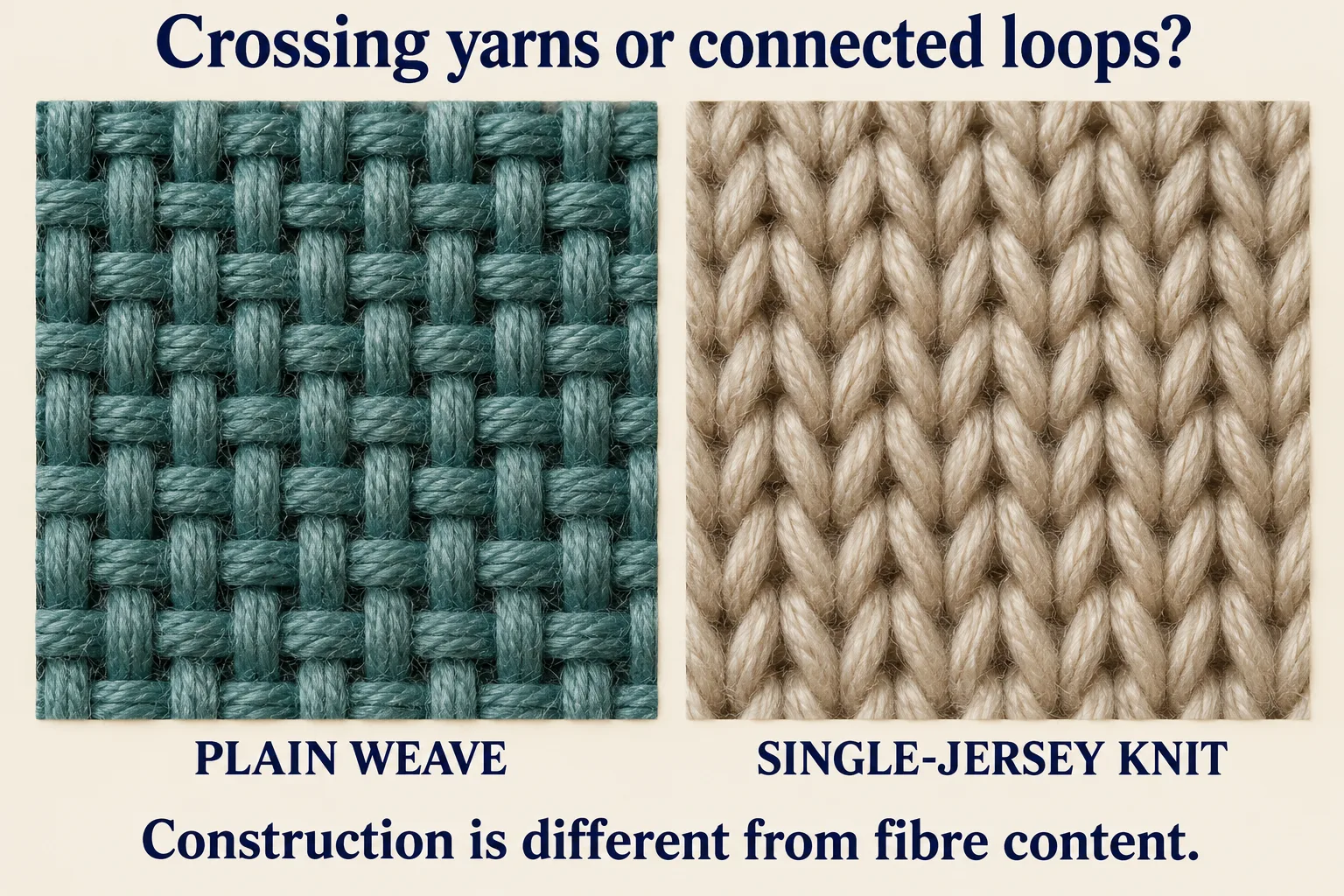
Knit or woven? Read the fabric construction
Tell knitted and woven construction apart using yarn and loop clues, understand why stretch is inconclusive, and ask for the right details when shopping.

Backpack litres vs dimensions: compare capacity and fit
Learn why two 20-litre backpacks can have different dimensions, how a box-volume calculation differs from bag capacity, and what to check for your gear.