Tennis grip sizes: numbers, inches and overgrips
Decode tennis grip size 2 and 4¼-inch labels, distinguish Babolat hand-measurement ranges, and tell a replacement grip from an overgrip.
On this page
A tennis racket marked grip size 2 and one marked 4¼ inches can carry the same size designation. A chart showing a 107 mm hand measurement is describing something else: a way to select a size. Confusing those fields can send you looking for a handle with the wrong specification.
This guide explains the numbered labels, a manufacturer’s hand-measurement chart and the layers wrapped around a handle. It does not prescribe a size for your body, promise injury prevention or report a product test.
The number identifies a handle circumference
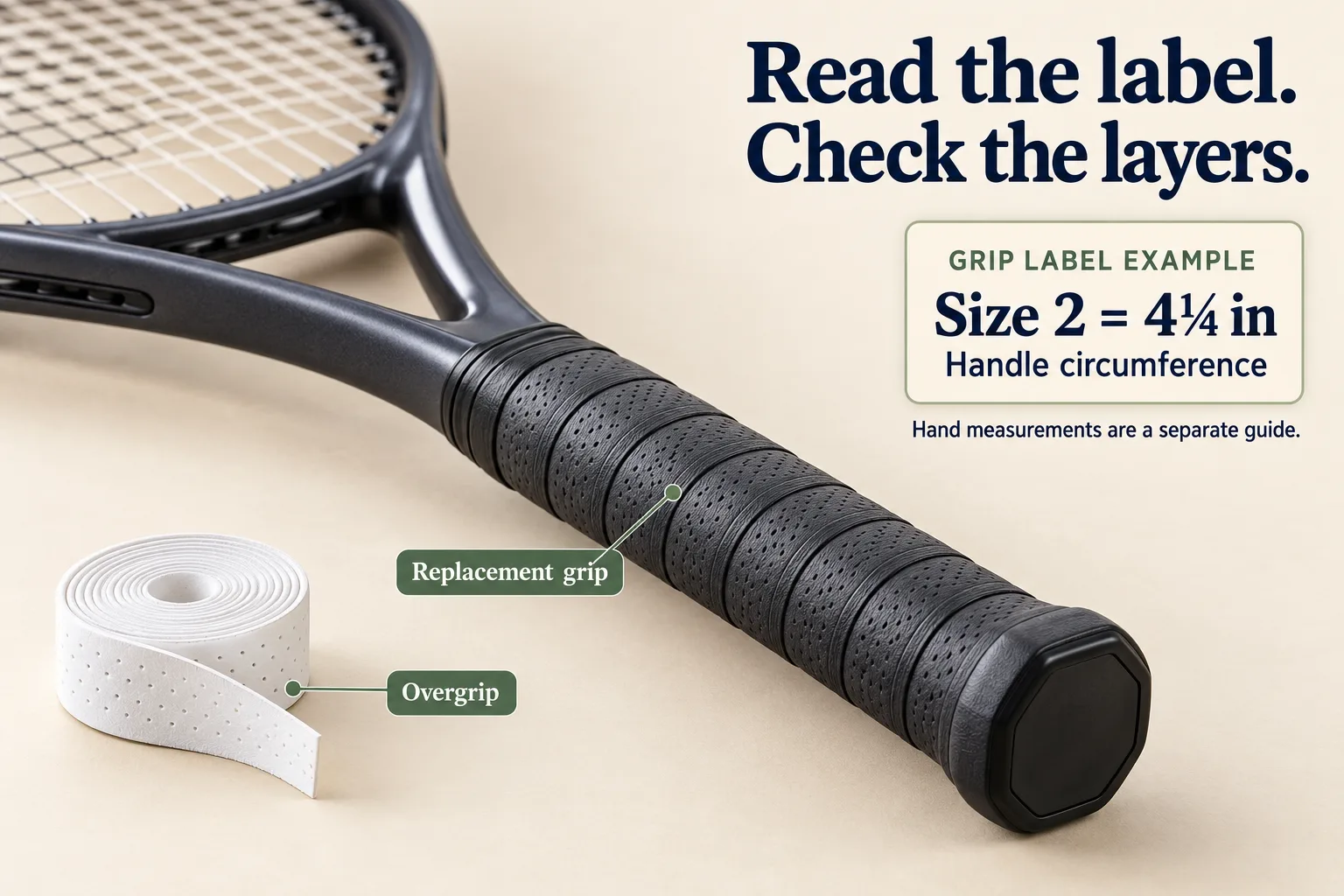
The LTA’s grip-size guide defines grip size as the distance around the racket handle. Its table pairs size 2 with 4¼ inches, size 3 with 4⅜ inches and size 4 with 4½ inches. These are circumference labels, not handle length or diameter.
Wilson’s racket-selection guide gives the same pairings within its size 0–5 list. Adjacent entries differ by one eighth of an inch. The numbered code itself has no inch unit: “size 2” does not mean a two-inch handle.
When comparing two listings, translate the code before treating them as different variants. Conversely, a listing that combines “size 2” with “4⅜” needs clarification. Those labels point to different rows in these guides; do not choose whichever description suits your expectation.
Read the hand column as a fitting guide
Babolat’s adult grip-size help page describes measuring from the ring-finger tip to the second line in the palm. Its millimetre column is explicitly a hand measurement. The three rows below are an extract from that manufacturer’s chart, not measurements of a racket.
| EU code | US label | Hand range |
|---|---|---|
| 2 | 4¼ in | 106–108 mm |
| 3 | 4⅜ in | 109–111 mm |
| 4 | 4½ in | 112–114 mm |
Following that method, a 107 mm hand measurement falls in Babolat’s size 2 row. Treat it as the brand’s starting recommendation, not a guarantee that every size 2 racket will feel right. Keep the measurement method with the result; a finger length measured from a different starting point is not the same input.
Why converting the inches does not reproduce the range
NIST’s length reference defines one inch as exactly 25.4 mm. Therefore 4¼ × 25.4 equals 107.95 mm. That converts a single circumference value into another unit. It does not produce the 106–108 mm hand range above.
The similar numbers can make the columns look interchangeable. They are not: one names the handle size and the other groups hand measurements for a recommendation. Do not relabel the hand range as a manufacturing tolerance or reject a racket because its label does not reproduce your hand measurement exactly.
A replacement grip and an overgrip are different layers
The LTA distinguishes the primary replacement grip attached to the handle from a thinner overgrip wrapped over it. An overgrip adds material outside that primary layer. Buying an overgrip therefore does not mean you have bought a replacement for the underlying grip.
Ask which layer needs attention before ordering. If an existing racket feels familiar, note whether it has an overgrip before comparing another racket with the same printed size. The label alone does not describe that added layer. Follow the specific wrapping instructions rather than assuming every overgrip produces an identical increase.
Compare the same setup before choosing
Consider a borrowed size 2 racket with an overgrip and a new size 2 racket without one. The matching codes establish the listed size, but they do not establish matching outer surfaces. Identify the difference before deciding that one seller has supplied the wrong size.
For an unclear listing, ask: “Is this the size 2 / 4¼-inch variant, and does the pictured handle include an added overgrip?” Keep the reply with the model details. This fictional enquiry resolves two concrete ambiguities without turning a chart into a universal fitting rule.
Practical takeaway
Match the size code to its inch label, keep hand measurements in their own column and identify the grip layers. Assess the actual setup separately. For other equipment-label questions, browse Activewear & Gear; for reading a match result, see our tennis score guide.
Sources
- Understanding tennis racket grip sizes & overgrips, Lawn Tennis Association
- How to Choose a Tennis Racket (Size, Weight & Grip Guide), Wilson Sporting Goods
- Adult - Grip size, Babolat
- SI Units – Length, National Institute of Standards and Technology
Continue reading
Related articles
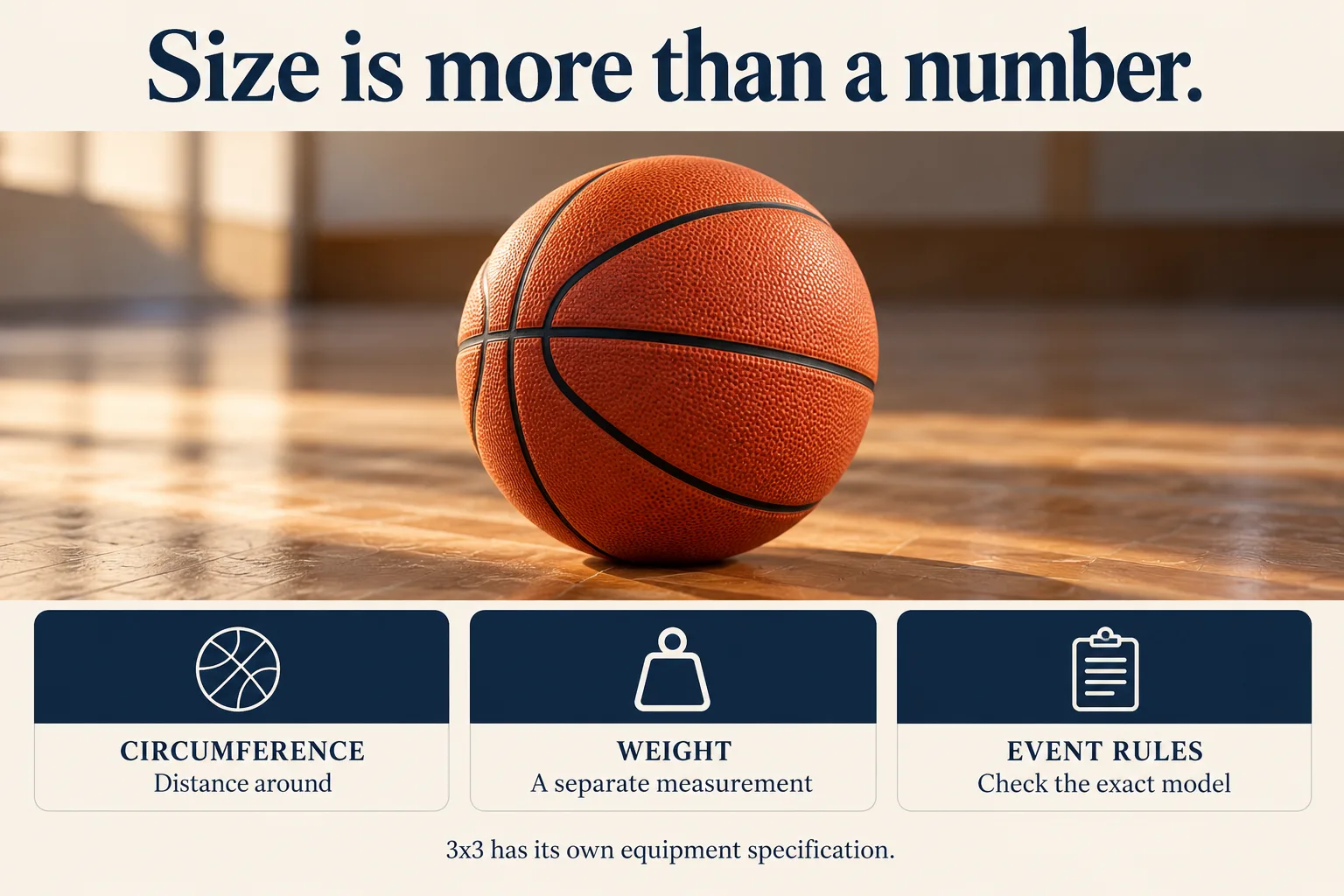
Basketball sizes and the 3x3 exception: circumference vs weight
Understand basketball circumference and weight, compare FIBA size 6, size 7 and 3x3 specifications, and check the exact ball required for your event.
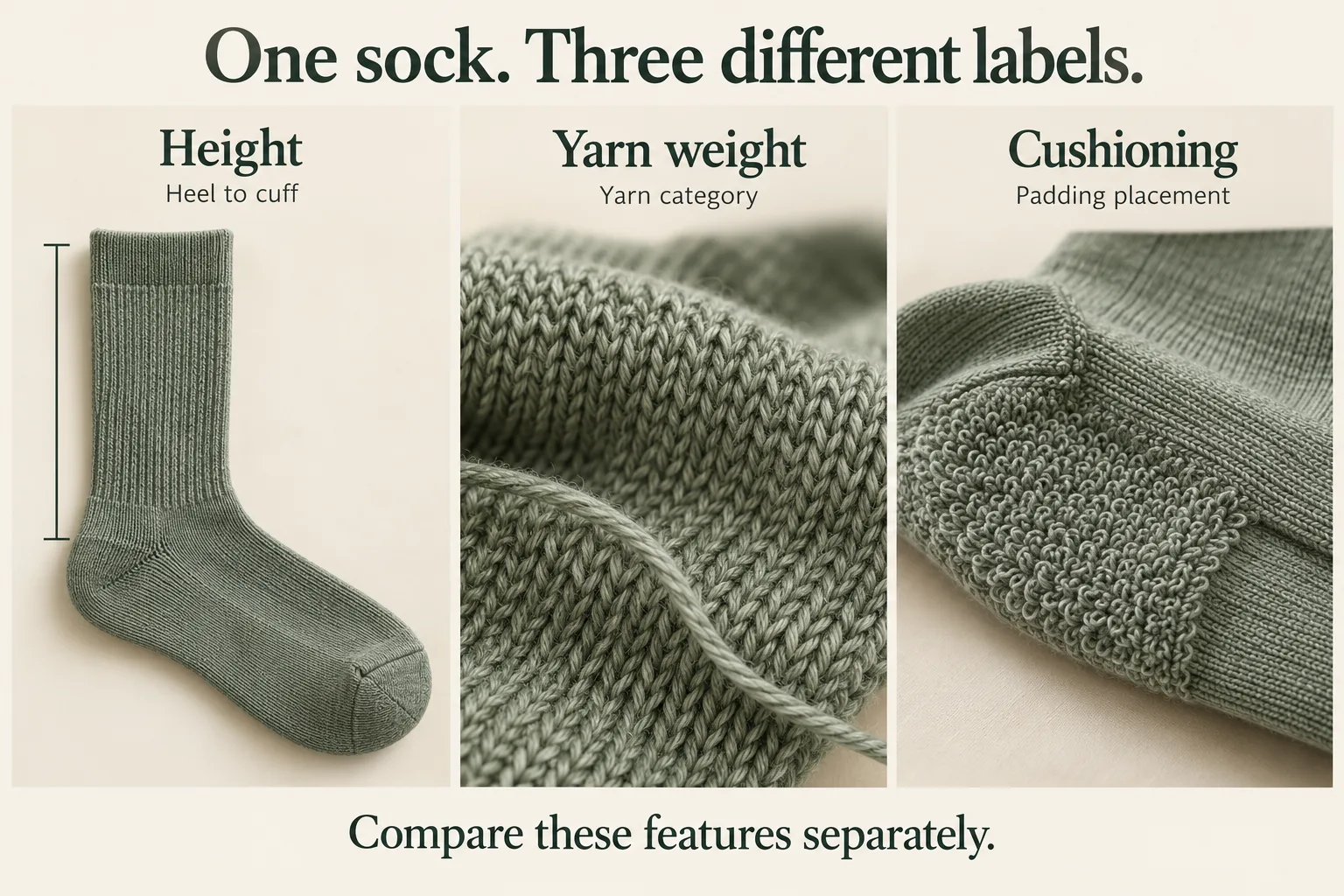
Sock height, yarn weight and cushioning explained
Understand crew height, lightweight yarn and sock cushioning as separate choices. Compare heel-to-cuff measurements and padding zones without assuming fit.
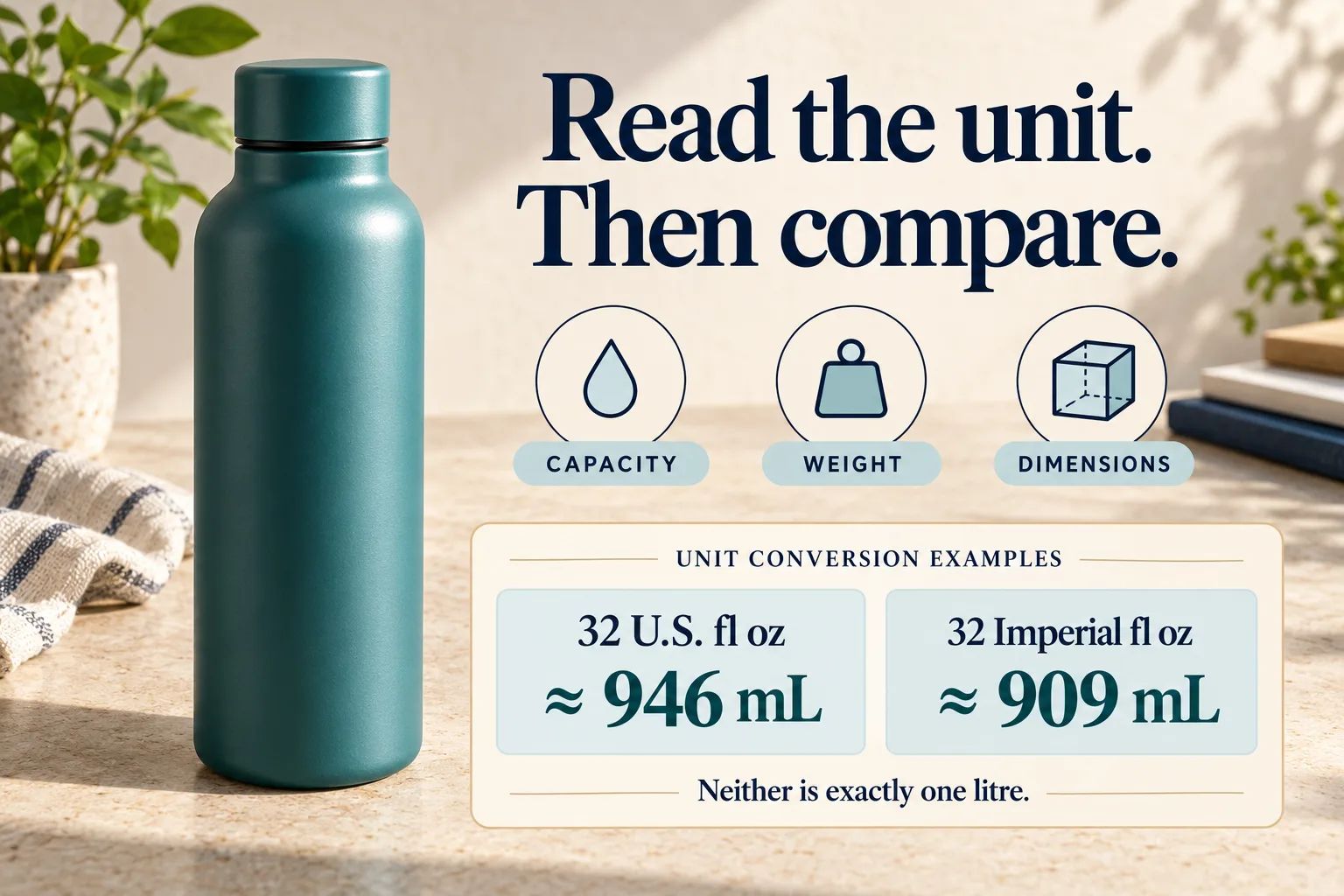
Water-bottle labels: fluid ounces, weight and size
Read water-bottle capacity, weight and dimensions correctly. Compare U.S. and Imperial fluid ounces and keep the exact bottle and cap specifications together.