Tennis ball labels: regular duty, extra duty and altitude
Understand regular-duty, extra-duty and high-altitude tennis-ball labels. Compare exact variants, court surfaces and manufacturer-specific elevation guidance.
On this page
“Extra duty” and “high altitude” answer different questions about a tennis ball. The first points to a felt and court-surface variant; the second identifies a version intended for play at elevation. A ball can carry both labels, so treating them as three mutually exclusive grades can lead to the wrong purchase.
Start with the surface at your venue and the exact ball name. This guide uses manufacturer examples to explain the wording. It does not rank brands, report a playing test or certify a ball for your competition.
Read duty as a surface clue
Wilson Australia’s tennis-ball guide associates extra-duty balls with hard, abrasive courts and regular-duty balls with softer surfaces, including clay. It describes different felt constructions for those uses. “Extra” therefore does not mean a universal upgrade for every place you play.
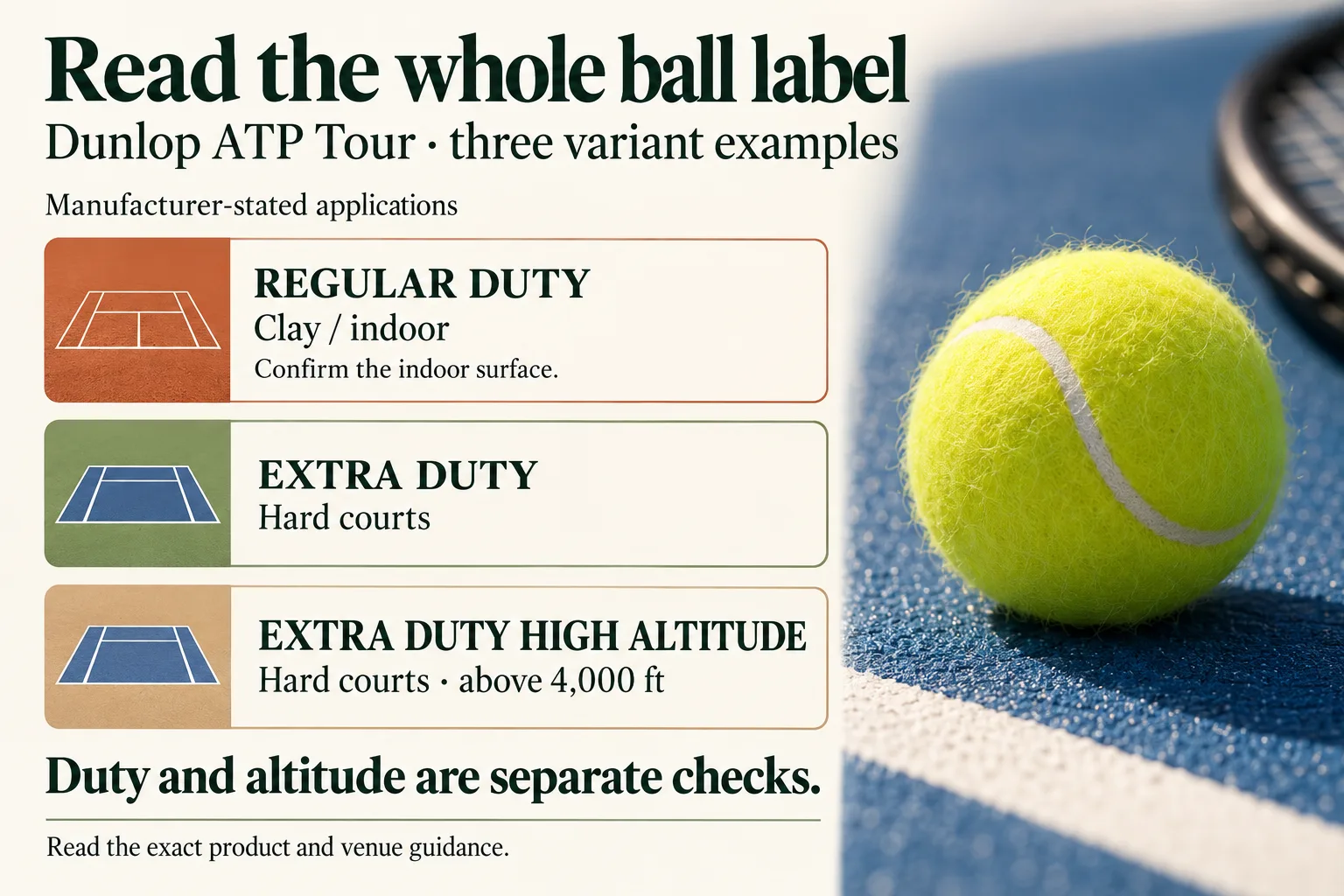
The distinction is visible within one product family. Dunlop describes its ATP Tour Extra Duty ball as intended for hard courts. Its ATP Tour Regular Duty version is described for clay and indoor courts with less abrasive surfaces. These are the manufacturer’s stated applications, not results from our own durability comparison.
Keep the family name and variant together when searching. “ATP Tour tennis balls” alone does not distinguish those two products. If you are replacing a familiar can, photograph the full label rather than remembering only its colour.
Ask what “indoor” means at your venue
Indoor describes where a court sits, not what its playing surface is made from. A product description that mentions indoor play is not enough to identify the right ball for every covered court. Ask the venue for the surface and its preferred ball specification.
For example, “It is an indoor court” leaves a useful question unanswered. A clearer enquiry is: “What is the playing surface, and do you recommend a regular-duty or extra-duty variant for it?” This is a fictional enquiry, not a universal instruction from a governing body.
The answer may also depend on the session. A club can provide the balls or specify a particular model for an organised match. Check that before buying a case on the assumption that any ball with the right surface label will be accepted.
Altitude is a separate specification
Dunlop also sells an ATP Tour Extra Duty High Altitude ball. Its page combines hard-court felt with a pressure-adjusted core and specifies use above 4,000 feet. Both parts of the product name matter.
| Variant | Surface | Altitude label |
|---|---|---|
| Regular Duty | Clay / indoor | No high-altitude label |
| Extra Duty | Hard courts | No high-altitude label |
| Extra Duty High Altitude | Hard courts | Above 4,000 ft |
In the first two rows, the final column describes the product label; it is not a measured elevation limit. The table does not establish a threshold for every tennis ball.
Wilson’s guide describes its high-altitude category for courts above 3,500 feet. That differs from the figure on the specific Dunlop page. Preserve the brand and model alongside each number rather than averaging them into one supposed industry rule. Check the selected product and venue guidance for your location.
Keep claims in their proper place
A surface or altitude label is not a promise about how many matches a ball will last. This guide does not turn manufacturers’ descriptions of speed, feel or durability into a tested comparison. It also does not infer injury prevention from a softer feel.
Pressure type is another field to check separately. Do not assume that “regular duty” means pressureless or that “high altitude” is an instruction to alter a ball yourself. Use the product as supplied and follow its instructions.
For a formal event, ask for the exact accepted model and any applicable ball requirements. A familiar tournament name printed on a retail product does not, by itself, confirm acceptance at your particular event.
Compare the variant before the pack size
Imagine two listings both say “Dunlop ATP Tour, three balls.” One is Extra Duty; the other adds High Altitude. The equal quantity does not make the contents equivalent. Resolve that difference before comparing the total price or ordering multiple cans.
Record four things: the complete model name, duty wording, any altitude designation and the number of balls supplied. Keep a seller’s clarification with the order. Our tennis grip-label guide shows a similar problem with equipment variants; our tennis score guide covers the separate task of reading match results.
Practical takeaway
Match the ball’s stated surface use to the actual court, then check altitude separately. Read combined labels in full, keep numerical guidance attached to its manufacturer and confirm any event requirement. Once the variant is clear, compare the quantity and price.
Sources
- How To Choose a Tennis Ball, Wilson Australia
- ATP Tour Extra Duty, Dunlop
- ATP Tour Regular Duty, Dunlop
- ATP Tour Extra Duty High Altitude, Dunlop
Continue reading
Related articles
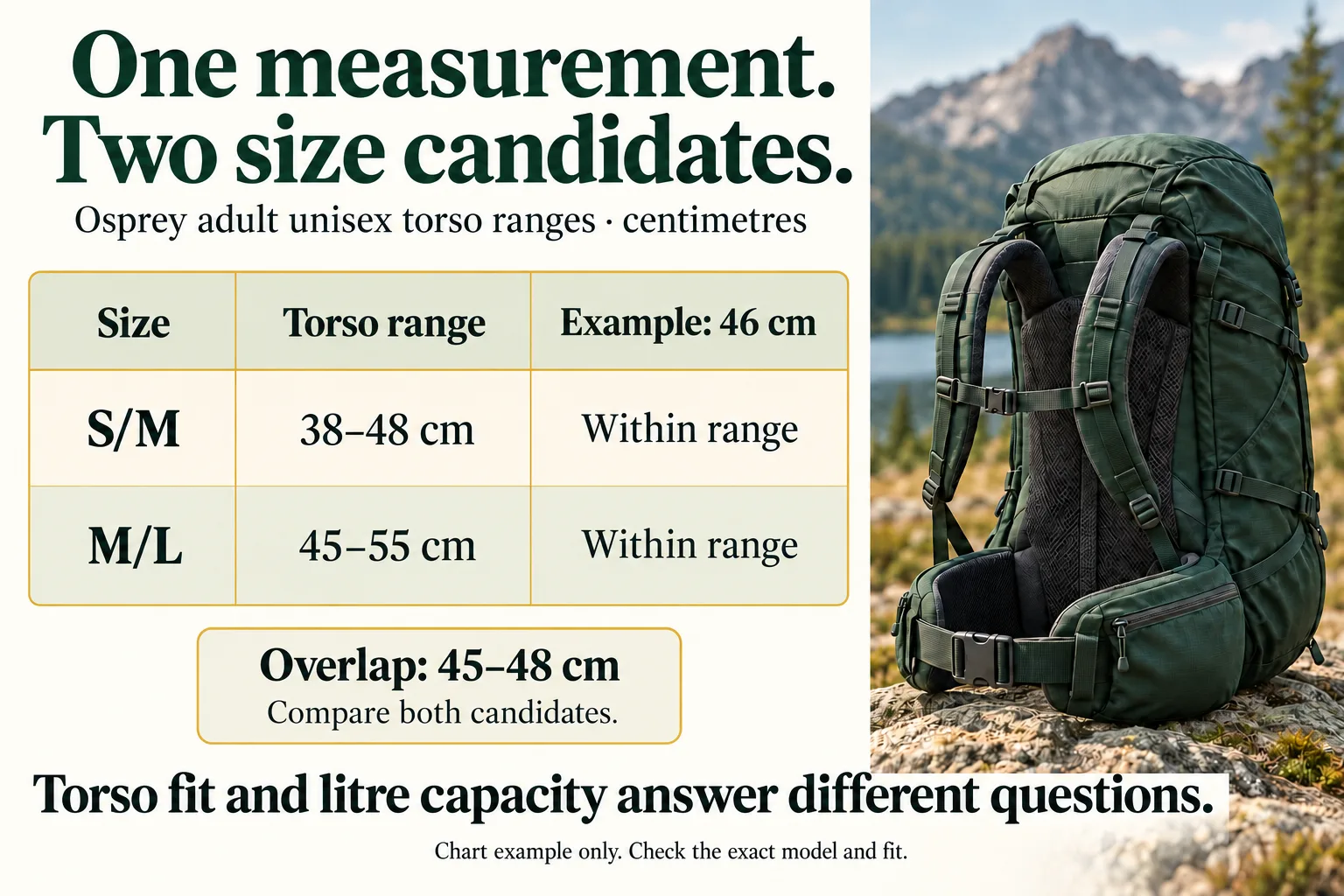
Backpack torso length: choose fit size separately from capacity
Separate backpack torso fit from litre capacity. Find the measuring landmarks, understand overlapping size ranges and check what the harness actually adjusts.
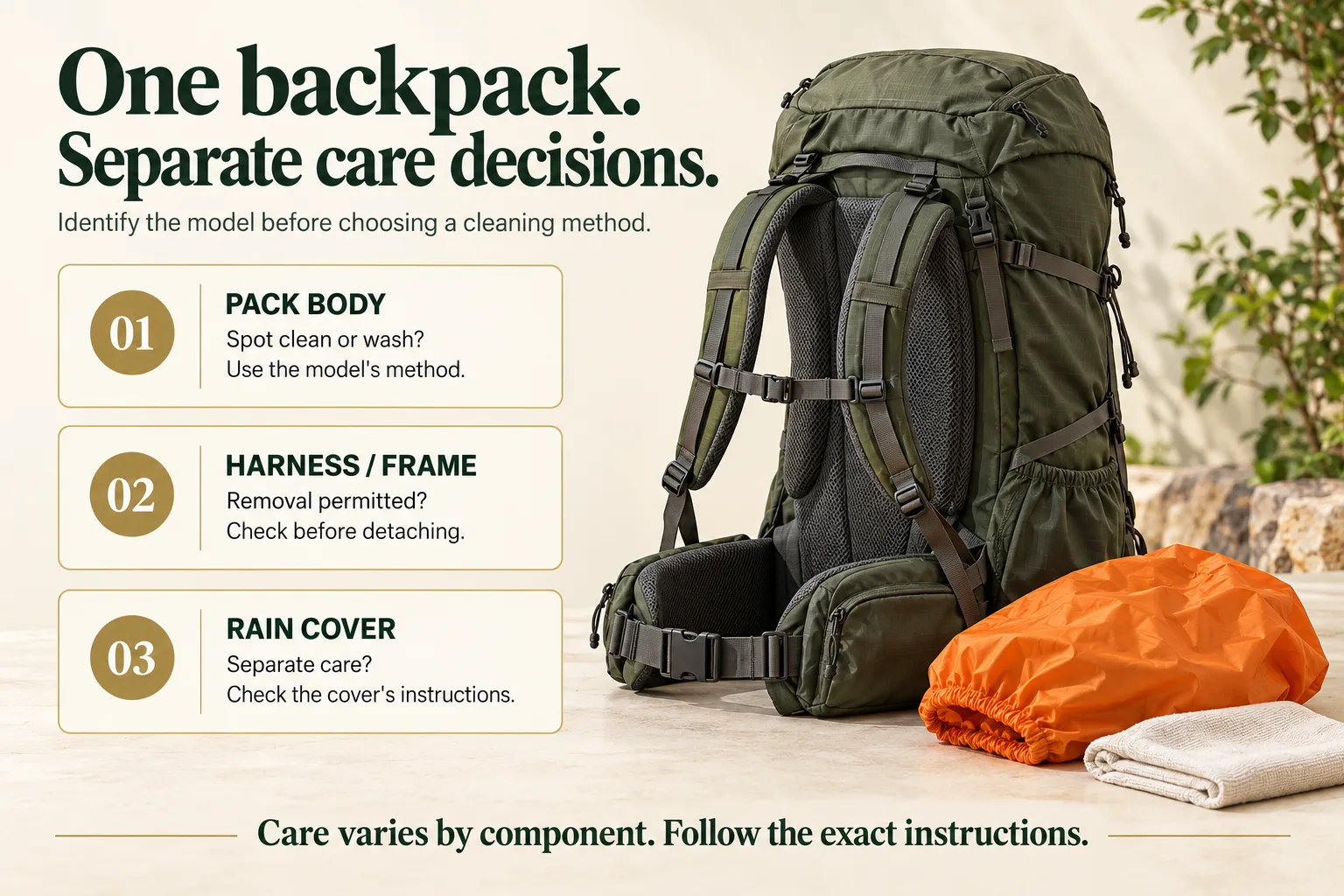
Cleaning a backpack: separate the pack, frame and rain cover
Plan backpack cleaning by component. Check removable parts, separate rain-cover care, manufacturer exceptions and drying before choosing a washing method.

Yoga mat sizes: plan floor space and packed storage
Compare yoga mat length, width and thickness separately. Check three named variants, bag openings and the difference between folding for travel and storage.