Visibility Gear for Walking and Running After Dark
Build a simple low-light kit with reflective details and active lighting while keeping route choice and road awareness first.
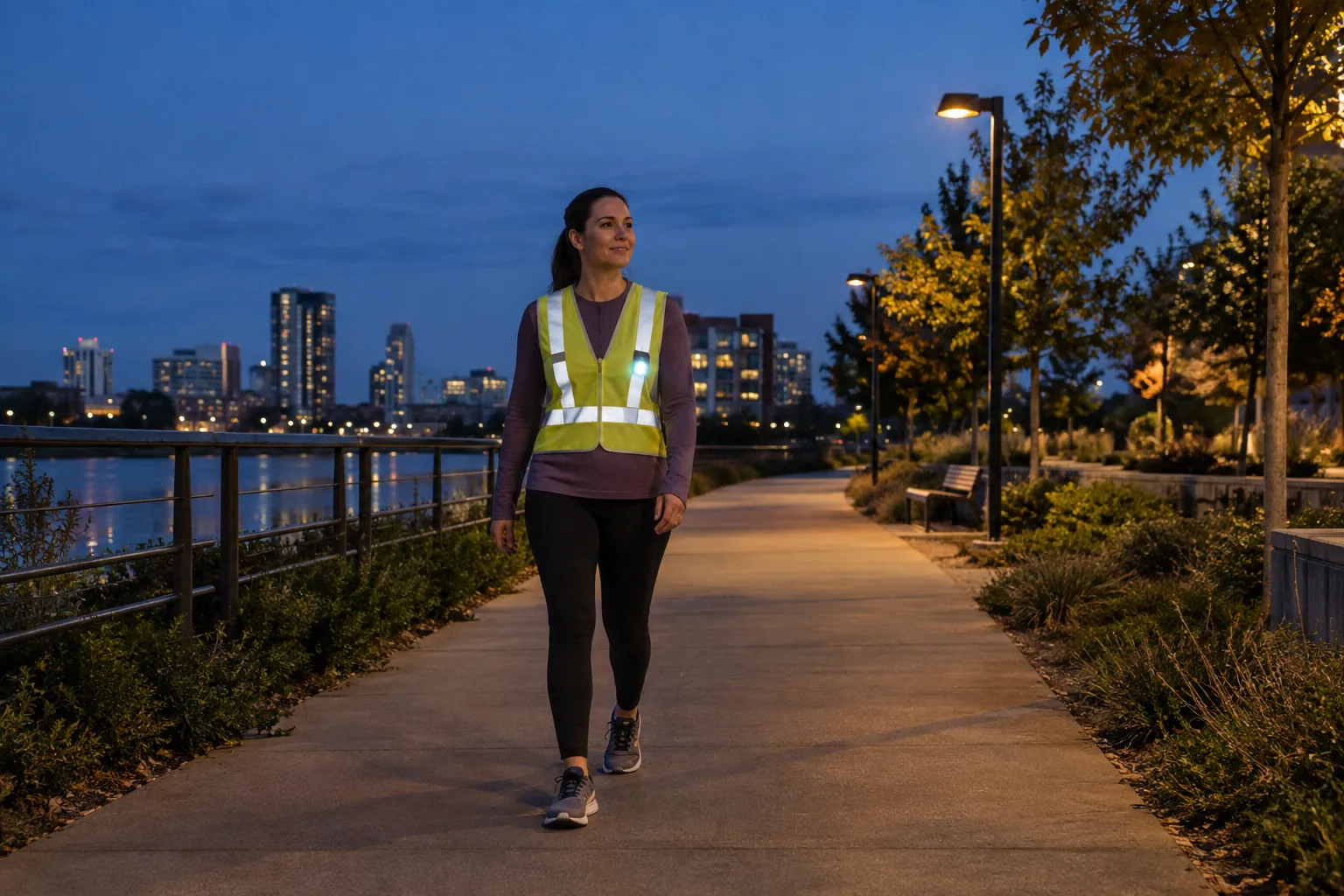
Being able to see a car does not mean its driver can see you. At dusk, at night and in poor weather, the gap between those two perspectives can be large. Visibility gear can help a walker or runner stand out, but it is an extra layer of protection rather than a substitute for a well-lit route, predictable movement and attention at crossings.
Begin with the route
Choose pavements, paths and crossings that separate you from moving vehicles wherever possible. A familiar route can look very different after dark: uneven surfaces disappear into shadow, vegetation narrows paths and headlight glare can make judging distance harder. Walk a new route in daylight before relying on it at night.
Tell someone where you are going, carry a charged phone and avoid sections where you cannot step away from traffic. If you must walk near a road without a pavement, follow local road rules. The National Highway Traffic Safety Administration's walking guidance recommends facing oncoming traffic when walking on or near a road so that walker and driver can see one another.
Use both contrast and reflection
Bright clothing can increase contrast in daylight and around dawn or dusk. At night, retroreflective material is especially useful because it returns light from vehicle headlights toward the source. This is different from fabric that merely looks bright under indoor lighting.
NHTSA's review of pedestrian conspicuity reports that nighttime visibility improves with retroreflective clothing, particularly when reflective material is placed on moving extremities. A vest provides a broad reflective area; bands or details on wrists, ankles, gloves and shoes can also help reveal human motion.
Add a light without creating glare
A small light has two jobs: helping others notice you and helping you see the path. A headlamp follows your gaze, while a chest or waist light may create steadier shadows on uneven ground. A handheld torch is easy to aim but occupies one hand. Choose the option that remains secure at your normal pace.
Use a comfortable brightness and angle the beam toward the path rather than other people's eyes. A rear-facing light can improve recognition from behind on shared routes, but check local rules about colours and flashing modes. Carry a backup light or spare power for a longer outing. Phone flashlights are useful in an emergency but can drain the battery needed for calls and navigation.
Make the kit work with your clothing
Reflective details are ineffective when covered by a coat, pack or rain layer. Put on the full outfit and view it from the front, back and sides. If possible, ask another person to observe from a distance under the conditions in which you will use it. Check that straps do not dangle and that clips cannot catch on other gear.
Comfort still matters. A loose vest that flaps or rubs will soon stay at home. Reflective bands should be snug without restricting circulation. Lights should not bounce, rotate or switch on accidentally inside a pocket. Keep the kit together near the door and recharge it after use so the safer choice is also the easy choice.
Protect attention as carefully as visibility
Visibility aids cannot overcome distraction or unsafe driving. NHTSA notes that conspicuity equipment does not remove the need for safer behaviour. Keep the volume low enough to hear traffic, bicycles and warnings; consider leaving both ears unobstructed near roads. Pause before crossing driveways and side streets, where turning drivers may be watching for larger vehicles rather than a person.
Make deliberate eye contact when possible, but never treat it as proof that a driver will yield. Cross at suitable locations, obey signals and remain predictable. If weather sharply reduces visibility, choose an indoor session or postpone the outing.
Practical takeaway
For low-light walking or running, combine bright clothing, retroreflective details on the body and moving limbs, and a secure light aimed responsibly. Test the complete kit from every direction. Most importantly, choose a route that limits exposure to traffic and move as though visibility gear helps drivers notice you but never guarantees that they will.
Sources
- Conspicuity Enhancement, National Highway Traffic Safety Administration
- Stepping Out as an Older Adult — Be Healthy, Walk Safely, National Highway Traffic Safety Administration
Continue reading
Related articles
How to Choose Sun-Protective Activewear for Outdoor Days
Use coverage, fabric, fit and a few simple habits to make sun protection part of your outdoor clothing system.
A Day-Hike Gear Checklist Without the Unnecessary Bulk
Pack a compact day-hike system around the route, weather and essential backup needs instead of carrying random extras.
An Athletic Shoe Fit Checklist That Starts With Comfort
Use fit, stability and real movement—not hype or a familiar size number—to choose comfortable athletic shoes.