Wash-label numbers and bars: temperature is only half the check
Read the temperature number and bars under a wash tub separately, compare three fictional labels, and check the machine manual before choosing a programme.
On this page
A wash label can show 40 inside a tub and still require more than a temperature choice. The small bars beneath the tub carry a separate instruction. Missing one can leave you comparing two labels as if they said the same thing.
This guide explains numbers and bars in the GINETEX-style washing symbols described below. The three labels are invented teaching examples, not instructions for a particular garment. Read the complete label, including written directions, before deciding how to wash your own item.
Record the number and the bars separately
The GINETEX care-labelling brochure identifies the number inside the tub as the maximum washing temperature in degrees Celsius. A bar beneath it calls for a mild process with reduced mechanical action; two bars indicate a very mild process.
Write “number: 40; bars: one” rather than shortening the label to “wash at 40”. The first note retains both pieces of information. The second loses the process requirement and makes a maximum sound like a compulsory setting.
Do not read a line beneath a different symbol as part of the tub. Locate the complete washing symbol first, then check the other care instructions independently.
Compare three labels without merging their instructions
Imagine laying out three unnamed garments before choosing a load. Here are only their washing-symbol descriptions; their remaining care instructions are deliberately unspecified. The table is a reading exercise, not permission to wash the garments together.
| Tub marking | Maximum | Process |
|---|---|---|
| 40; no bar | 40°C | Normal |
| 40; one bar | 40°C | Mild |
| 30; two bars | 30°C | Very mild |
The first two rows share a temperature ceiling, but the second asks for a different process. A temperature-only note would erase that distinction. The third changes both entries: its ceiling is lower and its process is very mild.
For a quick reading check, cover the maximum-temperature column. The process column still distinguishes normal, mild and very mild. Then uncover the table and look only at the maximum-temperature column: the first two rows both say 40°C, even though their tub markings and processes differ. That is the information lost when a laundry note records only numbers.
Check the programme description, not just its name
Miele's garment-care guide also distinguishes the maximum temperature from the reduced agitation indicated by a bar. Its programme examples belong in the context of its appliances; they are not a shortcut to choosing a setting on an unidentified machine.
Suppose your own manual describes one programme at 30°C, but you have not checked its wash process. That number alone does not establish a match for our second example. It is below 40°C, yet the mild-process requirement remains unresolved. Lowering the temperature is not evidence that the required mechanical action has also been selected.
Read the relevant programme table in your machine's manual, including any load guidance and adjustable settings. If it does not make the match clear, ask the appliance maker rather than assigning a programme from its reassuring name.
Keep a useful record of the whole label
Photograph the readable label while you have the garment in front of you. Include the full care panel and enough product identification to reconnect the photo with the right item. A close crop containing only “40” will recreate the same missing-information problem later.
Alongside the photograph, record the tub number, bar count, written directions and the manual section you consulted. Leave an uncertain mark unresolved. If the label is faded or unclear, request the exact garment's care instructions from its manufacturer.
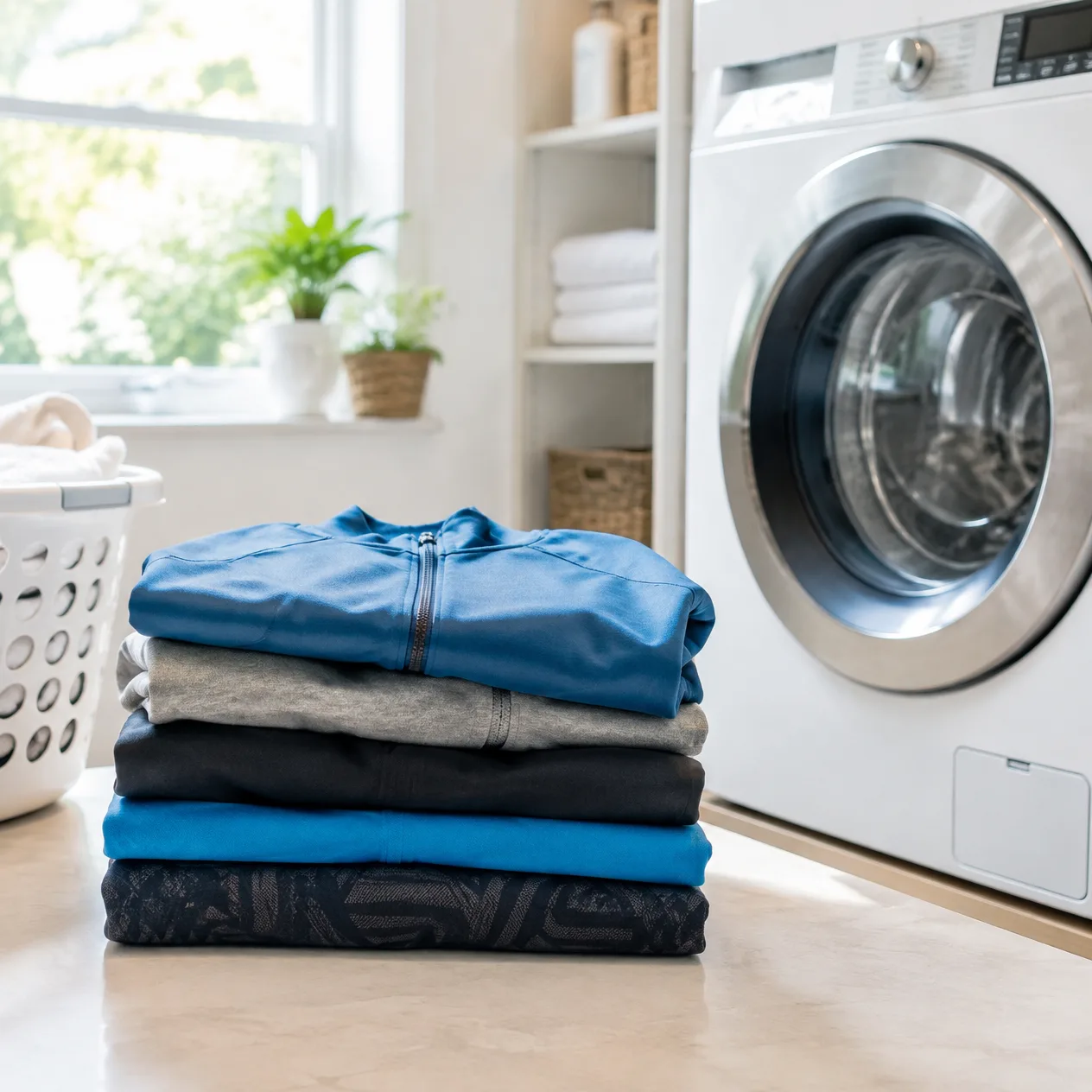
Ariel's label guide treats washing and drying symbols separately. A washing temperature therefore does not supply a tumble-drying setting. Our sportswear-washing guide covers the wider routine. The fabric-percentage guide explains composition; fibre percentages alone do not choose a care programme.
Practical takeaway
Carry the number and bar count together into your laundry notes. Compare both with the machine instructions, then read the rest of the garment label. A clear record is useful precisely because it preserves restrictions that a familiar temperature number can hide.
Sources
- GINETEX — The worldwide care labelling system, GINETEX
- Garment care labels, Miele Australia
- What are Washing Symbols for Laundry?, Ariel UK / Procter & Gamble
Continue reading
Related articles

Table-tennis racket colours: why one side stays black
Understand the black-side rule, the colours introduced in 2021 and why colour alone does not prove a table-tennis racket covering is approved for competition.
Classic Lined Crocs: can you remove the liner?
Check the Classic Lined Clog's fixed liner, match care guidance to the exact model, and avoid confusing a pivoting heel strap with a removable lining.
Water-resistant zippers: AquaGuard and AQUASEAL labels
Read water-resistant and waterproof zipper claims separately. Compare AquaGuard and AQUASEAL names, identify the exact closure and check the finished product.