Dishwasher-safe bottles: check the body, lid and parts
Check a bottle's exact model, generation and fitted lid before washing. Keep rack restrictions, removable-part instructions and drying steps together.
On this page
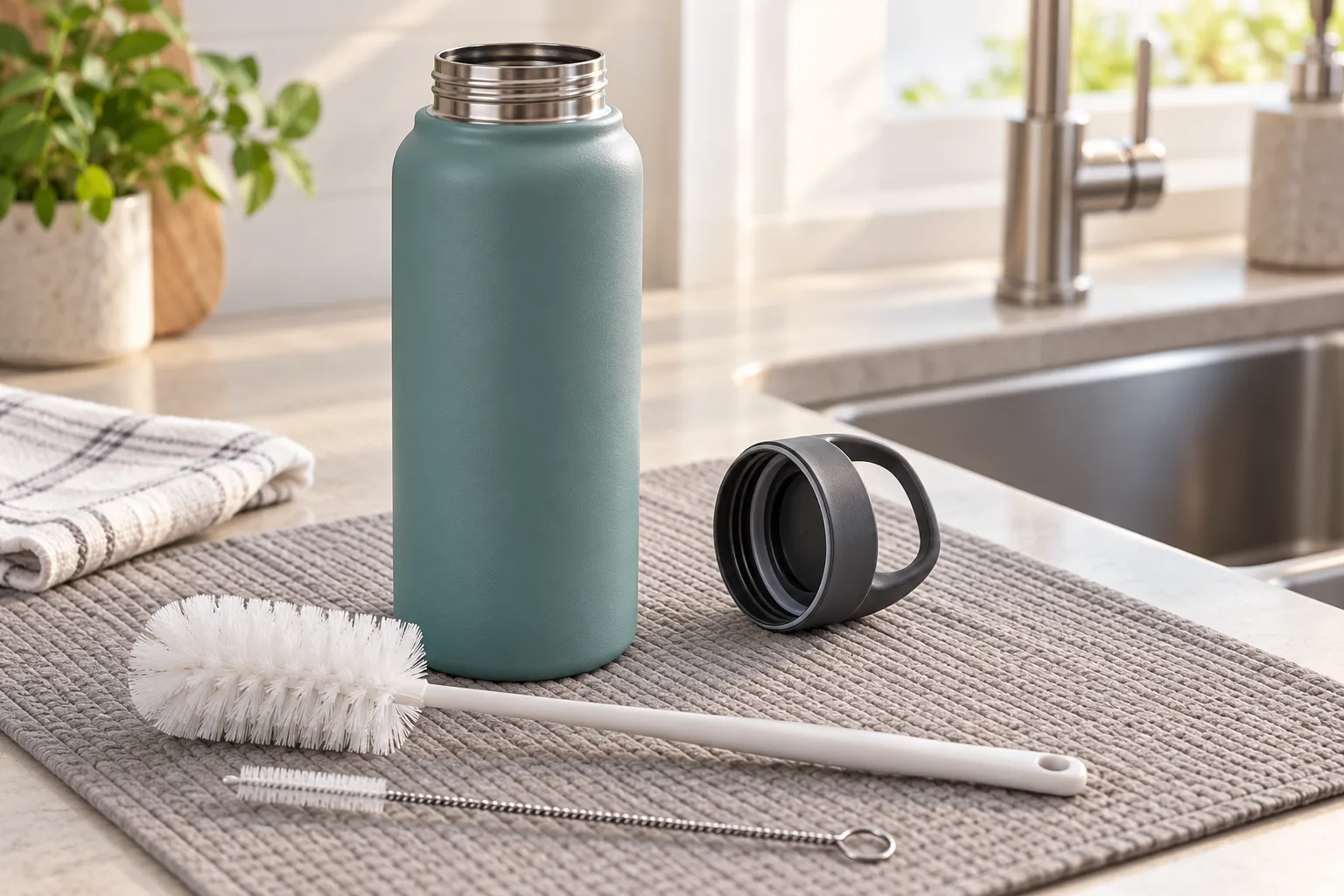
A dishwasher-safe bottle body does not settle how to clean a replacement lid, straw or removable seal. Before loading a reusable bottle, identify the exact product and the parts fitted to it. This matters especially when you bought it second-hand or changed the original cap.
The useful question is not simply “Can this brand go in the dishwasher?” It is “Which instructions apply to this body and these components?” This guide helps you organise that check. It does not report a product test or provide a disinfection procedure.
Start with the bottle you actually own
Look for a model name, item number and care marking on the bottle, then compare them with the maker’s instructions. Photograph the base and lid if you need help identifying it. Capacity and colour can help describe a bottle, but they do not establish its washing method.
Our guide to water-bottle labels separates capacity, weight and dimensions. Keep those details beside the product name without treating a matching “32 oz” label as proof that two bottles share the same care instructions.
Check the generation, not just the brand
Hydro Flask’s August 2024 dishwasher guide distinguishes its newer bottles from older ones identified by a trademark symbol beside the logo. It says those older bottles need hand washing and also excludes Trail Series bottles from dishwasher use.
That dated guide demonstrates why a newer product listing may be the wrong reference for an older bottle. It is not a complete catalogue of every later release. Match your product to its own care directions rather than assuming that a current bottle with a similar shape proves yours is dishwasher-safe.
Read the actual dishwasher conditions
The Stanley 1913 FAQ directs owners to check the bottom of the product for dishwasher suitability. For eligible products, it specifies the top rack; otherwise, it advises hand washing with warm water and soap.
Keep the placement instruction with the permission. A large bottle that cannot fit as directed does not gain permission for a different rack just because it is labelled dishwasher-safe. Check the product guidance for an alternative method instead of improvising from the appliance space available.
If the marking is missing or unreadable, record that as an unresolved question. An online photograph of another owner’s bottle is a clue for identification, not confirmation of your bottle’s care requirements.
Give the lid and small parts their own check
Stanley’s product-by-product cleaning guide separates Quencher, Flip Straw, shaker, travel-mug and other bottle instructions. The removable components differ. Its Quencher section, for example, includes the straw and silicone lid components where applicable, and recommends a small brush for the straw interior.
Use the instructions for the fitted lid. Do not pull out a seal merely because another product’s diagram shows one removed. Find the removal and refitting directions first; a replacement cap can require its own documentation even when it fits the bottle.
| Part | Identify | Confirm |
|---|---|---|
| Body | Model and generation | Method and rack |
| Lid / straw | Fitted version | Separate care steps |
| Seal | Exact component | Removal and refitting |
Work through a changed-lid example
Suppose you have an older bottle with a cap bought separately. Make two notes: one for the body and one for the replacement cap. A dishwasher-safe claim on the cap’s listing answers the cap question only; it does not update the older body’s instructions.
Then list any straw or seal the cap instructions identify as removable. If one component remains unidentified, pause that part of the plan and ask the manufacturer with your photographs. You can explain the exact gap: “I have identified the body, but cannot confirm this replacement lid.” That is more actionable than asking about the brand in general.
After following the applicable washing directions, include rinsing and drying in the routine. Stanley’s cleaning guide calls for components to dry completely before reassembly. Keep loose parts together so you can refit the correct pieces using their instructions.
Practical takeaway
Identify the body, check its generation, and make a separate care decision for the fitted lid and removable parts. Preserve any rack restriction and leave unknown details unresolved until confirmed. If you are also cleaning the bag that carries it, use our backpack component-care guide separately; the bottle’s washing method does not transfer to the bag.
Sources
- Is Your Hydro Flask Dishwasher Safe?, Hydro Flask
- FAQ — drinkware cleaning and dishwasher suitability, Stanley 1913
- How to Clean Your Stanley 1913, Stanley 1913 UK
Continue reading
Related articles

Drying wet running shoes: insoles, airflow and heat
Dry running shoes with care: check removable insoles, compare manufacturer paper-fill advice, avoid direct heat and inspect each part before reassembly.
When did Crocs buy Jibbitz? The 2006 timeline
Follow Jibbitz's family origins and the 2006 Crocs acquisition. Separate the agreement, closing and announcements, with carefully labelled purchase figures.

Football or futsal ball? Check more than size 4
Compare football and futsal ball requirements, including circumference, weight and rebound. Check the game and league before buying a ball marked size 4.