Croslite and LiteRide shoe component labels explained
Learn how to read Crocs' upper, footbed and outsole descriptions, compare corresponding components, and avoid assuming one label describes the entire shoe.
On this page
Croslite and LiteRide are not necessarily an either-or choice for a whole shoe. The useful question is which part each name describes. Crocs lists both names on the same InMotion LiteRide Clog: one for its footbed and the other for its outsole.
This independent guide explains how to read those component labels. CrocsDeal is not affiliated with or endorsed by Crocs, Inc. It is based on manufacturer descriptions, not hands-on wear tests or laboratory measurements.
Read the part beside the name
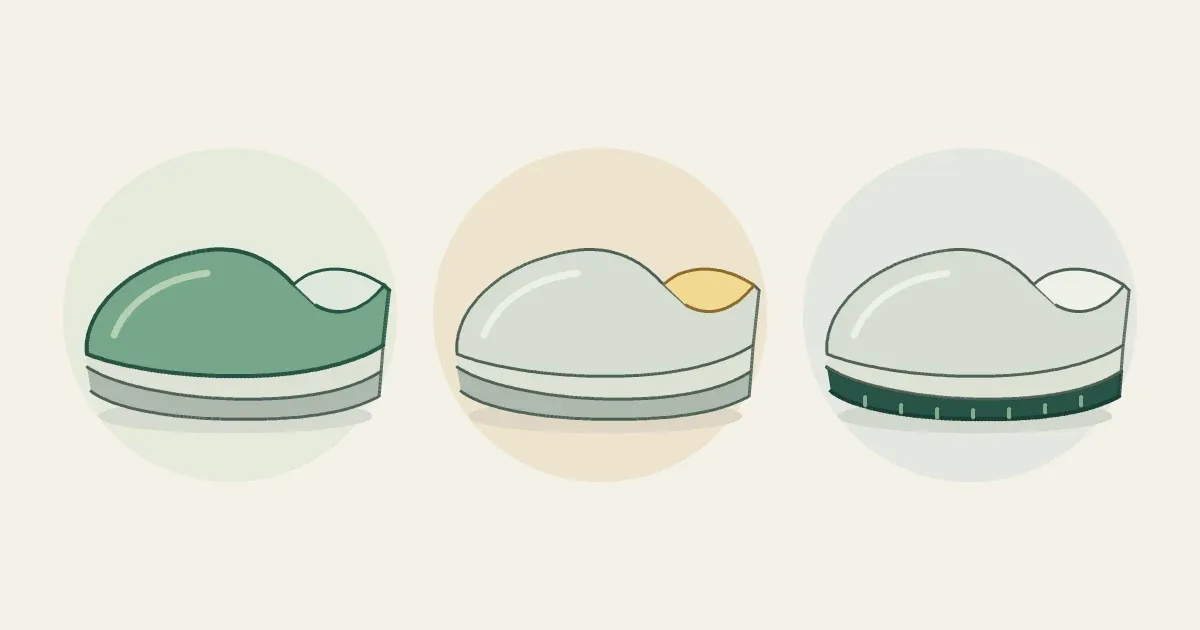
Start with three terms. The upper is the part above the sole that covers the foot. The footbed is the surface beneath the foot inside the shoe. The outsole is the bottom surface that meets the ground. A description of one part is not automatically a description of the others.
For a concrete example, the US listing for the InMotion LiteRide Clog, product code 209964, identifies these components:
| Component | Listed name |
|---|---|
| Upper | Free Feel Technology |
| Footbed | LiteRide foam |
| Outsole | Croslite |
This table reports the manufacturer's component labels, not an independently verified material or construction specification. Crocs also identifies a pivotable Free Feel Technology backstrap. Free Feel Technology is a branded technology description; the listing does not specify the upper's complete material formulation. This example does not establish the construction of other LiteRide styles. Check the exact model before applying these labels to another shoe.
Compare the same component
When comparing two listings, put footbed information beside footbed information. Comparing a footbed label on one shoe with an outsole label on another does not answer whether their underfoot feel is the same.
Mark an unstated detail as unknown. Do not turn the absence of a material name into proof that the material is absent, and do not treat a comfort slogan as a measured comparison. This guide does not rank softness, durability or comfort: those would require evidence beyond identifying names on product pages.
Keep a short note for each candidate:
- The exact model name, product code and regional listing.
- What the listing says about the upper, footbed and outsole separately.
- Any lining, trim or component whose material is not explained.
- The specific unanswered question to send to the manufacturer or seller.
For example, ask whether a described footbed is removable instead of assuming that it can be taken out because the listing names it separately. Naming a component does not tell you how it is attached. Do not pull the shoe apart to find out.
A material label is not a cleaning instruction
Crocs' Canadian care FAQ distinguishes entirely Croslite styles from canvas, fleece and other constructions. Seeing Croslite beside an outsole therefore does not establish that the entire shoe belongs in the plain-foam cleaning category.
Use the instructions for the complete model, including its lining and trim. Our Crocs cleaning guide explains that material-first approach without prescribing one method for every pair.
Keep fit and purchase checks separate
Material names do not provide a size conversion or tell you whether a particular pair fits. Follow the exact model's sizing information and use our size and fit checklist. For seller, total-cost and return questions, use the buying checklist.
Practical takeaway
The takeaway is simple: record which component, which label and which exact model before comparing shoes. That turns a vague question about which branded material is better into a specific question the listing or manufacturer can answer.
For a reusable comparison note, write: “Model [name/code], listing [country and date]: upper [stated label or unknown], footbed [stated label or unknown], outsole [stated label or unknown]. My unanswered question is [specific detail].” This is our note-taking format, not a manufacturer specification. Keep the source link beside the note so you can distinguish a current listing from an older screenshot when a name or description changes.
Sources
- InMotion LiteRide Clog, product code 209964, Crocs
- Crocs Canada care FAQ, Crocs Canada
Continue reading
Related articles

How to insert and remove post-backed Jibbitz charms
Check the attachment before fitting a shoe charm. Follow manufacturer insertion and removal guidance, with a preparation checklist and clear stopping points.
What to do with old Crocs: take-back options and checks
Check Crocs take-back options in the US and Singapore, distinguish collection from recycling, and prepare a pair without assuming every scheme accepts it.
Returning Crocs: seller, route and paperwork checklist
Prepare a Crocs return with the right seller, regional instructions, condition checks and tracking record. Compare US and Singapore routes without guessing.