
NBA game clock vs shot clock: read the two countdowns
Read NBA game and shot clocks separately, compare fictional displays, and understand why a deflection, rebound or zero cannot be judged without context.
On this page
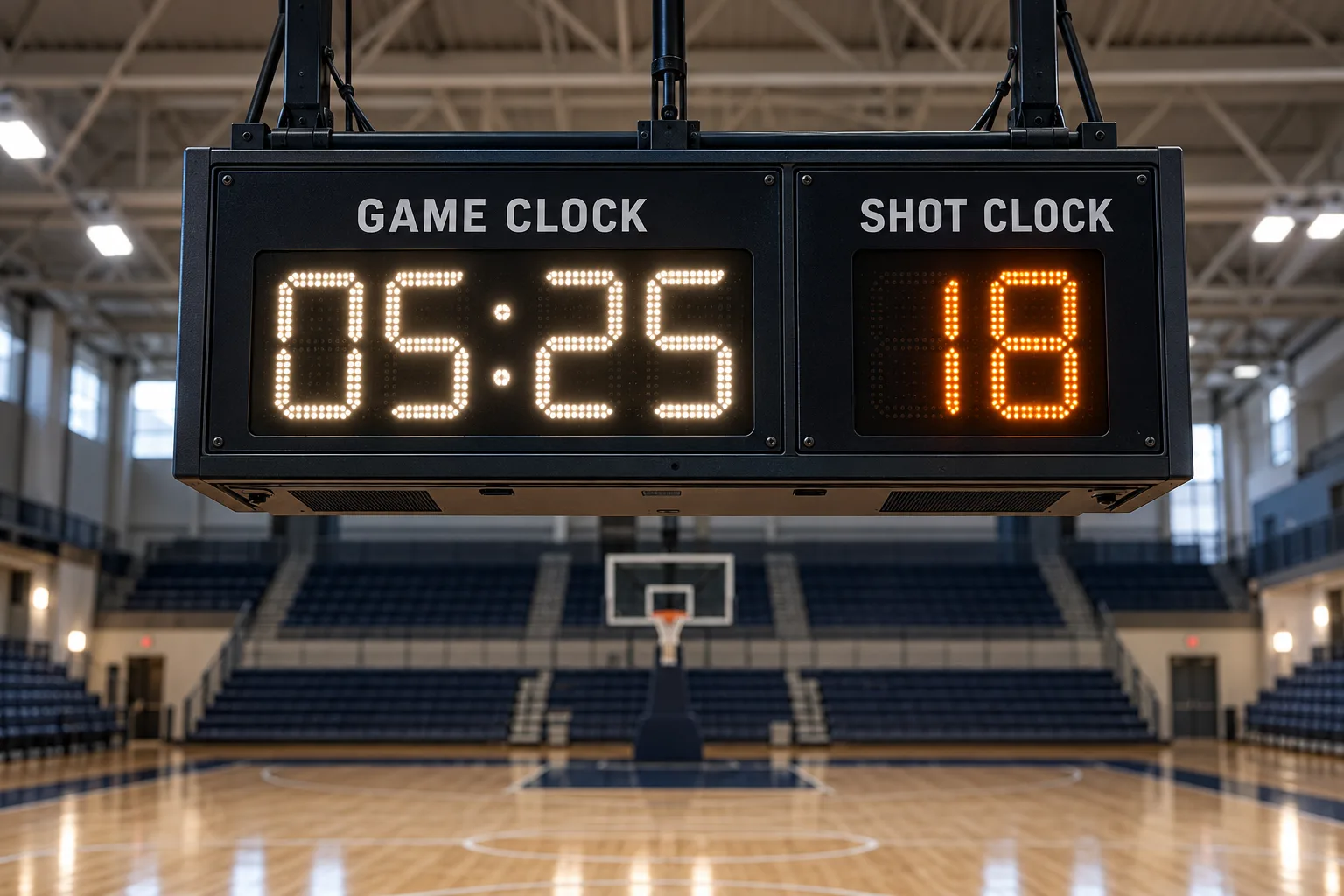
Two basketball clocks can count down together and still answer different questions. The game clock shows time left in the period. The shot clock shows the attacking team's remaining time to attempt a field goal. Confusing them can turn a routine possession into an imagined end-of-game emergency.
This guide uses NBA rules and fictional displays. It is for watching a game, not operating a scorer's table or deciding a disputed call. Other competitions can use different timings; identify the league before applying these examples.
Give each number a name
Start with the period label, then find the game clock and the separate shot-clock field. The NBA's scoring and timing rules specify 12-minute regulation periods and five-minute overtime periods. The game-clock display includes tenths during the final minute of a period.
A display such as Q2, 5:25 therefore needs its quarter label. Five minutes and 25 seconds remaining in the second quarter is not five minutes and 25 seconds until the whole match finishes. Nor is it an appointment for the next break: stoppages interrupt the countdown.
Read the possession deadline separately
Under NBA Rule 7 on the shot clock, its normal starting value is 24 seconds, with exceptions. Tenths appear once that clock reaches 4.9 seconds. A small decimal display can therefore concern the possession rather than the period.
Keep the labels when describing a tense moment. “Four seconds left” is incomplete if the listener cannot tell which clock you mean. If the broadcast hides one timer, do not reconstruct it from the other.
Try three fictional displays
These snapshots illustrate different fields, not a real sequence of play. Assume Q2 means the second quarter and that both clocks are operating normally.
| Game clock | Shot clock | Interpretation |
|---|---|---|
| 5:25 | 18 | Period minutes; possession seconds |
| 5:25 | 4.9 | Same period time; less shot time |
| 0:45.0 | 14 | Both displays concern seconds |
The first two rows hold the game-clock reading constant to make the distinction visible. They are separate situations, not successive frames from a single possession. In the last row, 45 seconds and 14 seconds are different deadlines, even though neither display contains several minutes.
Do not expect every touch to reset it
NBA Rule 7 distinguishes a defender touching the ball from gaining possession. A deflection alone does not grant the attacking team a fresh 24 seconds. Likewise, a defender sending the ball out of bounds ordinarily leaves the offence with its unused shot-clock time.
A familiar reset is different: when a missed shot touches the ring and the offensive team first regains possession, the NBA resets the shot clock to 14 seconds. This changes the possession allowance; it does not add 14 seconds to the period.
Follow the ball and the team controlling it before interpreting a changed number. Do not diagnose a timer malfunction from a cropped scoreboard image. The rule contains other reset and end-of-period provisions, so these examples are not a complete operator's checklist.
Zero does not explain the whole play
NBA timing rules include situations where a shot is still in flight when the period-ending horn sounds. A frozen display at zero alone cannot establish whether a basket counts. The release, subsequent play and officials' decision matter.
Similarly, a television replay can show an earlier clock reading. Check whether you are looking at live action or a replay before combining a score, timer and announcer's comment. This is a viewing habit, not evidence for overturning a call.
For another sport's distinct timing system, our football additional-time guide explains a minimum allowance rather than a basketball possession limit. More event explainers are in Sports & Athletics.
Practical takeaway
Name the competition, period and clock before quoting a number. Keep game time, shot time and elapsed viewing time separate. Watch possession changes and official signals; when a display lacks context, describe what is visible instead of inventing the missing timing.
Sources
Continue reading
Related articles
Tennis walkovers and retirements: read the match status
Read tennis walkovers, retirements and defaults without inventing a completed score. Compare fictional partial results and check the event's own status rules.
Swimming split times: totals versus each interval
Read cumulative and interval swimming splits with a fictional 200 m table. Check minutes and hundredths, missing checkpoints and result status separately.
Race bib timing tags: placement and care before the start
Check race-bib and shoe-tag instructions, keep the timing assembly intact, and prepare the right details for the event team if equipment or results go wrong.