Nike’s waffle sole: prototypes, patents and product dates
Read Nike’s waffle-sole history with its dates in context. Separate prototypes, patent filing and issue, and product accounts without hiding uncertainty.
On this page
A date attached to Nike’s waffle sole can describe an experiment, a prototype, a patent or a named shoe. Those are different events. Treating every year as “the invention date” makes a memorable footwear story look more certain than its sources allow.
Here is a way to read that history using two Nike archive accounts and an original patent document. The useful question is not simply “Which year is right?” It is “What exactly does this date describe, and which record supports it?”
Begin with the shoe named in the account
Nike’s 2025 Moon Shoe history describes hand-built prototypes prepared for the 1972 US Olympic Trials in Eugene. It distinguishes that early work from later named products, including the Oregon Waffle and Waffle Trainer. These names should not be collapsed into one shoe with one release date.
The account is a history published by Nike’s own archives. Attribute its recollections to that source rather than presenting them as your observation of a surviving pair. A photograph of a prototype, a later model and a modern heritage design may all belong in the wider story, but that does not make them the same object.
Read the patent’s two dates separately
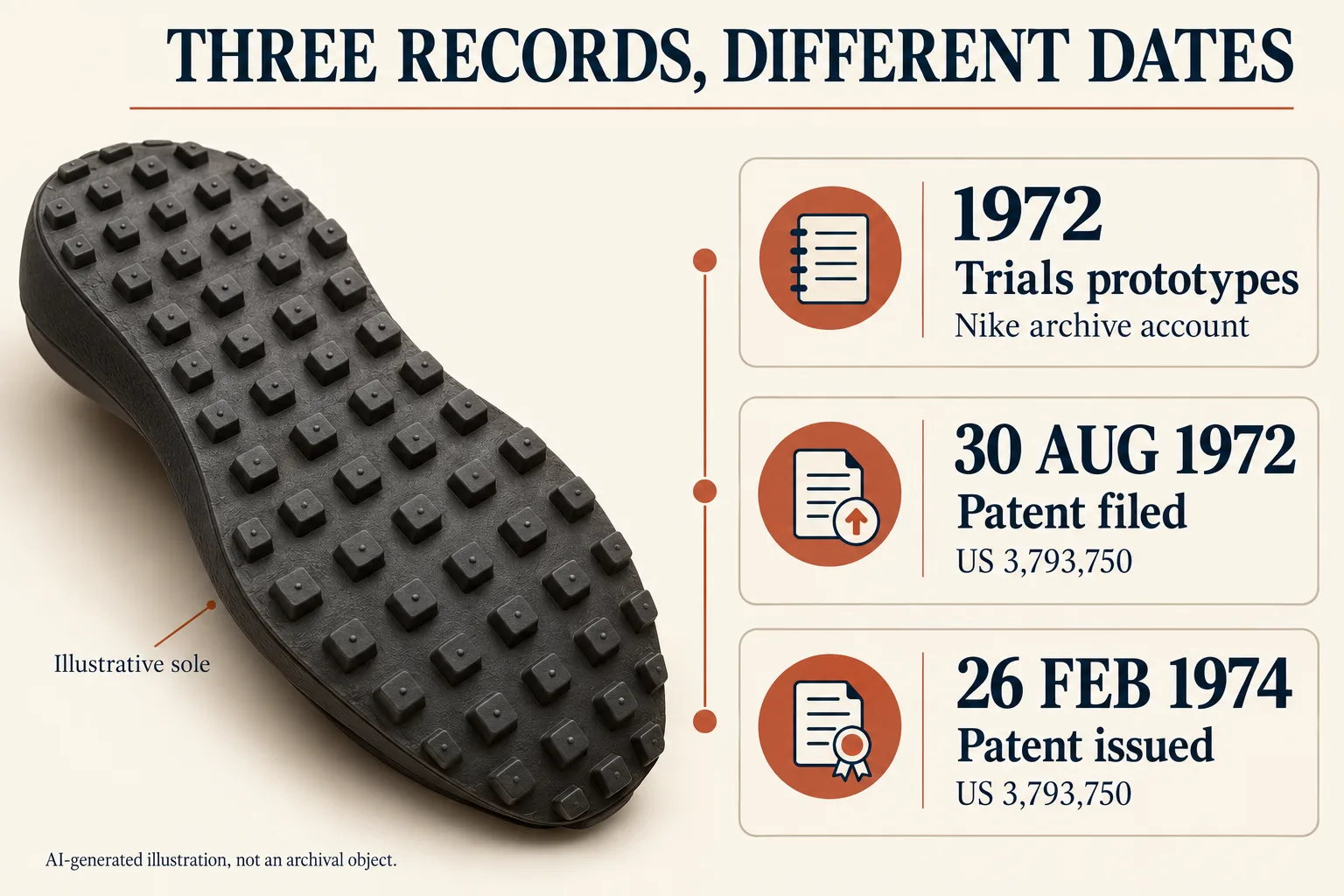
The first page of US patent 3,793,750 (PDF) names William J. Bowerman as inventor and BRS, Inc. as assignee. Its title is “Athletic Shoe for Artificial Turf”. It records a filing date of August 30, 1972, and an issue date of February 26, 1974.
Both dates belong to the document, but they answer different questions. Neither heading says when a particular pair was manufactured or first offered in a shop. If you are noting a date, copy its label too; “1974” alone loses the distinction.
| Record | What the source identifies |
|---|---|
| Trials prototypes | Nike’s 2025 account places this work at the 1972 US Olympic Trials. |
| Patent filing | August 30, 1972, on the first page of US 3,793,750. |
| Patent issue | February 26, 1974, on that same document. |
| Product development | Nike’s 2024 account says Bowerman developed the Waffle Trainer in 1974. |
Notice what the document actually discusses
The patent describes an athletic shoe for artificial turf, including a multilayer upper and polygon-shaped sole studs. That is more specific than a general story about running shoes. Reading the title and description prevents the familiar waffle-sole nickname from replacing the document’s actual subject.
Its descriptions of traction and other benefits are statements within the patent. They are not independent CrocsDeal product tests, and this historical document does not establish how a present-day shoe will perform. Use it to understand the recorded design, not to promise grip, comfort or injury prevention.
Keep disagreements visible
The kitchen anecdote is less tidy than the patent dates. Nike’s 2024 Bowerman profile places the breakfast inspiration in 1970; its 2025 Moon Shoe account places the waffle-iron episode in 1971. These two accounts do not establish one undisputed year for that moment.
They also use different wording about the Waffle Trainer: the 2024 profile says it was developed in 1974, while the 2025 account places its arrival two years after the Oregon Waffle’s 1973 release. Development and arrival are not identical labels. These passages alone cannot settle a precise first-sale date. Choosing one number and quietly discarding the other would hide the limits of the evidence.
Use a more precise note when comparing histories
A useful note combines four things: the shoe or design named, the event, its date and the source. For example, “US 3,793,750 — patent issue — February 26, 1974 — document first page” is more informative than “waffle shoes: 1974”. It preserves what you can actually check.
Keep an unfilled field unfilled. If an account does not identify the manufacture date of a pictured pair, do not borrow a patent date to supply it. Likewise, a recent article’s publication date tells you when that account appeared, not when its historical subject happened. None of these records alone authenticates a particular shoe.
For a different strand of footwear history, read how soccer boots evolved. That guide follows changes in rules, materials and playing surfaces; the waffle-sole example here focuses on how to interpret the records behind a design story.
Practical takeaway
Keep the name, event and source beside every date. Separate prototype accounts, patent records and product histories; attribute disputed details instead of smoothing them away. You can appreciate a footwear innovation without turning every part of its story into a single certain year.
Sources
- Nike Archives: the history of the Moon Shoe, Nike, Inc.
- US Patent 3,793,750: Athletic Shoe for Artificial Turf (PDF), United States Patent Office — original document via Google Patents
- Nike Archives: Bill Bowerman, original innovator, Nike, Inc.
Continue reading
Related articles
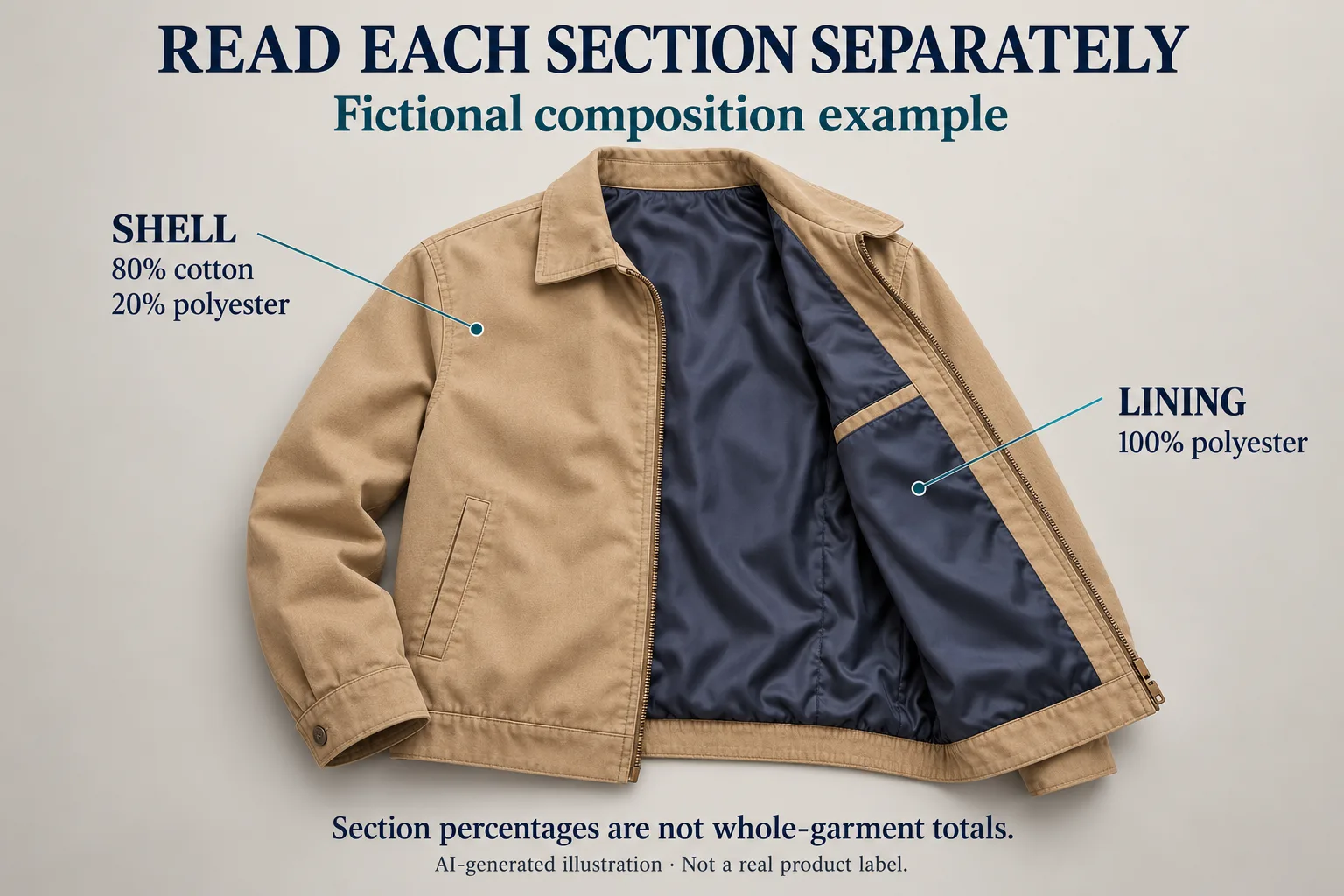
Fabric percentages: read shell and lining separately
Understand fabric percentages by garment section. Two fictional examples show why shell and lining figures cannot be averaged without their fibre weights.
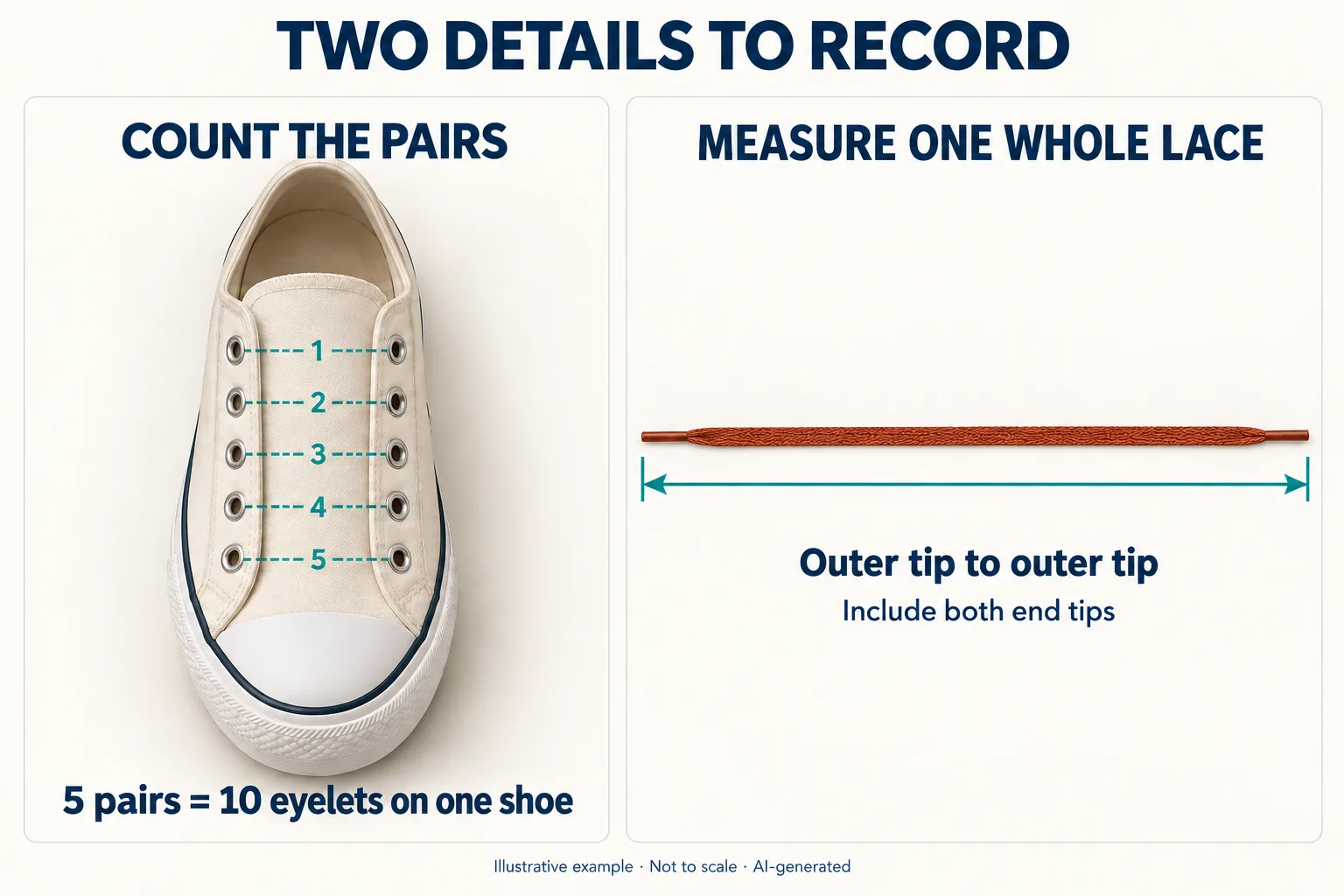
Replacement shoelaces: count pairs and measure one lace
Choose replacement shoelaces with a clear record: count eyelet pairs, measure a suitable old lace, and check the product’s length, shape and fastening type.
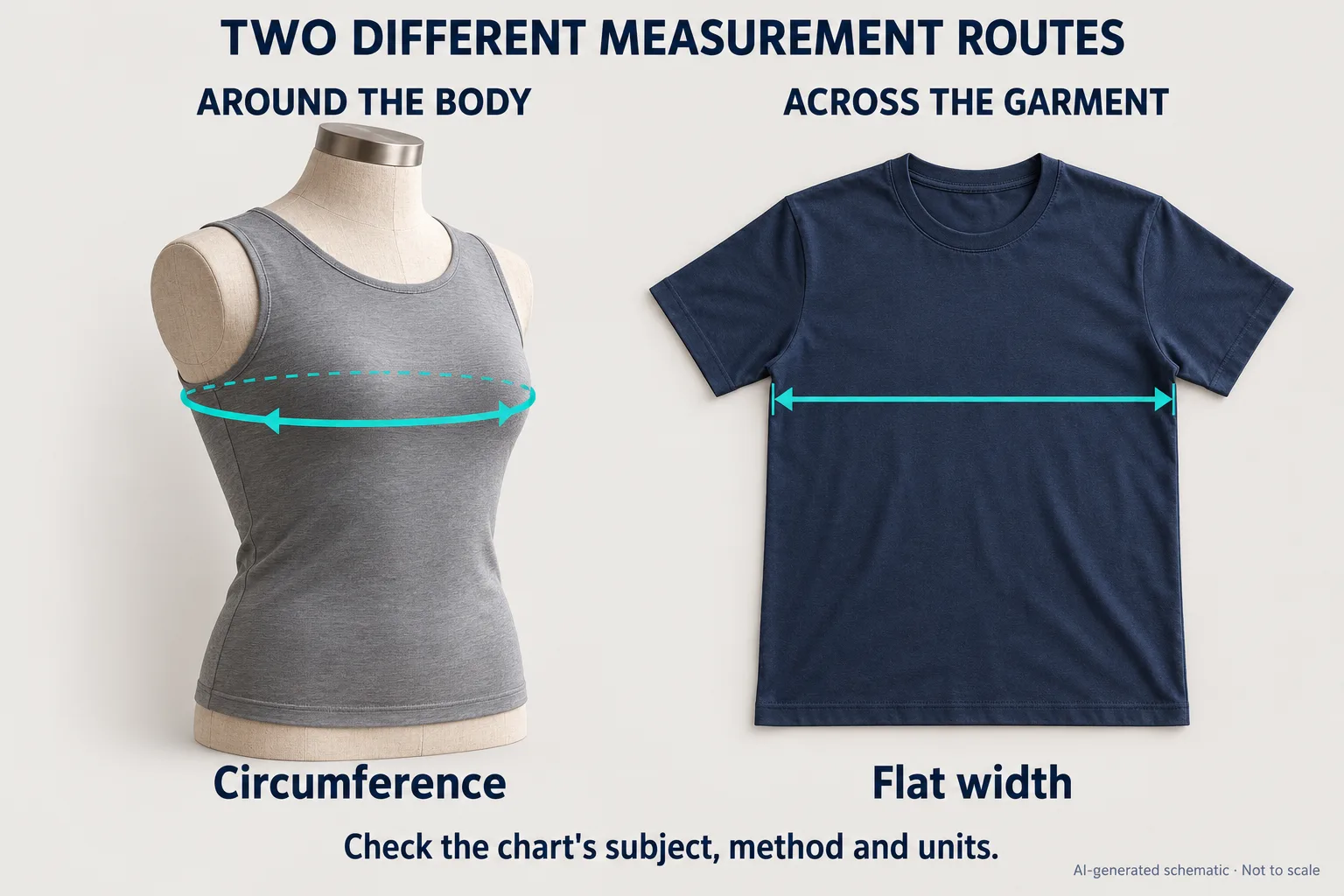
Clothing size charts: body or garment measurements?
Tell body measurements from finished-garment dimensions. Use a practical worksheet to compare chart labels, measurement routes, units and exact products.