Table-tennis lets: replay the serve or lose the point?
Learn when a table-tennis net serve is replayed, when the server loses a point, and why a correct rally return can touch the net without stopping play.
On this page
A table-tennis serve clips the net and lands on the receiver’s side. Do you replay it, lose the point or carry on? The answer depends on the rest of the service. The same net contact during a rally can have a different outcome.
This guide separates three ordinary situations, then explains the exceptions that a quick “net means let” rule misses. The examples are invented to make the decisions clear; they are not accounts of real matches.
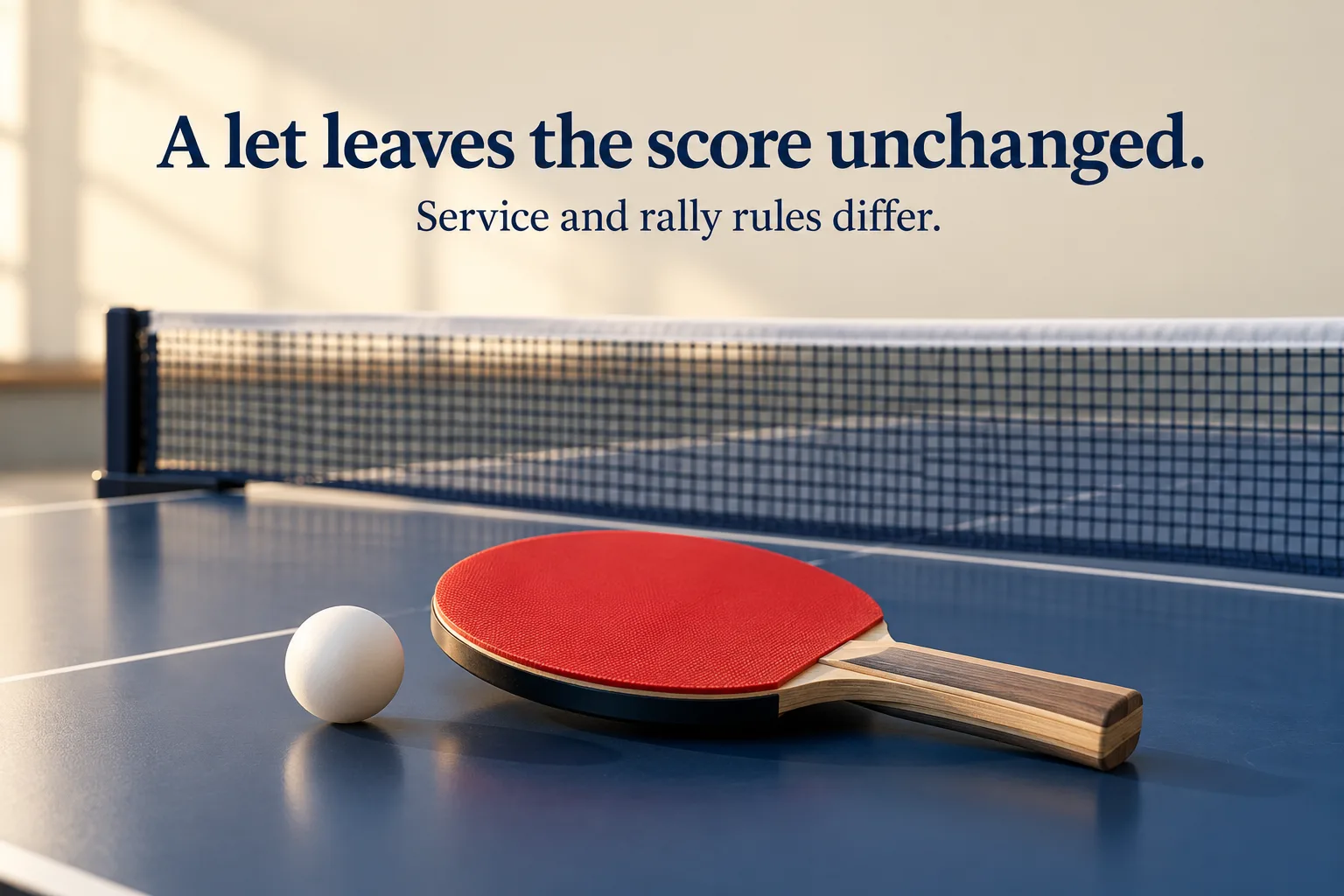
When a net-touching serve is a let
A let leaves the rally unscored. For the usual net-service case, the serve must be otherwise correct. Table Tennis Australia’s rules summary also includes the alternative case where the receiver or their partner obstructs the ball after net contact.
Imagine a singles serve that meets all the service requirements, bounces on the server’s court, clips the net and then bounces on the receiver’s court. Replay it. Now imagine doubles: the same description is incomplete until you check that the bounces were in the required right half-courts. Touching the net does not excuse landing in the wrong half.
Describe what actually happened rather than calling every touch a let. Was it a serve? Where did each bounce occur? Did anybody touch the ball before its receiving-side bounce? Those details distinguish an ordinary net serve from an obstruction or an incorrect service.
When the server loses the point
Table Tennis England’s beginner guide explains that there is no second serve. In an ordinary, uninterrupted attempt, a ball that hits the net and stays on the server’s side loses the point. So does a serve that goes off without bouncing on the receiver’s court, assuming the receiver has not obstructed it.
For example, Sam serves at 4–4. The ball bounces on Sam’s side, hits the net and drops back there, untouched by the opponent. The opponent now leads 5–4. Sam does not get another attempt at that same point just because the ball touched the net.
Keep this separate from an official’s warning about a service whose legality is uncertain. That procedure is not a general allowance to replace every failed serve.
Keep the score and service turn unchanged after a let
USA Table Tennis’s rules introduction says there is no numerical limit or point deduction for service lets. Its short net-service explanation still needs the correctness qualification above. A third genuine let is not automatically a lost point.
Suppose Alex is serving the first point of a normal two-point service turn at 6–6. Two successive serves are correctly called lets. The score remains 6–6, and Alex still serves that first point. If Alex then wins a completed rally, the score becomes 7–6 and Alex serves the second point of the turn.
At 10–10, players alternate service after each scored point. A let still adds no point, so it does not trigger the change. Count completed points, not the number of tosses or attempts you have watched.
A rally return can touch the net
Rule 2.7.1 in the 2026 laws reproduced by Table Tennis England permits a return to reach the opponent’s court after touching the net assembly. An otherwise correct return that does this remains in play. Do not stop simply because you heard the net.
| Situation | Result | Next step |
|---|---|---|
| Correct net serve | Let | Replay, same score |
| Serve falls back | Point lost | Update score |
| Correct rally return | Ball in play | Continue rally |
The middle example assumes an ordinary service failure, with no obstruction, outside disturbance or official interruption. The table is a reminder of those examples, not a complete substitute for the laws.
Other lets need their own facts
Under rule 2.9, a service delivered to an unready receiver or pair is a let only if neither receiver attempts a strike. Outside disturbances and official interruptions can also produce lets. Saying “I was not ready” after attempting the return does not meet that particular condition.
There are additional provisions for a receiver using a wheelchair because of a physical disability. An otherwise correct serve is a let if, after the receiving-side bounce, it returns towards the net or stops on that court; in singles, leaving via either sideline also qualifies. Table Tennis Australia includes these cases in its summary.
Practical takeaway
Identify service versus rally, then check the bounces and any interruption. Replay a genuine let without adding a point; do not invent a second serve after an ordinary failure. For organised play, ask the umpire about a disputed incident. Keep these rules separate from tennis scoring, and find other event explainers in Sports & Athletics.
Sources
- Table Tennis — Rules & Equipment, Table Tennis Australia
- Rules and how to play table tennis, Table Tennis England
- Rules of Table Tennis, USA Table Tennis
- Laws of Table Tennis 2026–27 — July 2026, Table Tennis England
Continue reading
Related articles
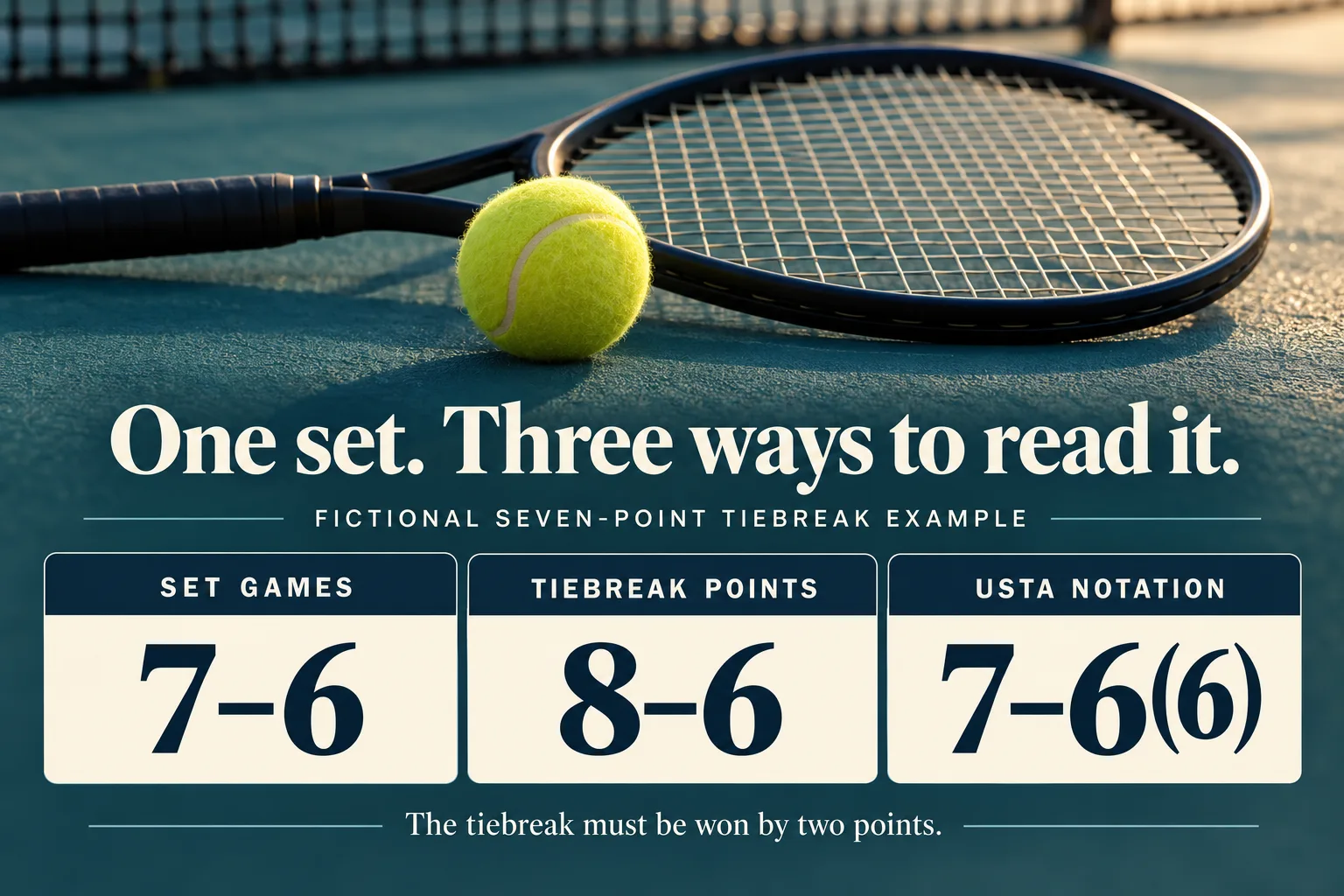
Tennis scores: sets, tiebreaks and bracketed results
Read tennis set scores, tiebreak points and bracketed results. Use worked examples to distinguish a set tiebreak from one that replaces the deciding set.
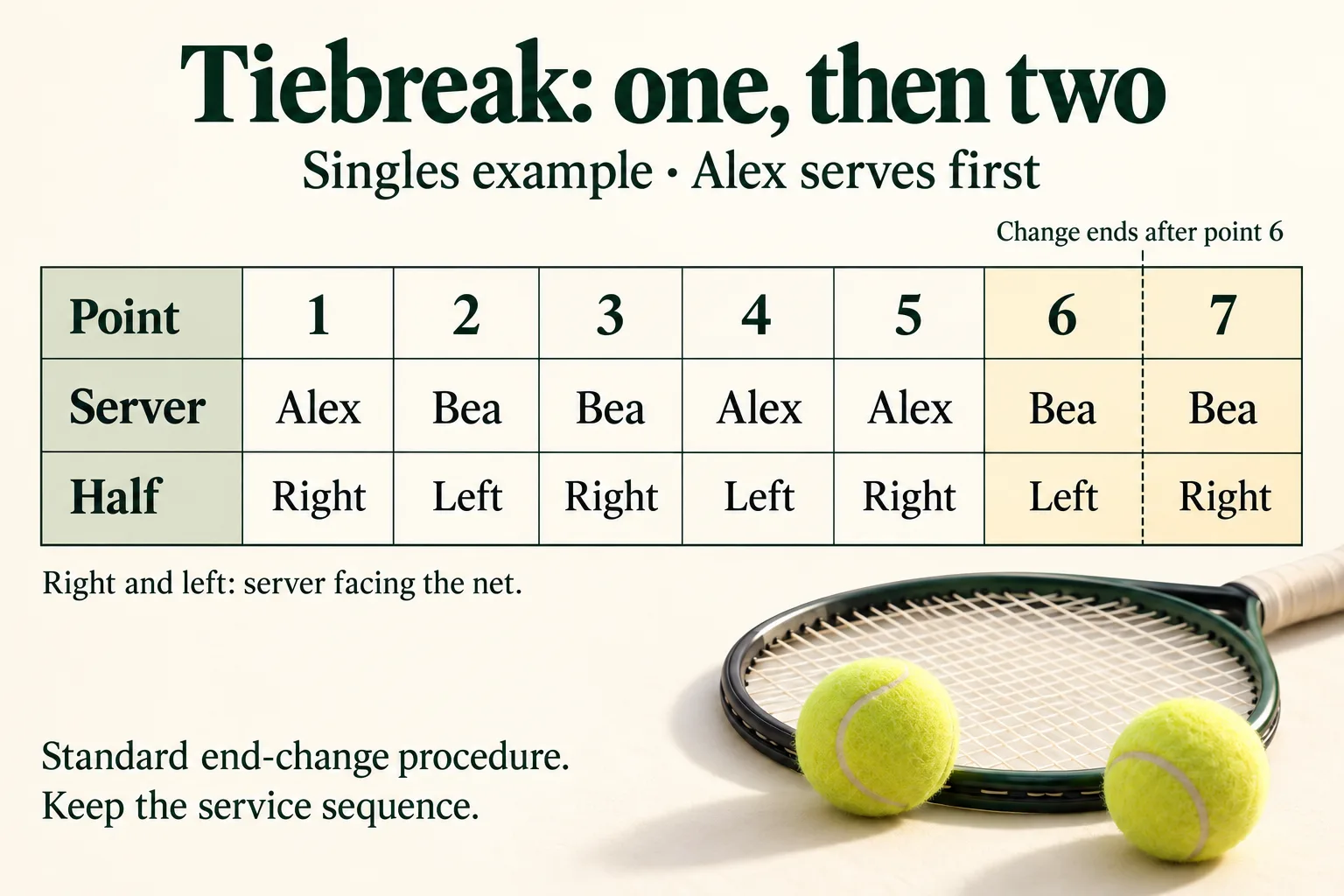
Tennis tiebreak serving order: points, sides and ends
Follow a singles tennis tiebreak point by point: who serves, right or left half, when to change ends, and who starts the next set.
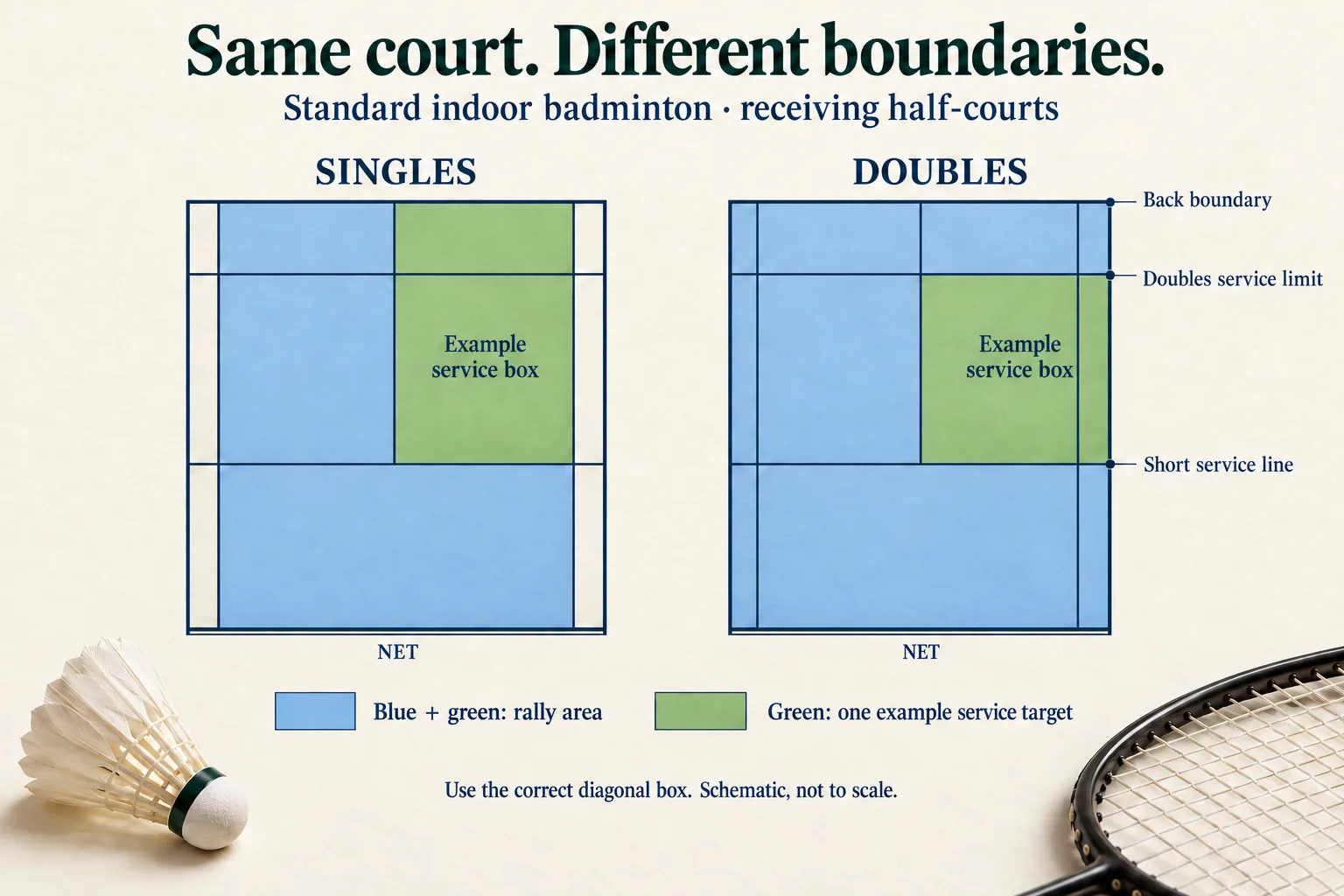
Badminton court lines: serve boundaries versus rally boundaries
See which badminton lines apply to singles, doubles, serves and rallies. Compare the landing areas, the rear service line and three common line-call examples.