
EU shoe material labels: read each part separately
Read EU footwear material categories by upper, lining and sole. A fictional three-row example shows what the label says and which details remain unknown.
On this page
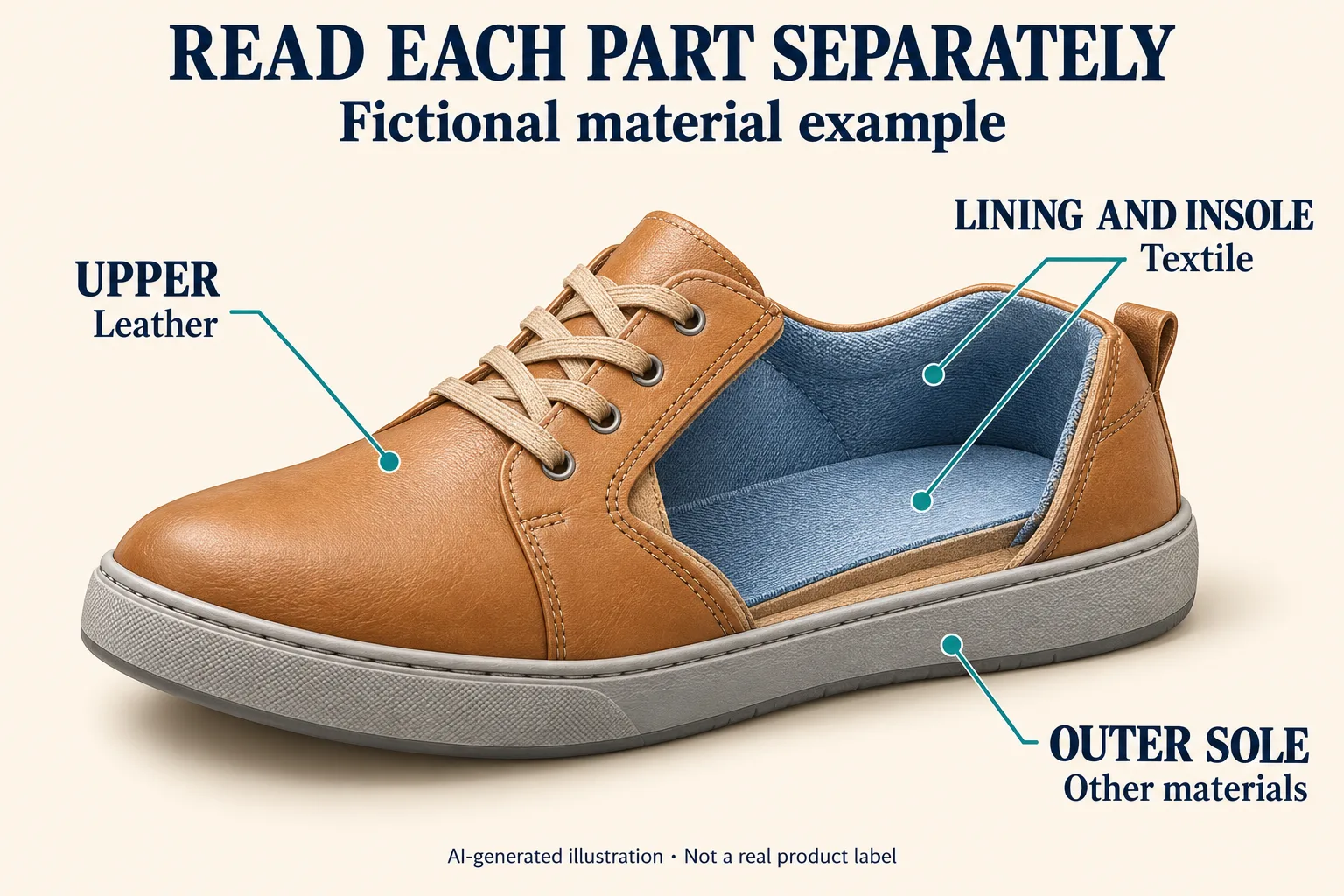
A shoe can have a leather upper, a textile lining and an outer sole described as “other materials”. Those three entries are not competing descriptions of the whole shoe. They answer three separate questions about its construction.
This guide explains how to read the material categories used on EU footwear labels as a shopper. It is not a global labelling rule, a retailer compliance checklist or a test of a particular pair. The worked example is fictional; use it to organise the information on the actual shoe you are considering.
Read the part and material as one entry
The EU’s footwear-label guidance identifies three parts: the upper, the lining and insole, and the outer sole. It also lists four material categories: leather, coated leather, textile and other materials. The information can be presented with pictograms or written indications.
First locate which part a material entry belongs to. Do not collect the material words into a single list and discard the part headings. A useful reading sequence is “upper — textile”, followed by the next part’s entry. If the connection between a symbol and its neighbouring material is unclear, ask for a clearer photograph or an explanation rather than guessing from its position.
The European Commission uses “lining and sock” for the middle group in its footwear overview, while Your Europe calls it “lining and insole”. Preserve the wording on the source you are reading. A reference to the inner part does not mean a separate pair of clothing socks is included with the shoes.
Keep the four material categories distinct
Leather and coated leather are separate entries in this system. Do not silently shorten a coated-leather entry to “leather” in your comparison. Equally, “textile” does not by itself name a particular fibre, and “other materials” is a category rather than the name of a specific plastic, rubber compound or branded foam.
A seller may provide more detail elsewhere on the product page. Keep that additional description beside the label entry instead of treating the two as interchangeable. For example, a broad material category and a manufacturer’s technology name answer different questions. Our Croslite and LiteRide component guide shows how branded names can apply to different parts of one model.
Work through a three-row example
Imagine a pair with the three written entries below. These are invented entries for a reading exercise, not a label template, brand specification or recommendation to buy a particular construction.
| Entry | Useful reading |
|---|---|
| Upper: leather | The leather entry belongs to the upper. It does not describe every part of the shoe. |
| Lining and insole: textile | Keep this inner-part entry separate. The category alone does not identify a particular fibre. |
| Outer sole: other materials | The sole has its own entry. This wording alone does not identify its exact compound. |
Now compare a second fictional pair whose upper entry is “coated leather”, with the other two entries unchanged. The visible difference is in the upper category. You have not established which shoe is softer, longer-lasting or better value. Nor do the shared inner-part categories establish that both shoes use the same fibre mixture.
A category is not a complete recipe
The European Commission’s footwear overview explains that this labelling system uses material thresholds for the named parts and can identify two principal materials. A displayed category is therefore not automatically a claim that every piece is made only from that material.
Do not calculate a whole-shoe composition from three category entries, or turn them into percentages by weight. If a listing separately provides numbers, keep their stated part and measurement basis with them. The fabric-percentage guide illustrates why separate section statements should not simply be added or averaged; it does not supply a formula for footwear labels.
Practical takeaway
Copy the exact part heading, its material entry and the model or item reference together. Mark missing detail as unknown. Then ask one precise question: “The label lists textile for ‘lining and insole’; what fibre information is available for this exact model?”
Use separate, product-specific information for cleaning, fit and performance questions. Material categories alone do not establish a washing method, waterproofing or workplace suitability. A clear three-part record helps you ask the right question without turning a short label into a promise it never made.
Sources
- Your Europe: Footwear Label, European Union
- European Commission: Footwear industry, European Commission
Continue reading
Related articles
Wash-label numbers and bars: temperature is only half the check
Read the temperature number and bars under a wash tub separately, compare three fictional labels, and check the machine manual before choosing a programme.

Denier vs GSM: understand fabric weight labels
Learn what denier and GSM measure, why they cannot be directly converted, and how a worked fabric-area example helps you compare clothing and bag specifications.
Crocs heel straps: pivoting, adjustable and sport mode
Understand pivoting and adjustable Crocs heel straps, what sport mode describes, and which details to confirm on an exact model before buying.