Indoor volleyball scoring: 25 points, 15 points and sets
Read indoor volleyball scores, know when a set needs more than 25 points, and see why only a deciding fifth set uses 15 in the standard FIVB format.
On this page
A volleyball scoreboard can show one team leading 2–1 in sets while trailing 18–21 in the current set. Those numbers answer different questions. The first records completed sets; the second shows points in the set still being played.
This guide follows the standard FIVB indoor format. All scores below are invented examples, not results from a named match. Check the organiser’s format before applying them to a school, recreational or shortened competition.
Read points and sets separately
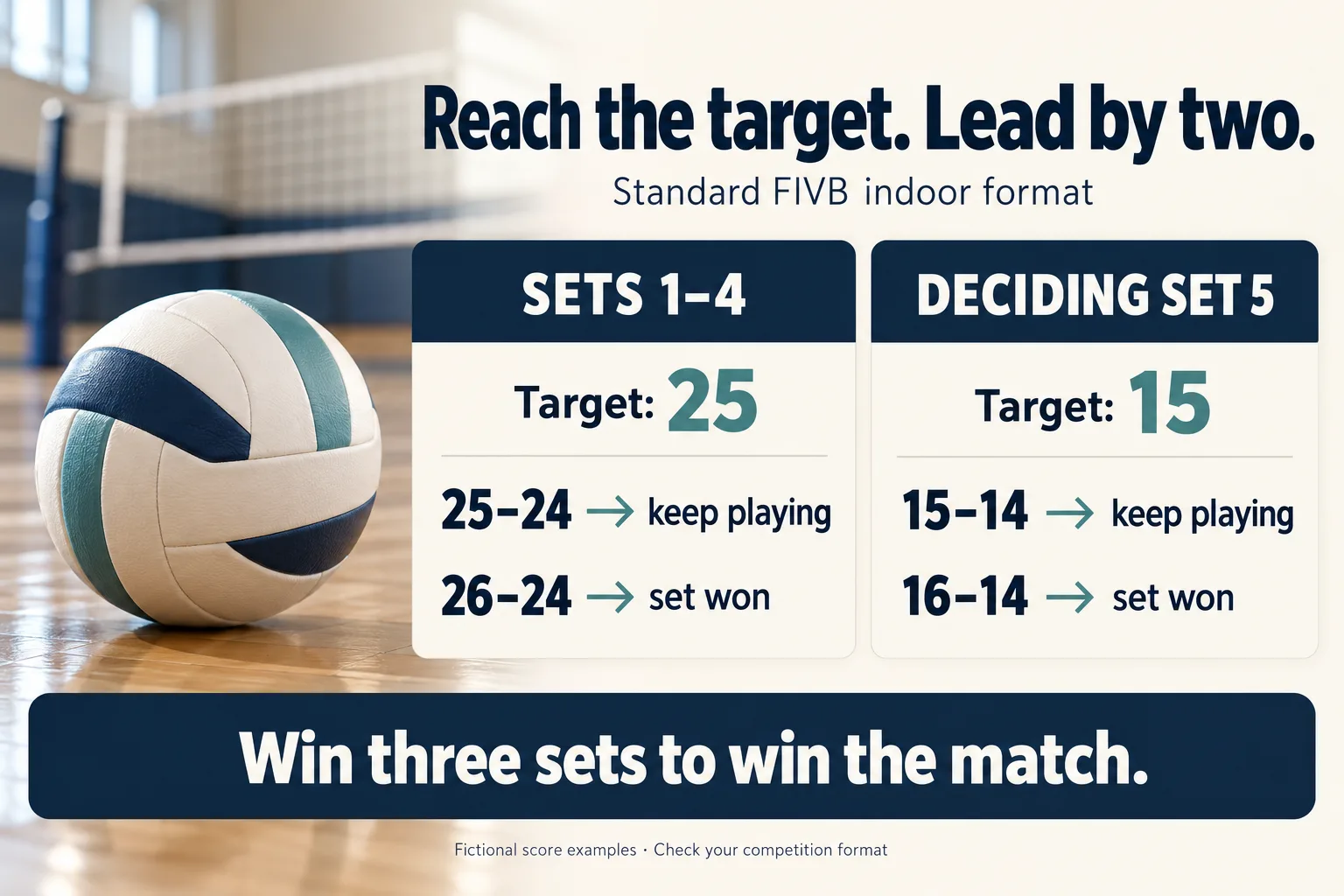
Under FIVB rules 6.2 and 6.3, a team wins the match by winning three sets. The first four sets, if needed, have a target of 25 points. A deciding fifth set has a target of 15. Every set requires a winning margin of at least two points.
For example, North leads South two sets to one but trails 18–21 in set four. North is closer to winning the match, yet South is ahead in that particular set. Do not describe the match as “18–21” without identifying which set you mean.
Check the target and the margin
Reaching the target is only half the test. At 25–24 in an ordinary set, the leader has enough points but only a one-point advantage. The set continues. Winning the next point makes it 26–24 and ends the set; losing it makes 25–25, so play continues again.
The FIVB basic-rules explanation confirms that there is no ceiling in this format. After 28–28, a 29–28 lead is still insufficient; 30–28 would finish the set. Conversely, 24–20 is not a completed set because the leader has not reached 25, despite the four-point gap.
When checking a score, ask both questions: has the target been reached, and is the lead at least two? Neither answer works alone.
Use 15 only for the deciding fifth set
A fifth set is needed when both teams have won two sets. At 14–14 in that decider, 15–14 is not enough; 16–14 is. The shorter target changes the threshold, not the two-point requirement.
“Final set” can be an unhelpful shortcut. If North wins the first three sets, set three ends the match, but its target remains 25. Likewise, a fourth set that completes a 3–1 victory uses 25. Neither becomes a 15-point set simply because it was the last one played.
Count set wins, not the grand total
Here is a fictional match written consistently from North’s perspective. Each row is one completed set, and the fifth uses the shorter target because the first four leave the teams level.
| Set | North | South |
|---|---|---|
| 1 | 25 | 23 |
| 2 | 10 | 25 |
| 3 | 25 | 23 |
| 4 | 10 | 25 |
| 5 | 15 | 13 |
North wins sets one, three and five, so wins the match 3–2. Adding the columns gives North 85 points and South 109. South’s larger point total does not overturn North’s three set wins.
The two heavy losses matter within those sets, but they do not create extra set wins for South. Keep the five individual scores alongside the 3–2 result if you want to show how the match unfolded. Our tennis score-notation guide explains a different sport’s scoring layers; do not transfer its game or tiebreak notation to this table.
Track who won the rally
USA Volleyball’s rally-scoring explanation makes clear that a team can earn a point while receiving as well as while serving. Within an ongoing set, the rally winner serves next: it either keeps service or takes it from the opponent.
Suppose South serves while trailing 18–20. North wins the rally, moving ahead 21–18 and taking the next serve. If South had won instead, South would still trail, now 19–20, and would serve again. Award the point according to the rally outcome, not according to who started it. A replayed rally does not add a point.
Practical takeaway
Identify the set number, read its point score, check the target and margin, then update the sets won. Stop when a team has three set wins; “best of five” does not mean all five must be played. For an unfamiliar competition, confirm its scoring format with the organiser rather than assuming these examples apply. Find more event explainers in Sports & Athletics.
Sources
- Official Volleyball Rules 2025–2028, FIVB
- Basic Rules, FIVB
- Rules of Volleyball, USA Volleyball
Continue reading
Related articles
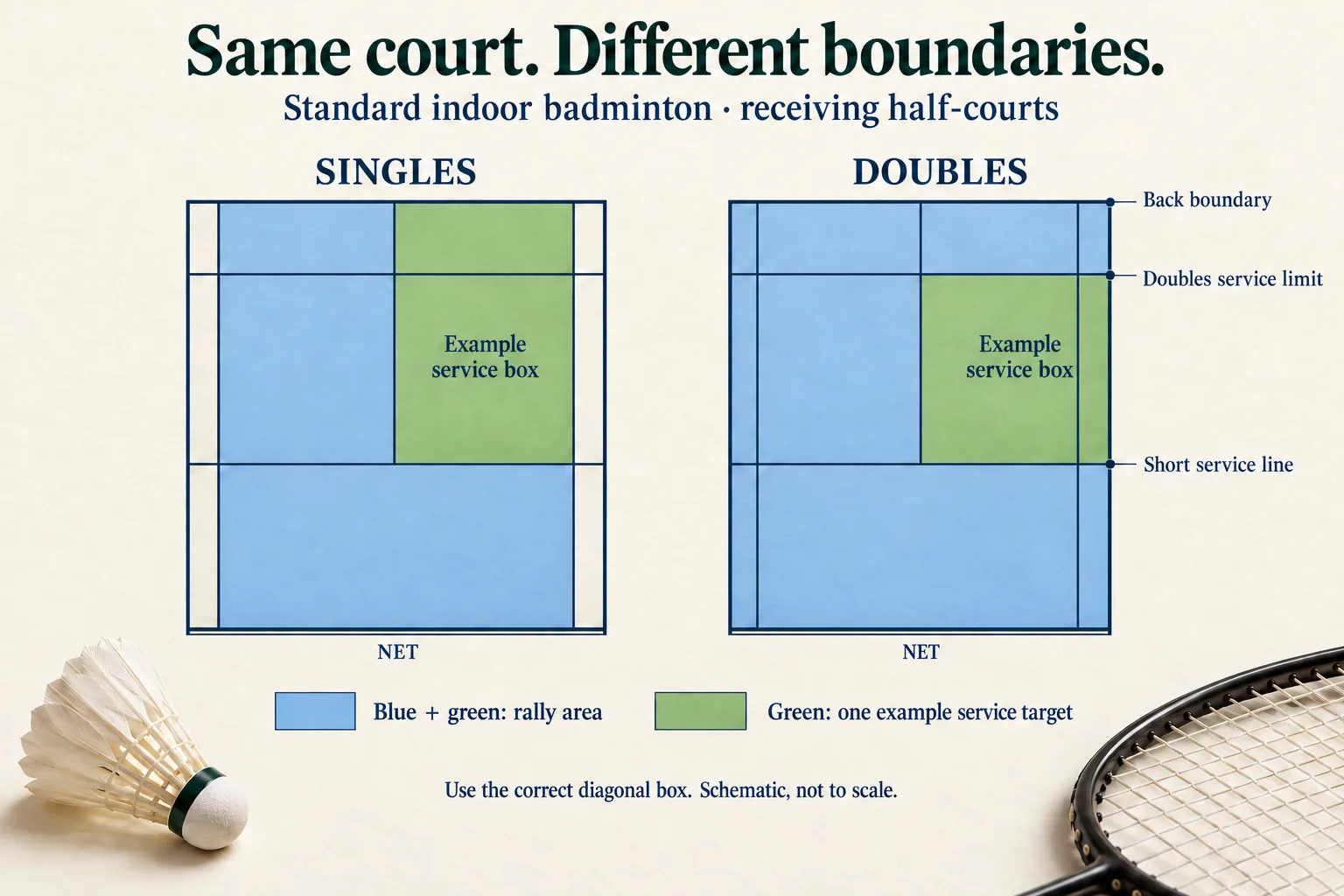
Badminton court lines: serve boundaries versus rally boundaries
See which badminton lines apply to singles, doubles, serves and rallies. Compare the landing areas, the rear service line and three common line-call examples.
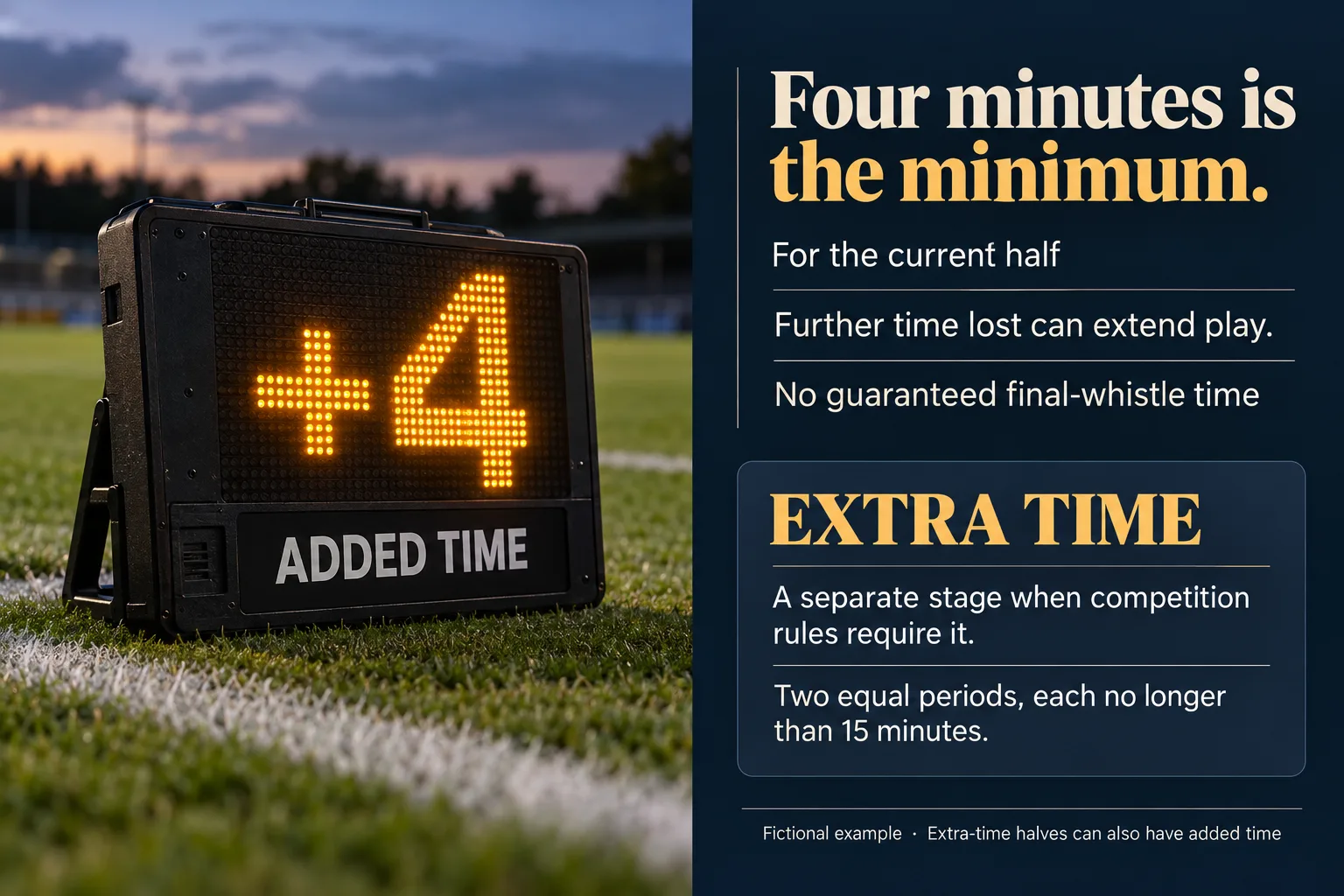
Football added time: what the +4 board means
Read football’s added-time board, understand why play can continue beyond the minimum, and distinguish the allowance from extra time.
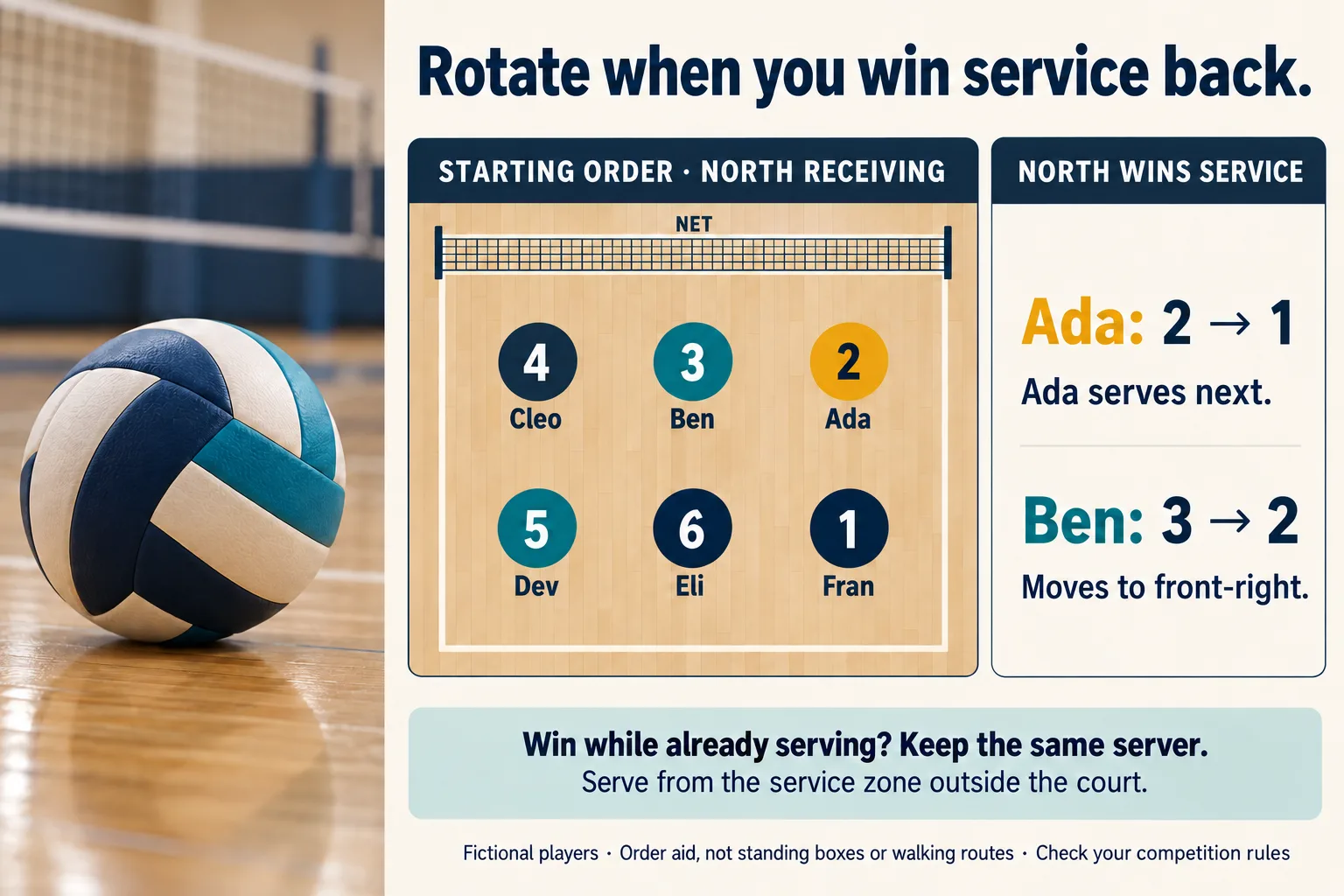
Volleyball rotation: service order and player positions
Learn when volleyball teams rotate, follow a fictional service sequence, and distinguish FIVB positioning rules from USA Volleyball’s requirements.